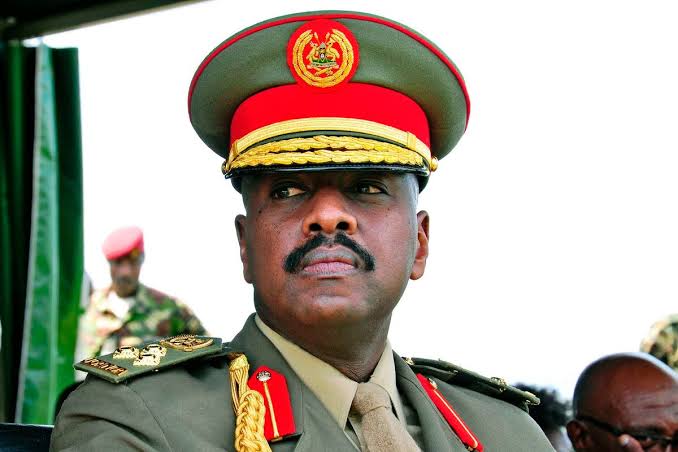
The Democratic Republic of Congo has demanded an explanation from Uganda after military chief Gen Muhoozi Kainerugaba made a series of controversial social media posts appearing to support a rebel advance into the country's mineral-rich eastern region.
Kinshasa summoned Uganda's diplomatic representative on Tuesday, 24 November, following remarks by Kainerugaba, who heads the Uganda People's Defence Forces (UPDF) and is the son of President Yoweri Museveni.
The general's posts on X suggested that Uganda would not oppose an advance by the Front for the Refoundation of the Nation (FRN), an armed movement associated with former Congolese president Joseph Kabila, into Walikale, in North Kivu province.
He went further, suggesting that Ugandan forces could take control of the territory themselves if the group delayed its advance.
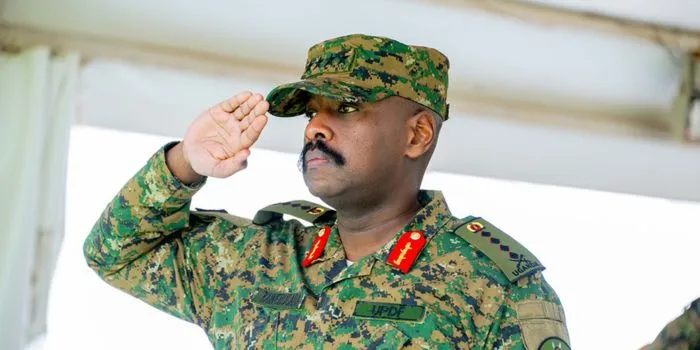
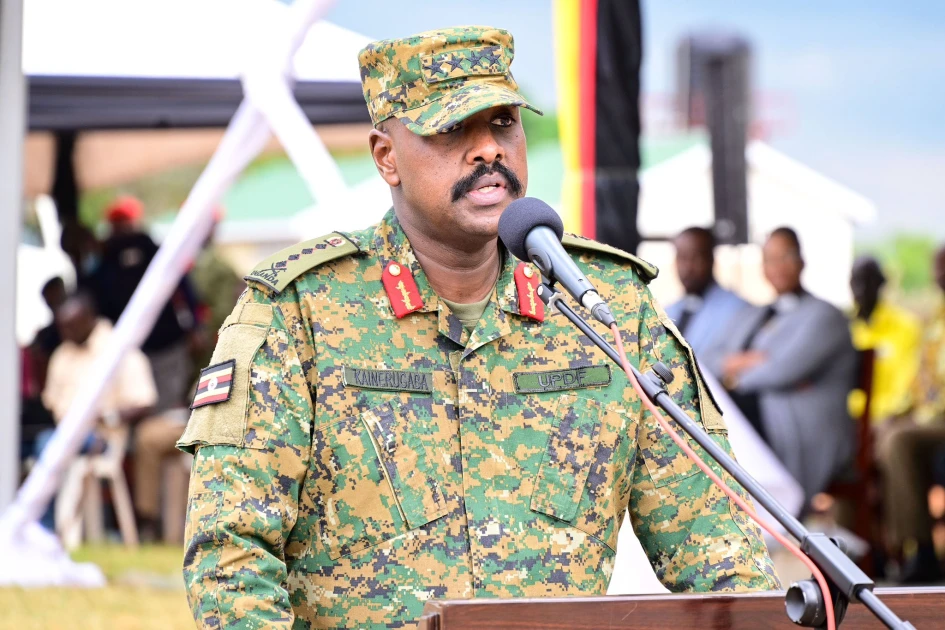
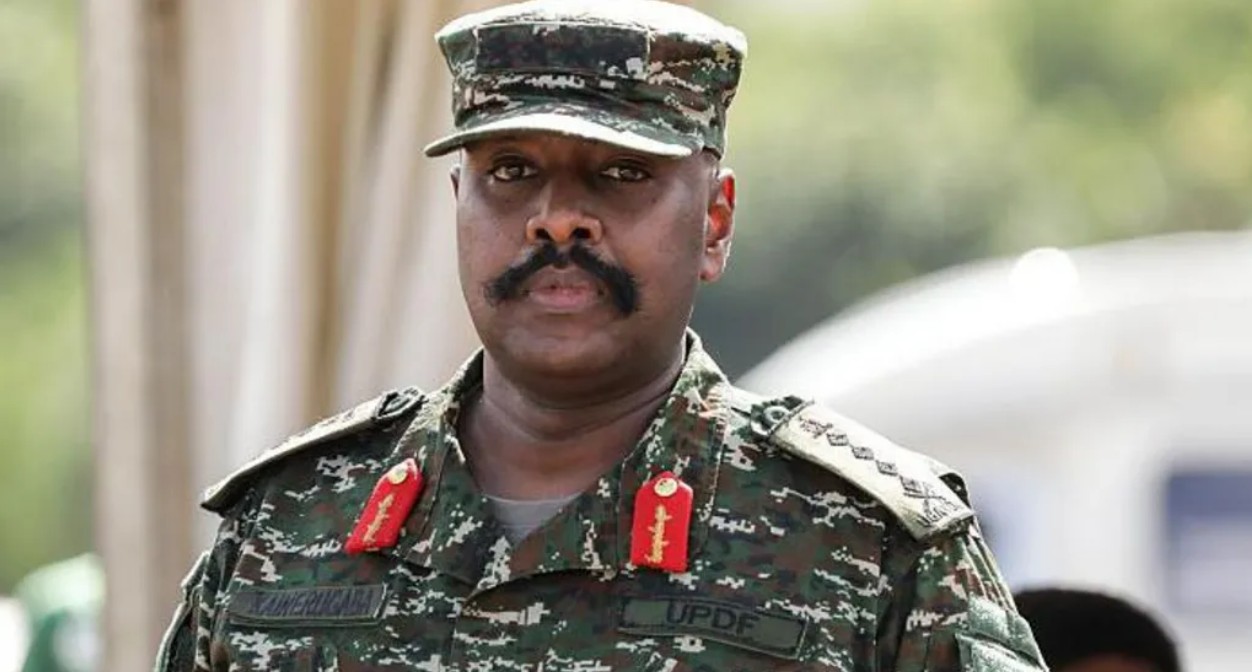 Uganda's military chief Gen Muhoozi Kainerugaba.
The Congolese government described the statements as particularly serious, arguing that they threatened the diplomatic restraint expected between neighbouring sovereign states.
In a statement issued by its foreign ministry, Kinshasa said the remarks had created a major diplomatic and media incident.
"The Congolese government expects the Republic of Uganda to clarify its official position and take the necessary measures to prevent such transgressions from recurring in the future," the ministry said.
It also reaffirmed its commitment to regional peace and stability, while insisting that it would defend the country's sovereignty, institutions and territorial integrity against any form of interference.
Uganda had not issued an official response to the latest diplomatic protest by Thursday, 26 November.
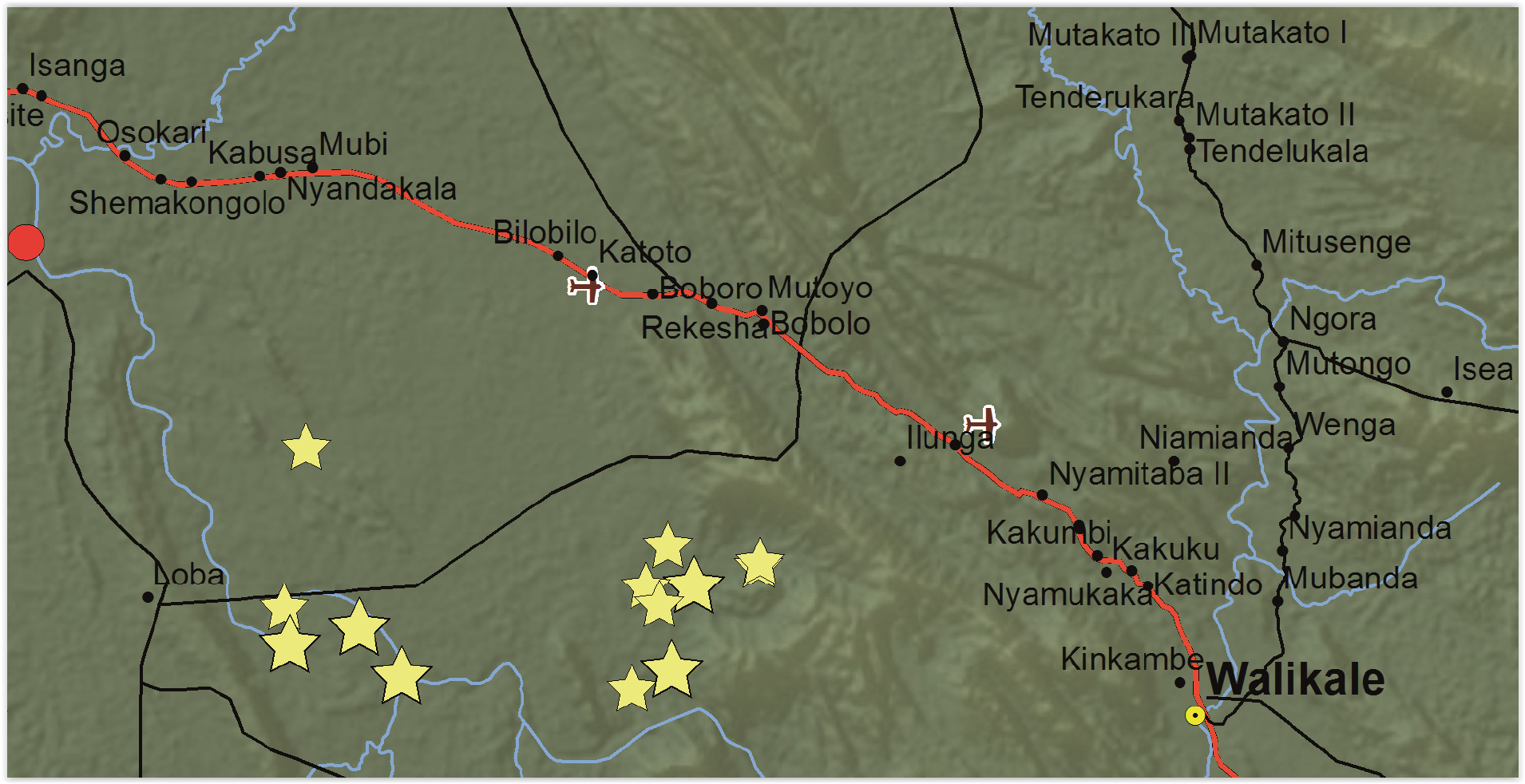 Walikale is a mineral-rich territory in eastern DR Congo, with significant deposits of tin and gold.
The controversy comes at a sensitive time for relations between the two countries, which have maintained military cooperation despite persistent insecurity in eastern DR Congo.
Since 2021, Ugandan and Congolese forces have conducted joint military operations against the Allied Democratic Forces (ADF), an armed group linked to the Islamic State.
Uganda has also been involved in mediation efforts between the Congolese government and an armed group led by former warlord Thomas Lubanga in Ituri province.
In his social media posts, Kainerugaba also accused the Democratic Forces for the Liberation of Rwanda (FDLR), another armed group operating in eastern DR Congo, of targeting members of the Bahema community.
The community is mainly based in Ituri and has historical and cultural links with the Bahima people in neighbouring Uganda.
The general defended Uganda's military presence in the country, insisting that its involvement was driven by security concerns. He also criticised the reported presence of foreign mercenaries fighting alongside Congolese forces.
His remarks came after reports that a Congolese military aircraft had allegedly been shot down by rebels, with foreign mercenaries reportedly among those on board.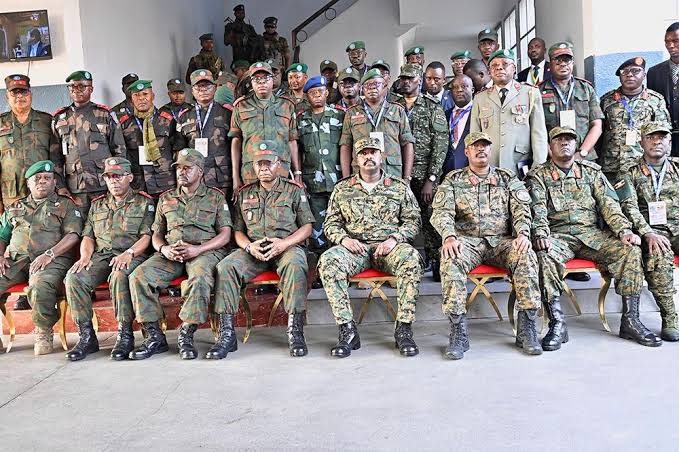 Uganda and DR Congo have worked together in military operations against the ADF in eastern Congo.
Kainerugaba's X account, which had nearly 1.4 million followers, subsequently became inaccessible. It remains unclear whether he deactivated it or whether the platform suspended it.
During the same week, the general declared: "My tweets in Uganda are directives that must be obeyed."
The latest incident adds to a history of diplomatic tensions linked to his social media activity.
In February 2025, Kainerugaba threatened to seize Bunia, a major town in eastern DR Congo, claiming that members of the Bahima community were facing attacks.
In 2024, Kinshasa also summoned Uganda's diplomatic representative after the general made threats against foreign mercenaries operating in eastern Congo.
His online remarks have previously caused tensions beyond DR Congo. In 2022, he threatened to invade neighbouring Kenya and capture Nairobi, prompting President Museveni to apologise for his son's comments.
At 52, Kainerugaba is widely viewed as a potential successor to his father, who has led Uganda since 1986. His increasingly prominent role in the country's military and political affairs has kept attention firmly on his public statements.
For now, Kinshasa is seeking an official explanation from Kampala as it attempts to prevent the latest dispute from further straining relations between the two neighbours.
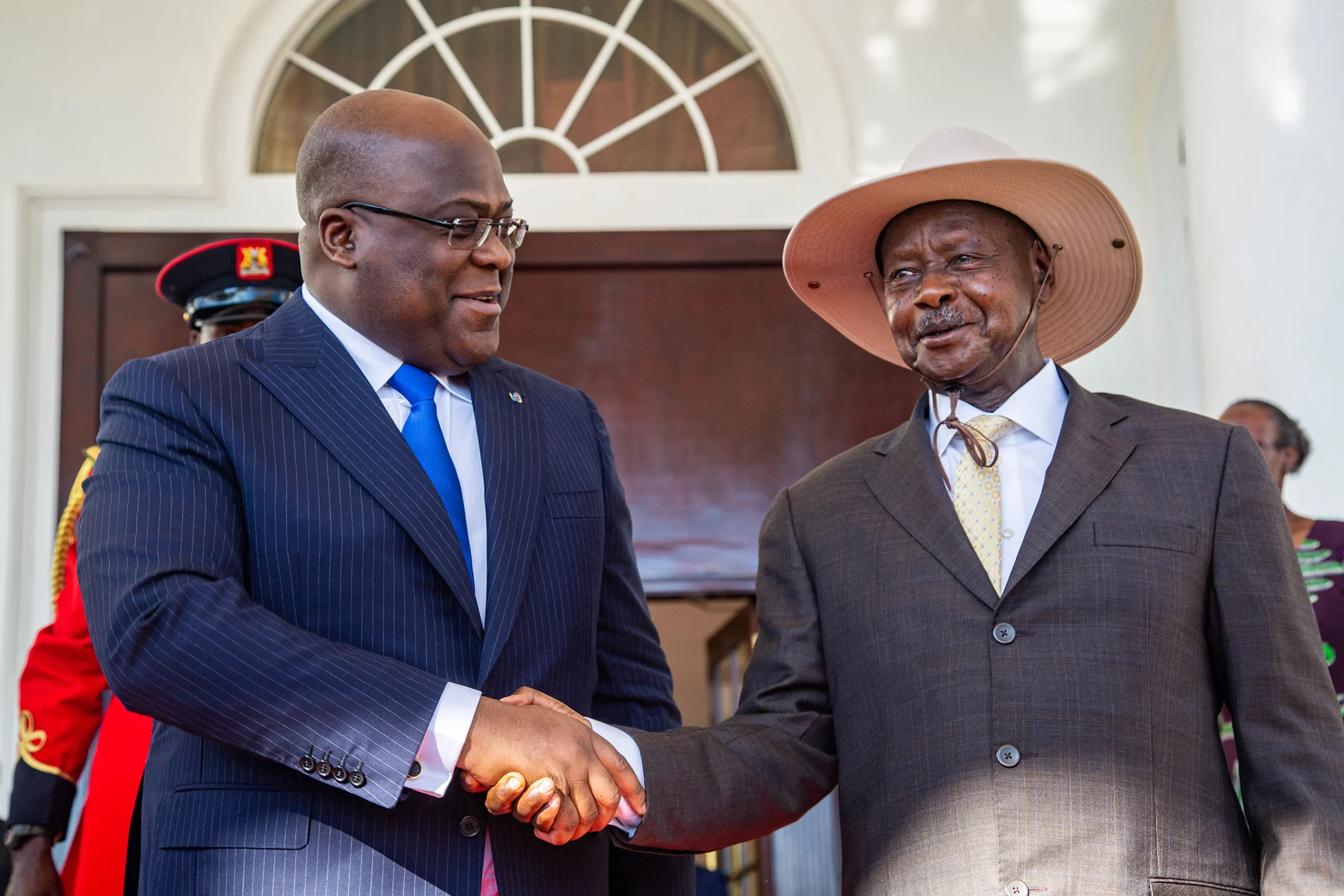 Presidents Yoweri Museveni and Félix Tshisekedi at a diplomatic meeting.