Uganda’s ruling party has reportedly resisted President Yoweri Museveni’s efforts to position his son, General Muhoozi Kainerugaba, as his eventual successor, exposing divisions within the party over the country’s political future.
The disagreement emerged during a closed-door meeting of the National Resistance Movement (NRM) executive committee on Tuesday, November 10, where members were discussing who should succeed the long-serving president.
According to five people who attended the meeting and spoke to Agence France-Presse (AFP), a vote on Kainerugaba’s proposed candidacy was abandoned after several committee members raised objections.
The committee has 28 members. However, only seven had voted before the process was halted, with four supporting Kainerugaba and three opposing his proposed candidacy.
The objections reportedly attracted strong support from other members in the room, signalling growing unease over the possibility of a family succession.
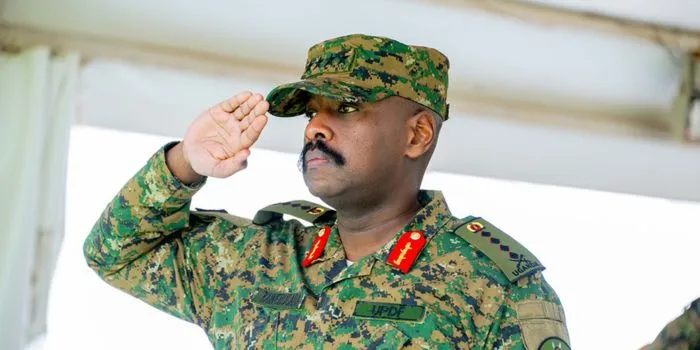
Museveni, 82, has governed Uganda since taking power in 1986. His 52-year-old son currently serves as the country's Chief of Defence Forces and has become increasingly influential in the country's political affairs.
Kainerugaba has already declared his intention to contest the 2031 presidential election, with his ambitions receiving backing from supporters within the Patriotic League of Uganda (PLU).
However, his political ambitions have also generated resistance, particularly over his controversial conduct on social media, where he has repeatedly made provocative statements about political opponents.
One participant in the NRM meeting reportedly told AFP that the army chief's confrontational approach had unsettled some senior party members, raising questions about his suitability for national leadership.
Calls for a civilian role
The disagreement also brought forward suggestions about how Kainerugaba could prepare for a possible future in politics.
NRM vice-chairperson Calvin Echodu reportedly advised Museveni to remove his son from the military and give him a civilian appointment.
According to a participant who spoke to AFP, the proposal was intended to give Kainerugaba an opportunity to interact more closely with ordinary Ugandans and gain experience outside the military.
Echodu also reportedly suggested that Museveni consider contesting the 2031 election again, arguing that his son was not yet ready to assume the presidency.
Museveni had backed his son's credentials
The latest disagreement follows an earlier meeting in late October, when Museveni presented a paper to senior NRM officials outlining why he believed his son had the qualifications to lead Uganda.
The president invited party members to consider Kainerugaba's suitability as a potential successor, bringing the increasingly prominent succession debate into the party's internal discussions.
The latest meeting, however, appears to have exposed differences over the proposal.
Although the reported vote was abandoned, the accounts from participants do not establish a formal party resolution rejecting Kainerugaba's candidacy. The NRM's official position on the matter remains important as discussions over succession continue.
For Museveni, who has led Uganda for four decades, the question of who takes over from him is becoming increasingly significant.
For his son, the resistance within the ruling party presents a fresh political challenge as he seeks to turn his military influence and growing political profile into support for a presidential campaign in 2031.