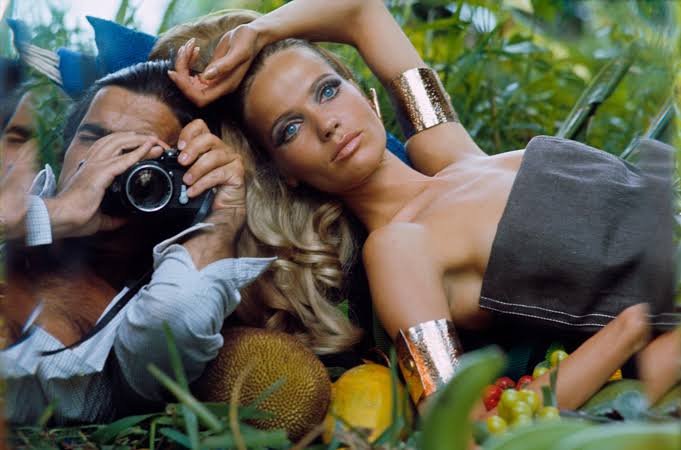
Vera von Lehndorff, better known as Veruschka, has died aged 87. The German model, celebrated for her striking looks and bold poses, died on Tuesday in Berlin.
Her death was announced through the website of her sister, Catharina Kappelhoff-Wulff. She was remembered as a woman who left a lasting mark on fashion, art and photography.
“In the 1960s and 70s she shaped the world of fashion, art and photography like no one else,” the statement read.
Her death marks the loss of one of the most influential figures in modern fashion photography.
A Model Who Changed Fashion
Veruschka rose to fame during the 1960s. At more than six feet tall, she stood out from other models of her generation.
Her approach to modelling was different. Rather than simply posing for cameras, she used movement, expression and dramatic gestures to bring photographs to life. Her distinctive style soon attracted leading fashion photographers and designers.
By the middle of the decade, she had become one of the world's most recognisable and highly paid models. Her work also caught the attention of Diana Vreeland, the influential editor of American Vogue. Veruschka was later featured on the magazine's cover 12 times.
A Childhood Shaped by War
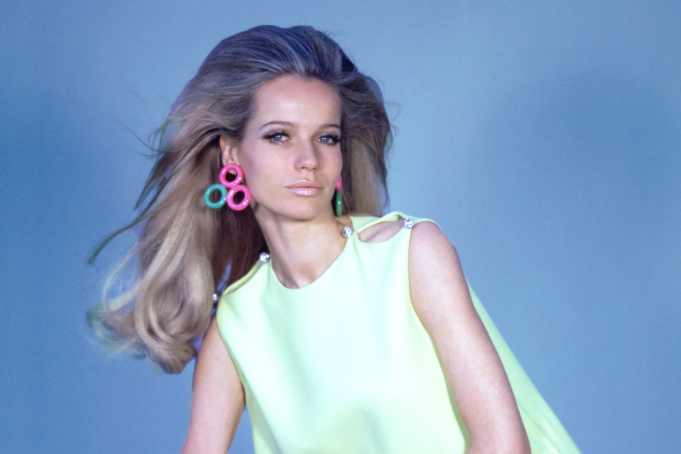 Her career took her from Vogue covers to Hollywood. She worked with leading designers and appeared
in films including Blow-Up and Casino Royale.
Veruschka was born in 1939 in Königsberg, then part of East Prussia. The city is now known as Kaliningrad, in Russia. Her childhood was marked by the Second World War. Her father, Heinrich Graf von Lehndorff, was involved in the German resistance against Adolf Hitler.
He was executed for his role in the failed July 1944 plot to assassinate Hitler. After the war, her family settled in Hamburg. She later studied art before moving to Florence, Italy. It was there, at the age of 20, that she was discovered by photographer Ugo Mulas.
From Vogue Covers to Hollywood
Veruschka went on to work with some of the biggest names in fashion. She became a muse to designers including Valentino Garavani, Yves Saint Laurent and Karl Lagerfeld. Her striking appearance also attracted leading photographers.
Richard Avedon once described her as the most beautiful woman in the world. The pair later worked on an ambitious Vogue project titled Great Fur Caravan. The 26-page fashion spread was photographed in Japan over five weeks.
The production reportedly cost $1 million, making it one of the most expensive fashion shoots of its time. Her influence also extended beyond the fashion industry.
She appeared in several films, including Michelangelo Antonioni's 1966 classic Blow-Up. In one memorable scene, she appeared opposite British actor David Hemmings. She also featured in the 2006 film Casino Royale.
Tributes Pour In
Tributes have been shared by photographers and fashion personalities following news of her death. Italian photographer Franco Rubartelli, who was once her partner, revealed that the two had recently reconnected after more than 50 years apart.
“Life gave me a bitter gift: after more than fifty years of knowing nothing of each other, it allowed me to hear from Veruschka once again,” he wrote on Instagram.
He added that their renewed connection had been cut short by her death. Photographer Nigel Barker, known for his work on America's Next Top Model, also paid tribute.
He said Veruschka had helped revolutionise fashion photography. Barker recalled photographing her in 2001, describing the experience as an important moment in his career. He also praised her elegance and humility while working with his team.
Why Veruschka Left Modelling
Despite her success, Veruschka eventually stepped away from mainstream modelling during the 1970s.
She turned towards art, seeking greater independence and control over her creative identity. Her decision reflected a long-held desire to be recognised as more than a face in fashion magazines. In a 2008 interview with German newspaper Bild, she explained her feelings about the industry.
“I never wanted to be a model, a meaningless object,” she said.
“My dream has always been to be able to disappear when I don't feel comfortable, to be absolutely free.”
Her words offered a glimpse into the woman behind the photographs. Veruschka's legacy will remain tied not only to the fashion world she helped reshape, but also to her determination to define herself beyond it.