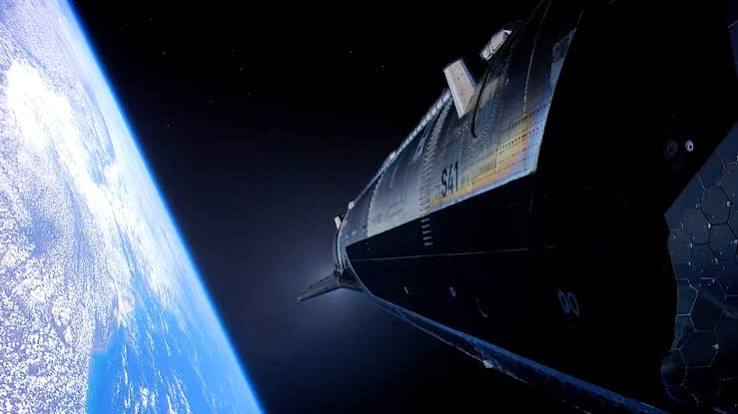
Elon Musk's SpaceX has been given the green light to deploy up to one million satellites in space. The ambitious project is designed to turn Earth's orbit into a vast network of data centres for artificial intelligence.
The approval was granted on Wednesday, November 25, by the US Federal Communications Commission (FCC). It marks the first authorisation of its kind in the United States. The proposed network, known as Starmind, would allow data to be processed in space before the results are sent back to Earth.
The plan comes as demand for AI computing power continues to grow. But concerns have already been raised about its impact on the night sky and the safety of Earth's crowded orbital environment.
How SpaceX Plans to Build Data Centres in Space
SpaceX intends to power the satellites using sunlight. The company believes that near-constant access to solar energy could make space-based computing cheaper and more energy-efficient than traditional data centres.
The satellites would operate in low-Earth orbit, at altitudes ranging from 500 to 1,002 kilometres. Data would mainly be transferred through laser links. Connections with SpaceX's existing Starlink network would also be used to relay information back to Earth.
The company has argued that the system could help meet computing demands that are becoming harder to accommodate on the ground.
Traditional data centres require vast amounts of electricity and water for cooling. Their construction has also faced growing resistance from communities concerned about their environmental impact.
FCC Sets Deployment Deadlines
The approval was issued by the FCC's Space Bureau, which described the project as a new frontier for computing infrastructure. FCC Chairman Brendan Carr said the decision would support America's position in advanced technology.
The authorisation, however, comes with strict deployment deadlines. SpaceX must have its first operational satellite in orbit by November 25, 2033. At least 10 per cent of the approved constellation must be deployed by November 2035.
The target will rise to 50 per cent by November 2038. The remaining satellites must be launched by November 2040. The approval does not mean that one million satellites will automatically be launched. SpaceX must still meet the conditions attached to its licence.
The FCC also deferred part of the company's request concerning alternative disposal methods for satellites at the end of their working lives. Further information on orbital debris management must be provided before satellites operating above 600 kilometres can be deployed.
Amazon and Scientists Raise Concerns
 Amazon and scientists have raised concerns over SpaceX's plan to launch one million satellites. They warn the project could disrupt astronomy, increase space debris and create new safety risks in orbit. Experts have also questioned whether the ambitious plan is technically feasible.
The decision has attracted criticism from rival companies and the scientific community.
Amazon's satellite business, which is developing its own internet network, challenged SpaceX's proposal during the regulatory process. The company described the plan as a "lofty ambition rather than a real plan", questioning whether it could be delivered as proposed.
The American Astronomical Society also opposed the application. In a statement released after the decision, the organisation said it was "disheartened and dismayed".
It warned that the proposed satellites could interfere with astronomical research and affect the public's ability to observe the night sky. The organisation also raised concerns about radio interference, atmospheric pollution and possible collisions in orbit.
The scale of the proposed network has become a major point of concern. Scientists fear that large numbers of bright satellites could interfere with observations made by ground-based telescopes.
Experts Question Whether the Plan Can Work
Questions have also been raised about the technical and financial challenges involved. Astrophysicist and author Adam Becker questioned whether the project could be delivered at the proposed scale. Speaking to The Associated Press, he described the prospect of launching one million satellites as "a fantasy".
He also pointed to the difficulty of managing heat in space. Although space is cold, heat generated inside equipment cannot simply disappear. It must be carried away and released through dedicated systems.
The risk of collisions has also been raised. A major accident could create debris that threatens other spacecraft operating in low-Earth orbit. The FCC, however, said its decision was consistent with existing orbital debris rules, while requiring SpaceX to provide further safety information.
Musk Welcomes the Decision
Musk welcomed the FCC's announcement in a post on X.
"Much appreciated. This will be a great asset to America and the world," he wrote.
SpaceX is not alone in exploring the idea of moving computing infrastructure beyond Earth. Other companies, including Google and Blue Origin, have also shown interest in space-based data centres.
For now, the Starmind project remains an ambitious proposal. Its success will depend on whether the technology can be developed, the costs managed and the safety concerns addressed.
If completed, the network could reshape how AI computing is powered and delivered. But the challenge of putting one million data centres into orbit remains enormous.