
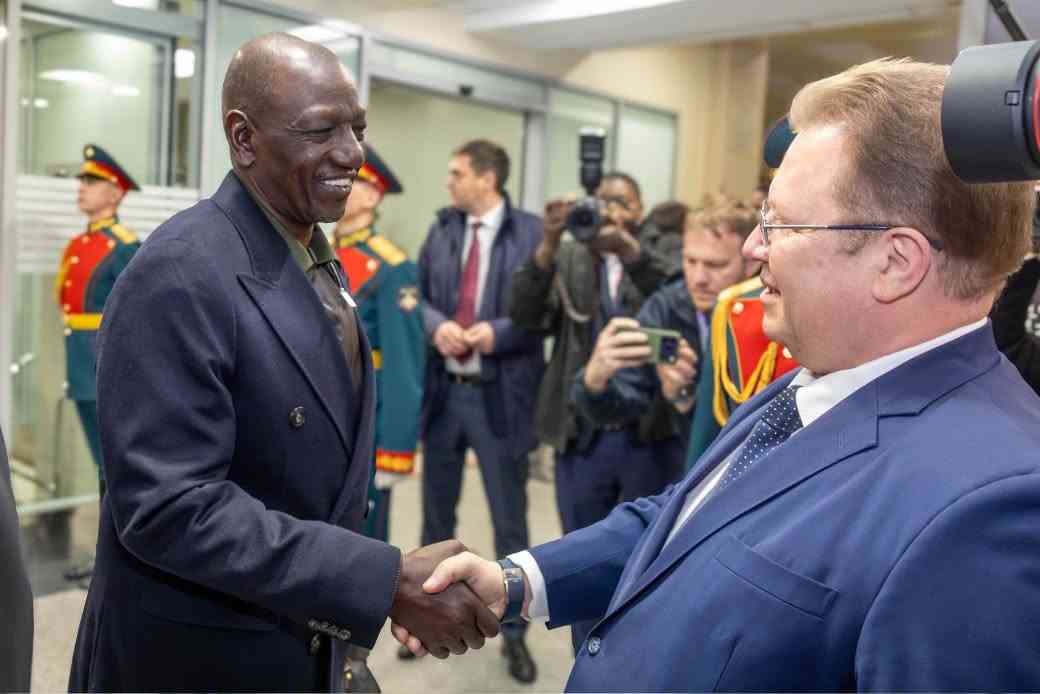
President William Ruto has urged Russian companies to invest in Kenya’s industries, promising partnerships that would create jobs and increase local production.
The appeal was made in Moscow on Wednesday, October 28, during the Russia-Kenya Business Roundtable. Kenya’s resources and access to African markets were presented as opportunities for Russian capital and technology.
“This is the partnership we invite Russian investors to build,” Ruto said. He called for an arrangement in which both countries would contribute and share the benefits.
A Trade Gap of $278 Million
The push comes as trade between Kenya and Russia remains heavily tilted towards imports. Bilateral trade reached about $380 million in 2025, according to figures cited by the President.
Kenyan exports were valued at $52 million. Tea, coffee, flowers, fruits and vegetables accounted for much of the total. Imports from Russia stood at $330 million, mainly wheat, fertilisers, iron and steel products.
The difference between imports and exports was about $278 million. Russian investment in Kenya was estimated at just $22 million.
“These figures challenge us to rethink the nature of our partnership,” Ruto said.
The figures point to room for closer commercial ties. But the challenge will be turning the investment pitch into projects that expand Kenya’s productive capacity and export earnings.
Manufacturing Takes Centre Stage
Russian expertise in energy, mining, fertiliser production, engineering, transport and manufacturing was highlighted as a potential match for Kenya’s industrial ambitions.
Local manufacturing and agricultural processing were among the areas targeted for investment. Mineral processing was also encouraged, so more value could be created within Kenya before goods are exported.
For decades, many African economies have relied on exporting raw materials while importing finished products. Ruto argued that this pattern has left much of the industrial activity and employment outside the continent.
“We seek partnerships founded on sovereign equality, mutual respect, and shared prosperity,” he said.
He rejected relationships built on dependency, saying Kenya wanted to create more value with its partners rather than simply divide existing gains.
Kenya Pitches Access to African Markets
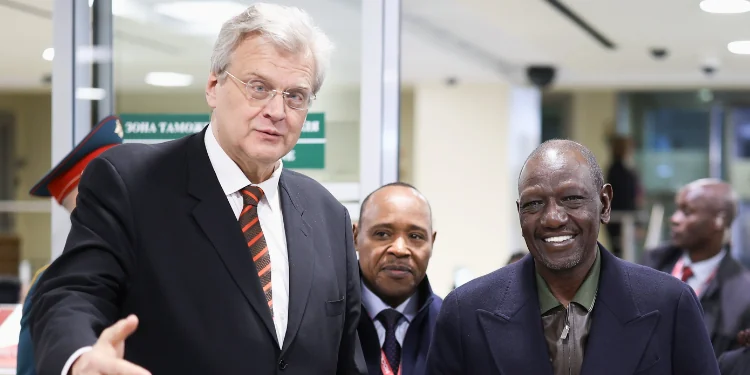
Russian companies were also invited to establish production facilities and work with Kenyan firms. Kenya was presented as a base from which businesses could reach markets across Africa and beyond.
“Invest in Kenya, manufacture in Kenya, and serve Africa and the world from Kenya,” Ruto said.
The appeal was aimed at attracting investment while strengthening local supply chains and creating employment. However, the scale of those benefits will depend on the projects established, the skills transferred and the jobs created.
The President said success should not be judged by the number of agreements signed. Completed projects, new industries and employment opportunities should provide the measure, he argued.
Investment Promises Face a Practical Test
The Moscow meetings form part of Kenya’s wider effort to attract foreign investment and expand trade. The Russia-Africa Economic and Humanitarian Forum is bringing African and Russian leaders together to discuss economic and political cooperation.
Yet the proposed partnership comes with practical challenges. Kenya’s trade figures show a substantial imbalance, while Russian investment remains modest compared with the overall value of trade.
Any new agreements will need to be followed by financing, implementation and clear benefits for local businesses and workers. The impact will also depend on whether Kenyan firms can compete, gain access to technology and secure lasting markets for their products.
For Kenya, the test will be whether the Moscow discussions produce factories, stronger exports and jobs not just promises of closer ties.


