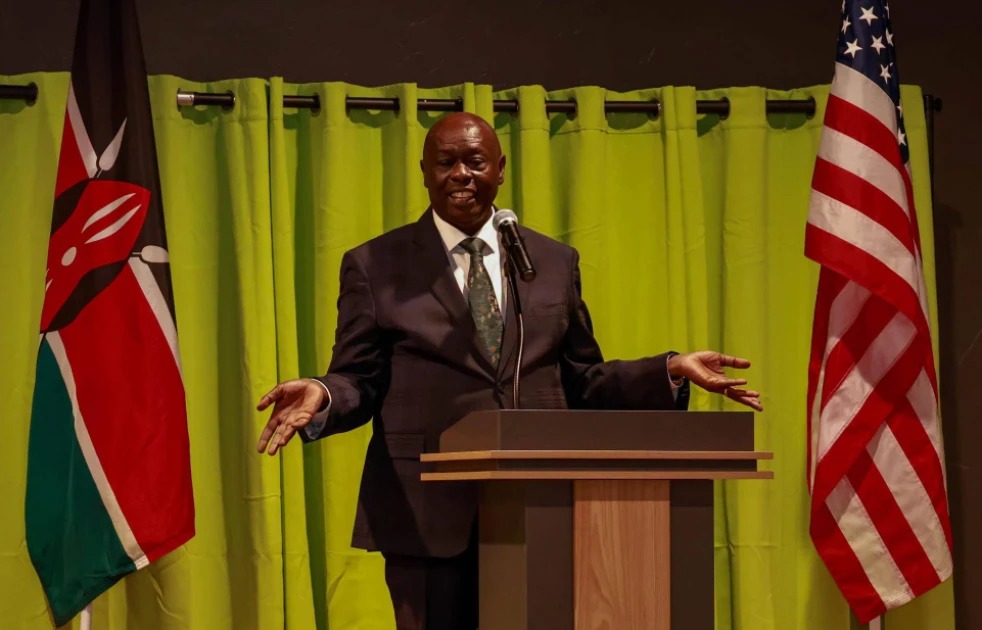
Former Deputy President Rigathi Gachagua has challenged fellow opposition leaders to prove their support among voters before seeking the coalition’s presidential ticket.
The Democracy for the Citizens Party (DCP) leader said political prominence and private negotiations would not be enough to secure the nomination. A candidate, he argued, must first demonstrate the ability to mobilise voters across the country.
His remarks were made on Tuesday during a meeting with a delegation from Nyeri at his Wamunyoro residence. They came as opposition leaders continued consultations over a possible joint candidate to challenge President William Ruto in the August 2027 election.
Disagreements Within the Opposition
Gachagua acknowledged that differences had emerged within the opposition. However, he played down their significance, saying the disagreements would not weaken the group's resolve.
“Hapo opposition tuko na disagreement kidogo kidogo. Lakini hiyo haiwezi badilisha our resolve,” he said, indicating that the coalition had some disagreements but remained committed to its broader goal.
He suggested that the divisions were partly driven by different approaches to securing political leadership. Some leaders, he said, were relying too heavily on meetings held in hotels rather than building support among ordinary voters.
“Kuna mahali tunadiffer vile ya kutafuta uongozi. Kuna wale wako kwa mahoteli. Wengine wako kwa bini zao,” he said.
Votes, Not Just Political Prominence
The former Deputy President maintained that no leader should expect to receive the opposition ticket simply because of their public profile or political connections.
“Mimi nimewaambia hata ukuwe na umaarufu kiasi gani, kura lazima utafute,” he said. He added that votes could not be arranged through hotel meetings or television appearances.
“It doesn't matter how beautiful you are. For you to win, you must persuade the 50+1. There is no other way to be president,” Gachagua said.
He also described politics as a numbers game. The support required to win, he argued, had to be built through direct engagement with voters.
“Politics is a game of numbers. The science of politics is numbers,” he said.
He estimated that Kenya could have about 26 million registered voters by the next election. However, he did not provide a detailed basis for that projection.
Gachagua also questioned whether online popularity could translate into votes. A strong social media presence, he argued, was not a substitute for a reliable grassroots network.
Several Leaders Eye the Ticket
The opposition's presidential contest remains unresolved. Several prominent figures have expressed interest in leading the coalition.
They include Jubilee Party leader Fred Matiang’i, Wiper leader Kalonzo Musyoka, Nairobi Senator Edwin Sifuna, who leads the Linda Mwananchi movement, and People’s Liberation Party leader Martha Karua.
Other political figures have also been involved in consultations aimed at building a united opposition front.
The talks have exposed differences over how a joint candidate should be selected. Questions remain about the role of regional support bases, the coalition's structure and the process through which competing ambitions will be reconciled.
The Challenge of Building Consensus
Gachagua said the presidential ticket should be earned through effort and demonstrated support. He also indicated that any future administration formed by the opposition should be guided by shared political values.
His comments come as other opposition figures have called for an inclusive process based on compromise and mutual respect. Matiang’i, in particular, has warned against reducing coalition-building to regional voting blocs or individual influence.
The disagreement highlights the delicate task facing the opposition. Leaders must build grassroots support while also finding an acceptable way to settle on one presidential candidate.
No final agreement on the flag bearer has been announced. Whether the competing camps can reconcile their differences before the 2027 election remains a central question for the opposition.