
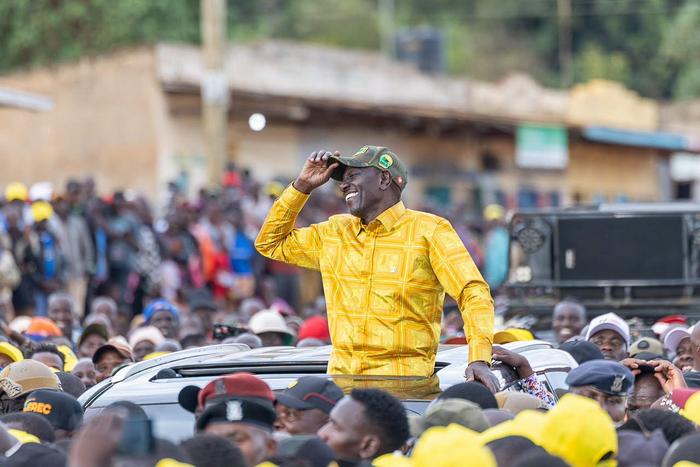
President William Ruto has taken his development message to Ukambani, a region long associated with opposition leader Kalonzo Musyoka. Roads, water and other public projects are at the centre of his four-day tour.
On Saturday, October 24, the President addressed residents at Mbiuni market in Machakos County. He said government services should reach Kenyans regardless of their political loyalties. No region, he argued, should be excluded from development because of its voting choices.
The visit comes as political leaders begin positioning themselves ahead of the 2027 General Election. Ruto has repeatedly expressed a desire to work with Kalonzo, though the Wiper leader remains in the opposition.
A Road Promise for Kalonzo
One of Ruto’s key announcements concerned the road leading to Kalonzo’s rural home in Tseikuru, Kitui County. The President said its tarmacking would be launched on Monday.
The pledge followed remarks attributed to Kalonzo, who had acknowledged Ruto’s role in road construction. The President responded with a light-hearted reference to the two men’s respective roles.
“Mimi nikipima kuna watu wawili wanatumiwa na Mungu: Ruto na Kalonzo,” he said, suggesting that God was using both men one to build roads and the other to publicise the work.
Ruto also questioned why a former Vice-President should still rely on a dusty road to reach his rural home. The planned works were presented as part of the government’s wider development agenda.
The announcement may also carry political significance. By highlighting a project linked to Kalonzo’s home area, Ruto is making a direct appeal to voters in the Wiper leader’s traditional stronghold.
Water and Other Development Projects
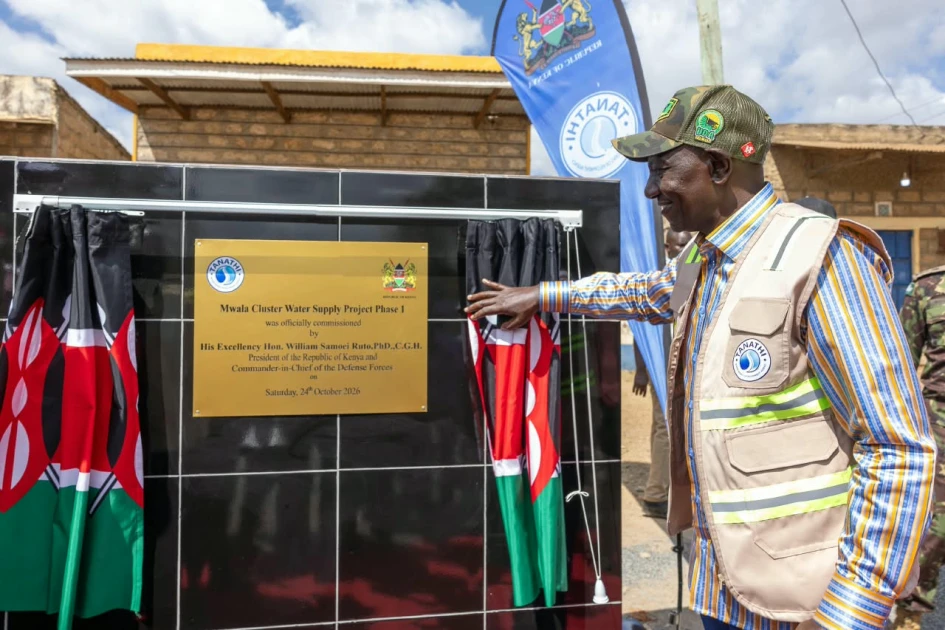
The tour began with the commissioning of Phase Two of the Mwala Cluster Last Mile Water Supply Project in Machakos County. The project is intended to improve water access for residents across several communities.
Further engagements are planned across Machakos, Makueni and Kitui counties. The programme includes road construction, electricity connections, affordable housing and the issuance of title deeds. Education and health facilities are also part of the wider development agenda.
In Makueni County, 6,000 title deeds were issued to residents of Kaiti, according to the report. The President also defended the Social Health Authority (SHA), saying the programme was helping households manage medical costs.
However, the long-term impact of the announced projects will depend on their completion, funding and delivery to residents. Their benefits cannot be fully assessed from launch ceremonies alone.
Ruto Criticises Opposition Politics
Alongside his development pledges, Ruto criticised Kalonzo and other opposition leaders. He accused them of promoting ethnic-based politics and obstructing development in the region.
The President maintained that Ukambani should not be treated differently because of its political affiliations. His message was that infrastructure and public services should be delivered across the country.
Yet the tour has drawn criticism from some opposition figures. Former Machakos Town MP Victor Munyaka dismissed the outreach as politically motivated, arguing that Ukambani had not received its fair share of development compared with other regions. He also questioned the progress of key projects.
Those criticisms contrast with the government’s emphasis on new projects and planned investments. The central question is whether the promises will translate into completed infrastructure and lasting improvements for residents.
A Political Courtship Ahead of 2027
Ruto’s latest visit follows an earlier appeal to Kalonzo during a church service in Kitui in July. On that occasion, the President said he wanted to work with the Wiper leader but would not force him into an alliance. He also pledged that Ukambani would not be left behind in development.
Kalonzo’s acknowledgement of road construction has offered Ruto an opportunity to present development as common ground, even as the two remain on opposing sides of national politics.
The four-day tour is therefore serving two purposes: showcasing the government’s development programme and strengthening its engagement in a region where Kalonzo retains significant political influence.
Whether the visit will change political loyalties remains uncertain. For residents, the more immediate test will be whether the promised roads, water systems and other projects are completed and deliver the improvements they have been promised.


