The contest to choose the next United Nations secretary-general has entered a critical stage, with growing divisions among powerful nations threatening to derail the process ahead of the December deadline.
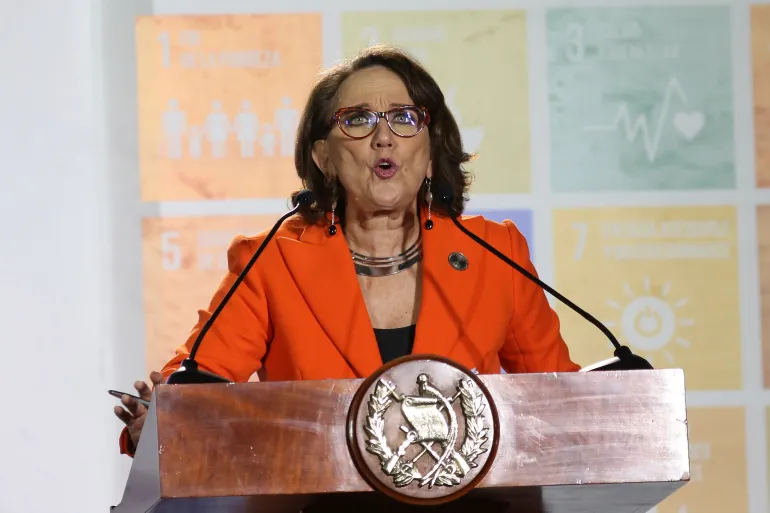
Costa Rican diplomat Rebeca Grynspan has emerged as the leading contender, but opposition from the United States and Russia could complicate her chances of replacing outgoing Secretary-General António Guterres.
Guterres is expected to leave office on December 31, 2026. However, with eight candidates still in the race and no agreement among the five permanent members of the UN Security Council, uncertainty continues to surround the selection.
The five permanent members: the United States, United Kingdom, France, Russia and China; hold veto powers that can effectively block any candidate.
According to straw polls conducted by the Security Council, Grynspan received 12 votes of encouragement and three discouraging votes in the latest round held on November 5.
Her position has strengthened in recent weeks, although concerns remain over whether she can secure support from Washington and Moscow.
Richard Gowan, programme director at the International Crisis Group, described Grynspan as the frontrunner but noted that opposition from the two powers could threaten her campaign.
Some of her previous positions have attracted scrutiny, particularly her criticism of Israel's actions in Gaza and the occupied West Bank. She has also challenged Russia's justification for suspending an agreement that allowed grain shipments through the Black Sea.
Despite these differences, Grynspan has continued engaging influential governments. She met Russian Foreign Minister Sergei Lavrov in April as part of efforts to build support for her candidacy.
Eight candidates compete for the top UN job
The race has attracted eight candidates, five of whom are women, amid growing calls for the organisation to appoint its first female secretary-general.
Argentina's Rafael Grossi, who heads the International Atomic Energy Agency, is another strong contender. He received nine encouraging votes and four discouraging votes in the latest straw poll.
However, his close relationship with Washington could work against him in Moscow and Beijing.
Other candidates include Guyana's Carolyn Rodrigues Birkett, Maria Fernanda Espinosa of Ecuador's neighbour Antigua and Barbuda, and Ecuadorian diplomat Ivonne A-Baki.
The United Arab Emirates has nominated Lana Nusseibeh, while Türkiye has put forward Feridun Sinirlioglu.
Nusseibeh has reportedly attracted support from Washington and Moscow, but her campaign faces questions over allegations that the UAE has supplied weapons to paramilitary forces accused of atrocities in Sudan. The UAE has denied the allegations.
Ugandan politician Olara Otunnu is the only remaining African candidate. He received nine discouraging votes in the latest poll.
Powerful nations could determine the outcome
The selection process has become increasingly complicated as major powers seek a candidate whose positions align with their diplomatic interests.
Analysts say the divisions reflect wider tensions within the international community and growing disagreements over the future direction of the United Nations.
Georgina Holmes, a senior lecturer in politics and international studies at the Open University, said the contest reflected a struggle for political influence within an organisation facing mounting pressure.
The next secretary-general will inherit an institution grappling with financial difficulties, criticism from the Trump administration and limited influence in major international conflicts, including those involving Iran and Ukraine.
The successful candidate must secure at least nine votes in the 15-member Security Council without facing a veto from any of its five permanent members. The UN General Assembly must then approve the appointment.
Ben Donaldson, an adviser to the 1 for 8 Billion campaign, said opposition recorded in preliminary polls did not necessarily mean a country would eventually veto a candidate.
He noted that such opposition had previously been used to negotiate concessions, including appointments to senior positions within the United Nations.
Fears of leadership vacuum
The growing uncertainty has raised concerns about whether the organisation will have a successor ready when Guterres leaves office.
The UN Charter does not provide for an automatic interim secretary-general if the position becomes vacant. Any temporary arrangement would require agreement among relevant UN bodies.
Analysts have warned that a prolonged selection process could leave the incoming leader with little time to prepare for the transition.
Adam Day, head of the Geneva office of the United Nations University Centre for Policy Research, said the current contest remained within the historical range of previous selection processes.
However, he warned that delays would reduce the time available for the next secretary-general to prepare for the demanding role.
With the December 31 deadline approaching, the outcome will depend heavily on whether the world's most powerful governments can overcome their differences and agree on a candidate.