With 309 million Africans facing hunger and millions of Kenyans struggling to access adequate food, the first Global Parliamentary Summit Against Hunger and Malnutrition held on African soil is putting governments under pressure to move beyond promises and deliver laws, funding and measurable results.
President William Ruto has challenged African governments and parliaments to take greater responsibility for ending hunger, warning that political declarations will achieve little unless they are backed by legislation, adequate funding and effective implementation.
Speaking at the opening of the Third Global Parliamentary Summit Against Hunger and Malnutrition in Nairobi, Ruto urged lawmakers to use their constitutional powers to mobilise resources, strengthen agricultural production and hold governments accountable for food security commitments.
The President told delegates that Africa must take ownership of its food systems rather than depend primarily on external financial commitments to address a crisis affecting hundreds of millions of people.
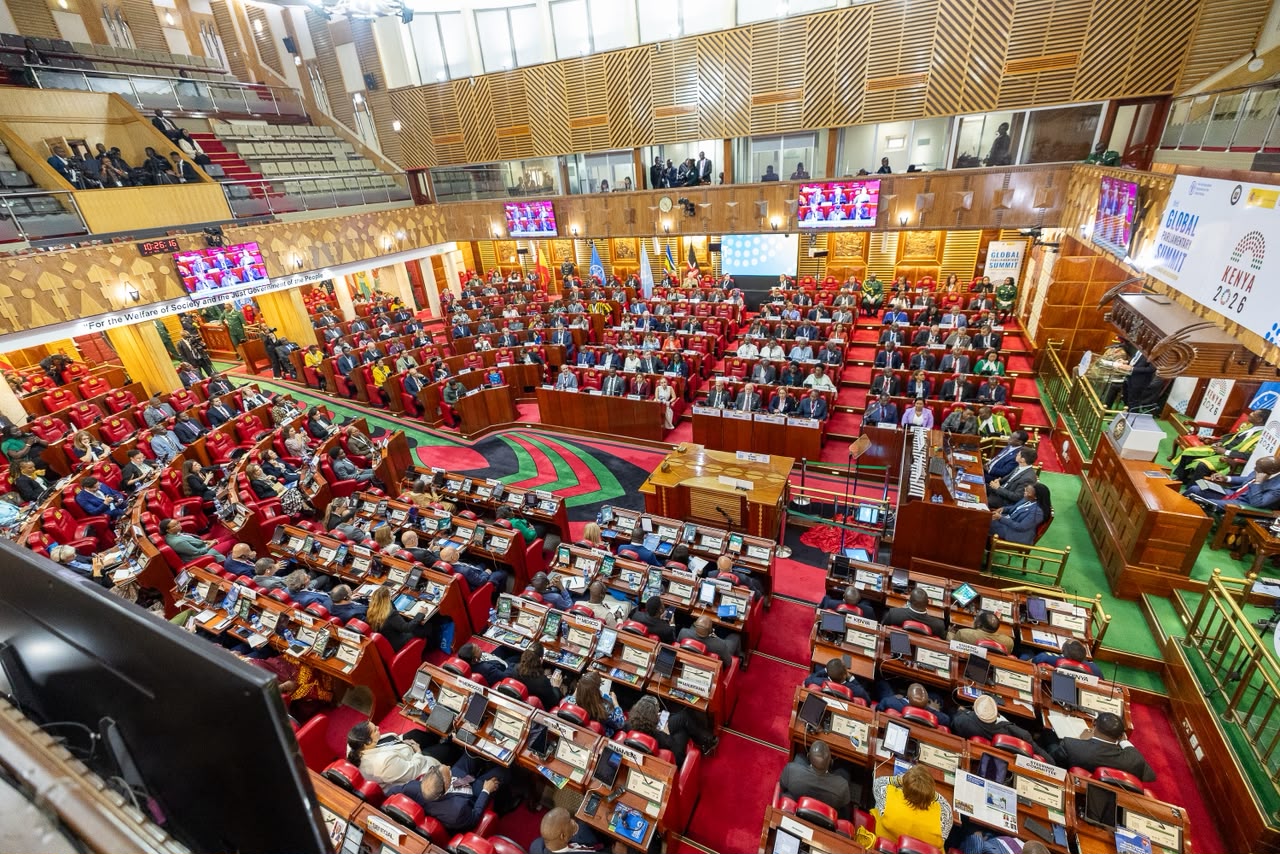
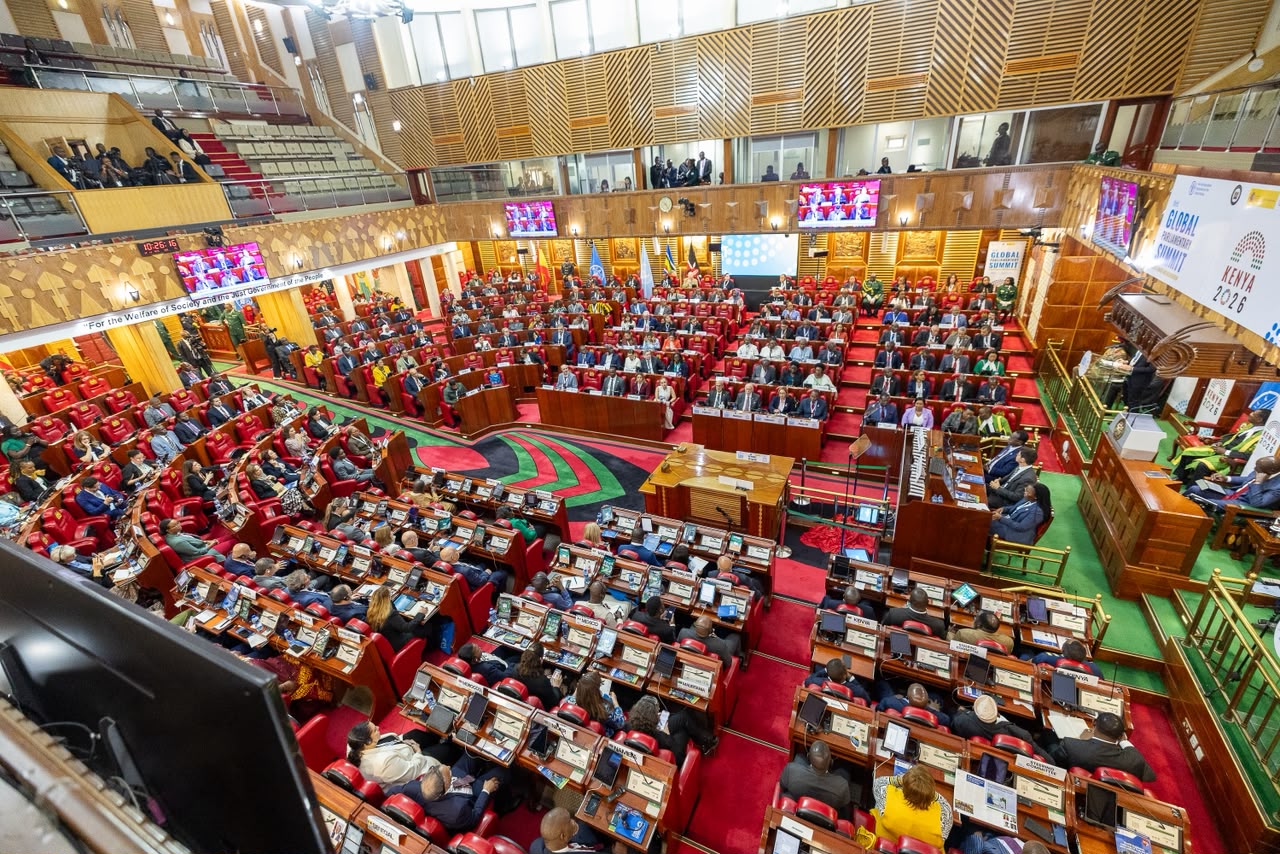
His remarks placed parliamentary accountability at the centre of the two-day meeting, which has attracted more than 250 legislators representing over 100 national parliaments, alongside international organisations, development partners and agricultural policy experts.
The summit, taking place at Kenya's Parliament Buildings on November 16 and 17, is the first of its kind to be hosted in Africa, following previous editions in Madrid, Spain, in 2018 and Valparaíso, Chile, in 2023.
Jointly organised by the Parliament of Kenya, the United Nations Food and Agriculture Organization (FAO) and the Spanish Agency for International Development Cooperation (AECID), the gathering is being held under the theme Legislating for Resilient Agrifood Systems and Zero Hunger in a Changing Climate.
A continent struggling to feed itself
The Nairobi meeting comes at a critical moment for global food security, with Africa continuing to bear a disproportionate share of the world's hunger burden.
According to FAO's 2026 State of Food Security and Nutrition in the World report, an estimated 645 million people experienced hunger globally in 2025, including 309 million in Africa.
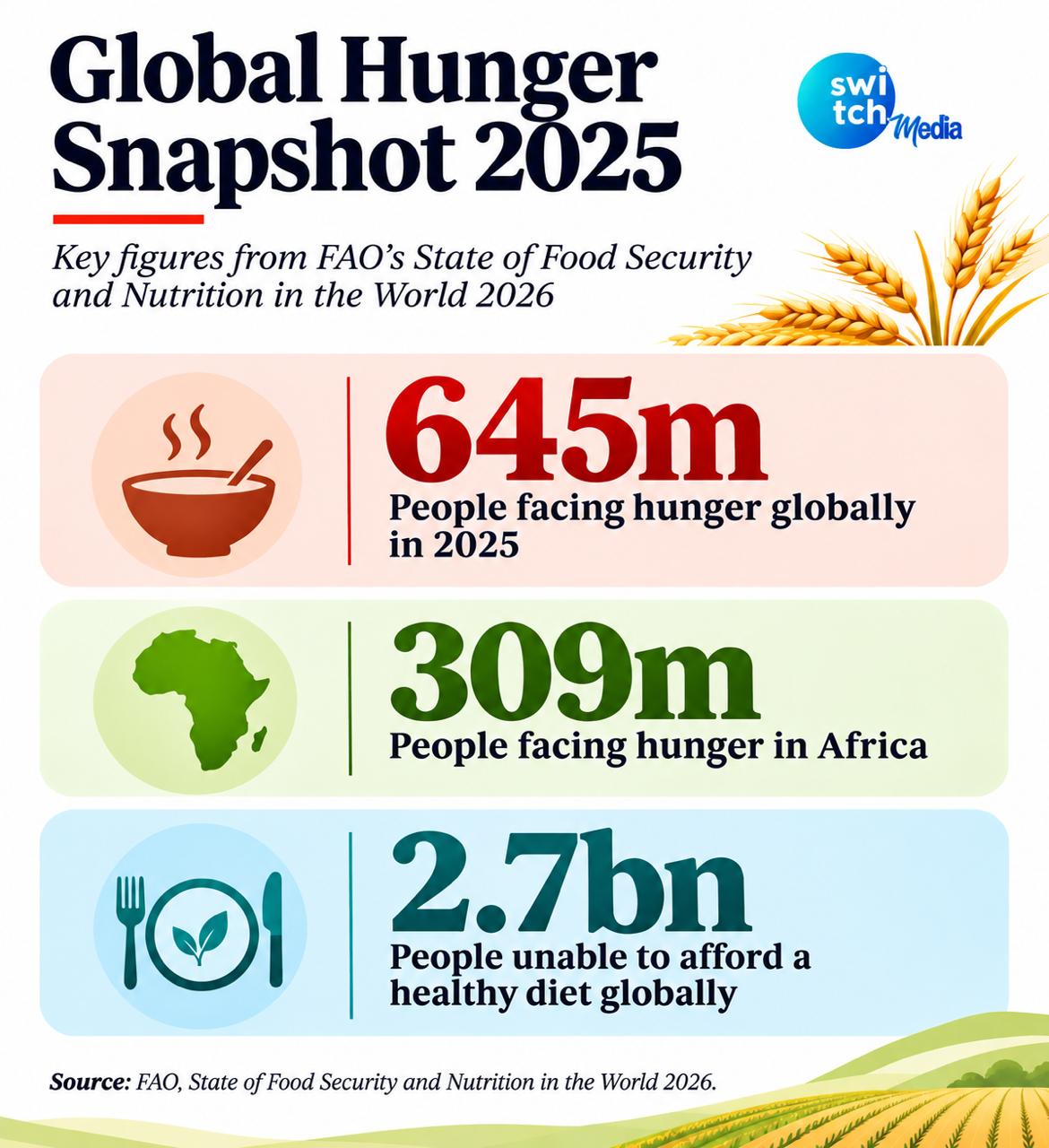
Although Africa recorded a marginal improvement in hunger prevalence, declining from 20.3 per cent in 2024 to 20 per cent in 2025, the continent remains far from achieving the United Nations Sustainable Development Goal of ending hunger by 2030.
FAO has warned that, without substantially faster progress, Africa could account for more than half of the world's hungry population by the end of the decade.
The challenge extends beyond food shortages. Rising food prices, poverty, conflict, inadequate infrastructure, climate shocks and unequal access to agricultural resources continue to undermine households' ability to obtain nutritious diets.
For policymakers, the figures expose a fundamental weakness in food security interventions: increasing agricultural production does not necessarily guarantee that vulnerable households can afford sufficient and nutritious food.
Kenya's own food security crisis
For President Ruto, the Nairobi summit also presents an opportunity to defend his administration's agricultural policies against the reality of persistent hunger in parts of Kenya.
Despite the country's relatively developed agricultural sector, food insecurity remains severe in arid and semi-arid counties, where erratic rainfall, depleted household food stocks and weak livelihoods have increased humanitarian needs.
An Integrated Food Security Phase Classification (IPC) assessment released on September 14, 2026, estimated that 2.7 million people in Kenya's arid and semi-arid lands faced crisis-level or worse acute food insecurity between July and October.
Of these, approximately 348,000 were classified in the Emergency category, requiring urgent interventions to protect lives and livelihoods.
The assessment represented a 55 per cent increase from the previous analysis, highlighting the vulnerability of communities dependent on rain-fed agriculture and pastoralism.
The IPC projected a modest improvement to approximately 2.1 million people experiencing crisis-level or worse food insecurity between November 2026 and January 2027, although conditions remain vulnerable to further climatic and economic shocks.
Malnutrition presents another serious challenge.
A separate IPC analysis estimated that more than 883,300 children under five and 117,000 pregnant and breastfeeding women would require treatment for acute malnutrition between April 2026 and March 2027.
These figures underline the importance of connecting agricultural production with health services, nutrition programmes, social protection and household purchasing power.
Ruto defends agricultural reforms
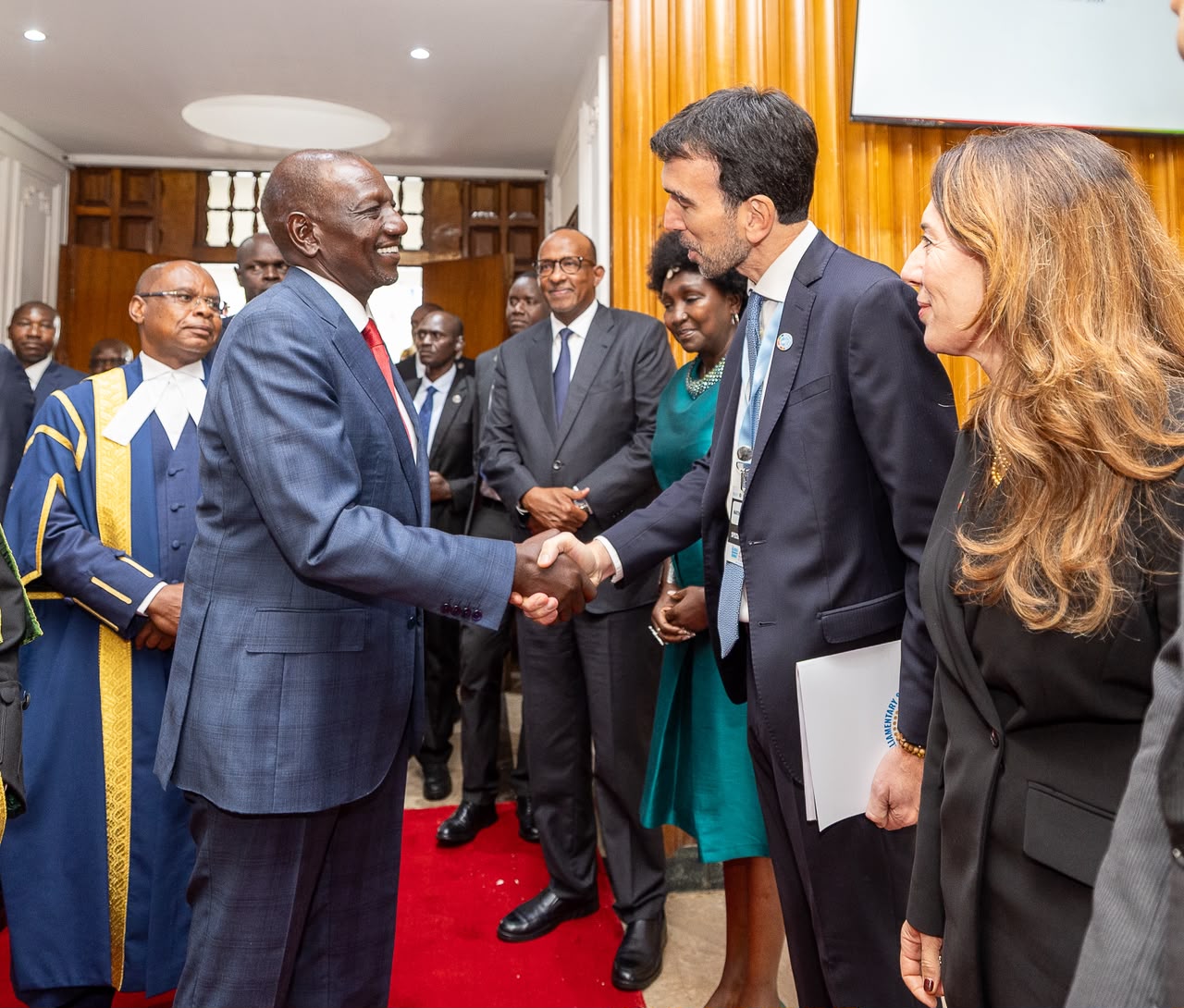
At the summit, President Ruto presented Kenya's investments in agricultural production, digital services and reforms in the dairy and sugar sectors as examples of interventions intended to strengthen food security.
His administration has pursued a strategy of subsidising agricultural production, particularly through affordable fertiliser, certified seeds and improved access to farm inputs.
In his 2025 State of the Nation Address, Ruto said the government had distributed more than 21 million bags of subsidised fertiliser, saving farmers an estimated Sh105 billion.
The administration has argued that lowering production costs and increasing yields will reduce reliance on food imports, stabilise domestic supplies and improve farmers' incomes.
At the Nairobi meeting, Ruto also cited reforms in the dairy industry and increased milk production, alongside improvements in sugar production and planned bonuses for sugarcane farmers.
However, these interventions raise broader questions about how production gains translate into household food security.
Farmers need predictable markets, fair prices, reliable infrastructure and affordable financing. Consumers, meanwhile, need food prices that remain within reach of their incomes.
A successful agricultural policy must therefore balance producer profitability with affordability, nutritional quality and resilience to changing climatic conditions.
Why parliaments hold the key
A central argument emerging from the summit is that ending hunger cannot remain solely the responsibility of agriculture ministries, international organisations or humanitarian agencies.
Legislatures determine how public money is allocated, scrutinise expenditure and establish the legal frameworks governing agriculture, nutrition and social protection.
Speaking ahead of the summit, FAO Parliamentary Networks Coordinator Jean-Léonard Touadi challenged lawmakers to ensure that the Nairobi meeting produces stronger implementation and accountability.
He argued that previous summits had already established substantial political consensus on the urgency of hunger, making practical action the next priority.
FAO Deputy Director-General Maurizio Martina similarly stressed that the effectiveness of parliamentary cooperation would ultimately be measured by laws strengthened, public resources mobilised and programmes expanded to support vulnerable families.
In Kenya, Article 43(1)(c) of the Constitution recognises every person's right to be free from hunger and to have adequate food of acceptable quality.
Yet realising that right requires much more than constitutional recognition. It demands sustained investment, functioning institutions and mechanisms to ensure public spending delivers measurable improvements.
This is particularly significant for county governments, which are responsible for important agricultural services and interventions affecting rural livelihoods.
Stronger coordination between national and county institutions could improve irrigation, agricultural extension, livestock health, local food markets and nutrition programmes.
Climate change reshaping the hunger debate
Climate change is another major focus of the Nairobi discussions.
Across Africa, prolonged droughts, unpredictable rainfall, floods and environmental degradation are increasingly disrupting food production.
For smallholder farmers and pastoralists, these disruptions can destroy harvests, reduce pasture, increase production costs and force households to sell productive assets.
The summit is examining how legislation can support climate-resilient agriculture, sustainable land management, agroecology and investment in water infrastructure.
East African Legislative Assembly member Iman Falhada Dekow is expected to present the Agroecology Bill, 2026, while delegates from other regions will share experiences on reducing food losses, improving food donations and developing more sustainable agricultural systems.
The conversations also extend to storage infrastructure, cold chains, agricultural technology and regional trade.
Such interventions are important because significant food losses can occur between harvesting and consumption, even where production is sufficient.
From Madrid and Chile to Nairobi: The accountability test
The Nairobi summit builds on almost a decade of international parliamentary cooperation against hunger.
The inaugural meeting in Madrid in 2018 helped mobilise parliamentary networks, while the second summit in Chile in June 2023 resulted in the Global Parliamentary Pact Against Hunger and Malnutrition.
The pact established commitments to strengthen food security legislation, mobilise resources, improve oversight and recognise access to adequate food as a fundamental right.
However, the challenge has increasingly shifted from adopting declarations to implementing them.
Nairobi is therefore expected to examine whether previous parliamentary commitments have produced tangible improvements and how international cooperation can be strengthened.
The African Union's Kampala Declaration, which provides a framework for agricultural transformation from 2026 to 2035, is also informing discussions on investment, food systems, nutrition and resilience.
Ruto has urged lawmakers to ensure these continental commitments receive sustained budgetary and legislative support.
Beyond food production: Nutrition and social justice
Another important dimension of the summit is the distinction between food availability and adequate nutrition.
A household may have access to staple foods but still experience malnutrition because diets lack sufficient protein, vitamins and essential minerals.
Addressing the problem requires integrated approaches involving agriculture, healthcare, education, sanitation and household incomes.
Kenya's school feeding programmes are among the interventions being examined, with Dagoretti North MP Beatrice Elachi scheduled to share the country's experience.
Delegates are also discussing how women, children, young people and vulnerable rural communities can be better protected against food insecurity.
The debates are particularly relevant for Africa, where women contribute substantially to agricultural production but often face barriers to land ownership, financing, technology and market access.
What Nairobi must deliver
The summit is expected to conclude on Tuesday, November 17, with parliamentary deliberations on its outcomes and possible commitments to strengthen global cooperation.
However, the most significant measure of success will emerge after delegates return to their respective countries.
For Kenya, progress will depend on whether government investments improve farm productivity, reduce food losses, strengthen drought resilience and make nutritious food more affordable.
For African parliaments, the immediate challenge is to translate existing food security commitments into funded programmes, enforceable legislation and transparent oversight mechanisms.
International cooperation will remain important, but stronger domestic institutions and sustained public investment will be essential to achieving lasting results.
The Nairobi summit has placed Africa at the centre of the global hunger debate. Whether it becomes a turning point will depend less on the number of delegates attending and more on the decisions made after the meeting.
For millions of families facing hunger, the ultimate test is not what leaders promise in Parliament, but whether those commitments lead to affordable food, better nutrition and more secure livelihoods.