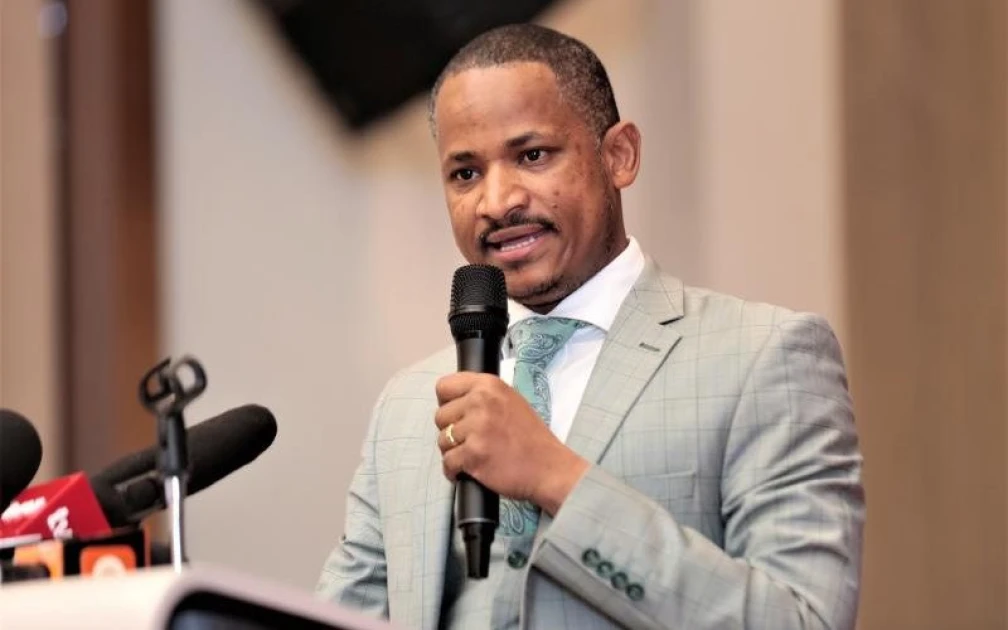
Embakasi East MP Babu Owino has offered a new account of the political differences that led him to leave Edwin Sifuna’s Linda Mwananchi camp.
He says the two leaders had initially agreed on a power-sharing arrangement. Under the proposed deal, Sifuna would seek the presidency while Owino would become party leader.
But the MP claims the understanding changed after their group began moving away from the Orange Democratic Movement (ODM). He says some members wanted Sifuna to hold both positions.
Owino discussed the alleged agreement in a recorded interview with K24 on Friday, November 13. His remarks offer a glimpse into the negotiations behind the emerging opposition movement ahead of the 2027 General Election.
The Original Power-Sharing Plan
According to Owino, the arrangement was intended to give both politicians room to pursue their ambitions without one overshadowing the other. He said other members who had planned to leave ODM were also aware of the proposal.
“Initially, we had agreed with Sifuna and other members that the moment we get the party out, Sifuna was to be the presidential candidate and I was to be the party leader, but things changed,” he said.
Owino added that he did not know how the agreement had been altered. Some members, he claimed, argued that a presidential candidate should also lead the party. He disagreed, maintaining that both politicians needed opportunities to grow.
“Some were saying that a presidential candidate cannot fail to be a party leader. But we said that we needed to both of us grow. Both of us had to grow,” he added.
The alleged disagreement appears to have centred on how leadership responsibilities and political influence would be shared. However, Owino's account has not independently established who changed the arrangement or why.
Why Owino Chose a Separate Party
The MP said his decision to pursue a separate political path was driven by the need to protect his political interests.
He cited the impeachment of former Deputy President Rigathi Gachagua as an example of why politicians should maintain independent party structures. Owino argued that Gachagua might have been better protected politically if he had controlled his own party.
“You remember Gachagua? He said clearly that if he had had his political party, he would have never been impeached,” he remarked.
He also questioned the idea that one politician should advance at the expense of another.
“And politics is about interest. There is no way one was to grow and leave the other one down,” he said.
Owino's remarks suggest that control of a political party is important to him not only as an organisational matter, but also as a source of political security.
Sifuna Secures the Linda Mwananchi Party
The political paths of the two leaders have since diverged. Sifuna initially faced difficulties in registering Linda Mwananchi as a political party. He subsequently joined The Equitable Party (TEP), which provided a legal vehicle for the movement's political activities.
On November 13, TEP delegates approved a change of name to the Linda Mwananchi Movement. They also endorsed changes to the party's constitution, colours, symbol and headquarters.
The delegates further authorised coalition-building talks with like-minded political parties ahead of the 2027 elections.
Meanwhile, Owino left the movement and joined Muungano Party, which was later rebranded as the Mwananchi Party.
The separate political vehicles have fuelled speculation about a fallout. However, Owino has rejected suggestions that he and Sifuna are competing for the same position.
‘Sifuna Is Going for President, Babu Is Going for Governor’
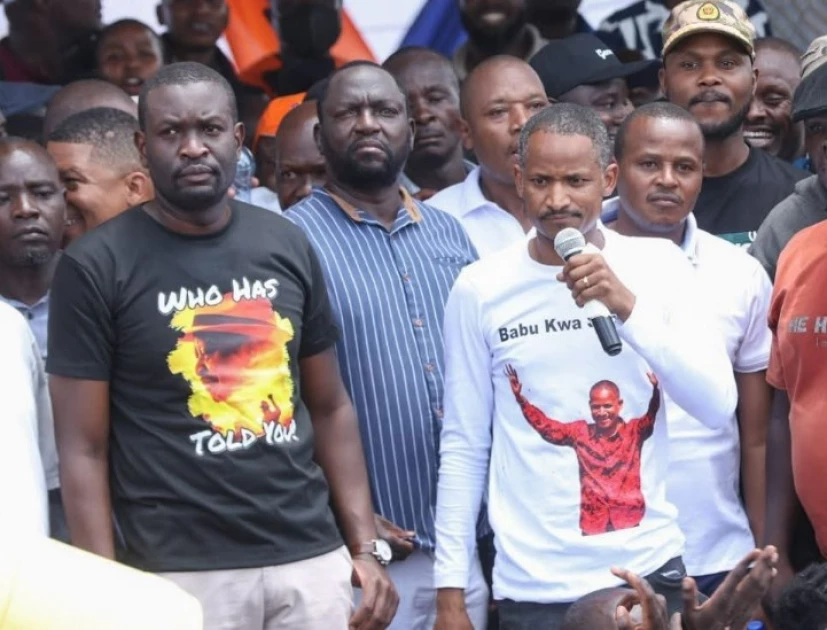
Despite their different political paths, Owino said he supports Sifuna's presidential ambitions. He maintained that their interests are not in direct competition because they are pursuing different elective positions.
“There can't be competition between Babu and Sifuna. Sifuna is going for president, Babu is going for governor,” he said.
The MP is seeking the Nairobi governorship, while Sifuna has been associated with a presidential bid under the Linda Mwananchi banner. Owino also defended the proposed arrangement under which he would have served as party leader while Sifuna pursued the presidency.
He argued that such a structure would have allowed the party to hold its president accountable while protecting the interests of other political leaders. His comments suggest that the original proposal was intended to establish a balance between the party leadership and the holder of the presidency.
‘Politics Is About Interest, Not Trust’
Owino also addressed questions about whether personal trust had broken down between him and Sifuna. He rejected the idea that political partnerships should depend on personal friendships. Instead, he argued that alliances should be built around clear interests and commitments to voters.
“Politics is not about trust. Politics is about interest. Put the interest on the table. How will wananchi benefit? That is the first interest that is served on the table,” he said.
He went further, saying he did not necessarily trust his political friends.
“I don’t trust my friends. I get friends. I have a wife who will give me friends. I don’t trust friends in politics,” he stated.
The comments underline his view that political agreements should be based on defined responsibilities rather than personal relationships.
A Test for Opposition Unity
The revelations come as opposition leaders continue positioning themselves ahead of the 2027 General Election.
Sifuna's party has now formalised its identity as the Linda Mwananchi Movement and opened the door to coalition talks. Owino, meanwhile, is pursuing his own political platform and Nairobi gubernatorial ambitions.
His account of the original agreement raises questions about how leadership negotiations were conducted and whether the differences could have been resolved.
For now, Owino insists that there is no rivalry between him and Sifuna. Whether their separate political paths can still lead to cooperation will become clearer as the opposition's coalition discussions progress.
The immediate challenge for both leaders will be to explain how their political ambitions fit into a wider opposition strategy.