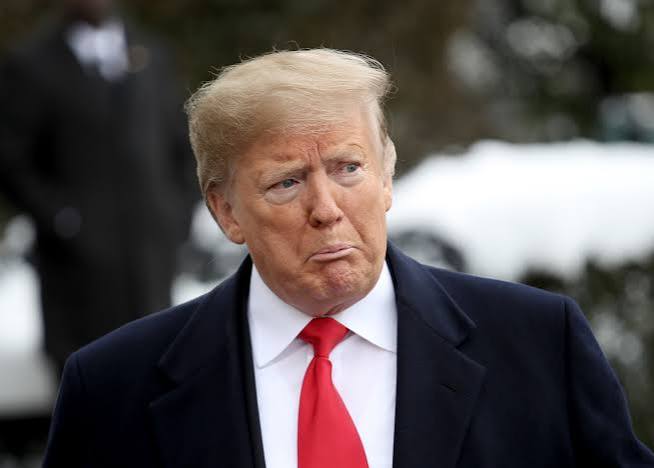
A federal judge has temporarily blocked President Donald Trump’s ambitious plan to build a 250-foot triumphal arch in Washington, DC, dealing a fresh setback to a project that has attracted fierce opposition over its legality, cost and location.
US District Judge Tanya Chutkan issued a 14-day order barring construction on the proposed monument, just hours after a federal planning commission approved the project in an 8-4 vote on Thursday, November 5.
The ruling prevents the Trump administration from beginning construction while the court considers legal challenges brought against the project.
The decision came at a critical moment for the administration, which had been preparing to move ahead with the work immediately after securing the commission’s approval.
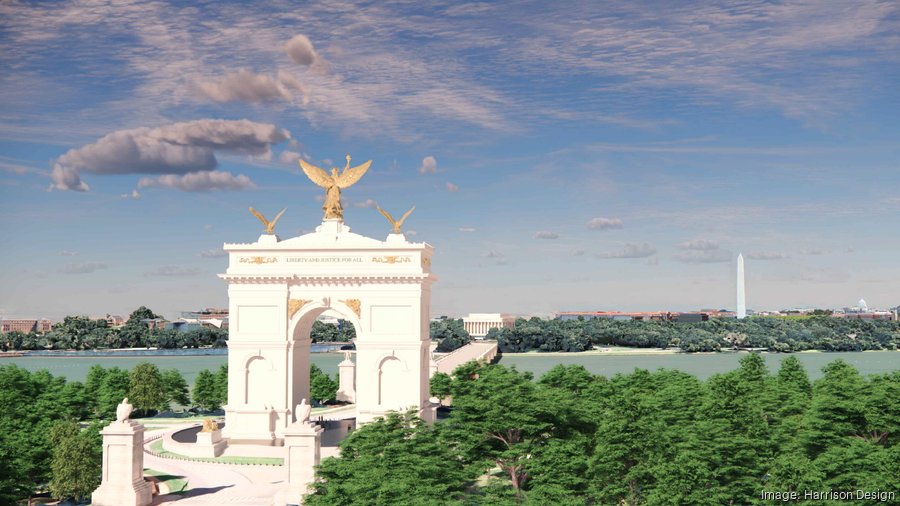
The proposed structure would stand at Memorial Circle, near Arlington National Cemetery, across the Potomac River from the Lincoln Memorial.
At 250 feet (76 metres), the arch would be significantly taller than the Arc de Triomphe in Paris and would dominate a prominent section of Washington’s historic landscape.
Arlington cemetery location sparks opposition
The monument’s proposed location has emerged as one of the biggest sources of controversy.
Arlington National Cemetery is the final resting place of hundreds of thousands of American military personnel, making the surrounding area particularly sensitive to changes in its historic landscape.
Veterans, preservationists, lawmakers and local residents have questioned whether the structure would undermine the dignity of the cemetery and alter the visual relationship between some of Washington’s most recognised memorials.
More than 100 people reportedly presented their objections during the National Capital Planning Commission’s public hearing on Thursday.
Congressman Jared Huffman, the top Democrat on the House Natural Resources Committee, was among those who criticised the proposal.
"This arch would dishonour America, our ideals and our laws," Huffman said.
He also warned officials and companies involved in the project to consider the legal consequences of proceeding before the outstanding questions had been resolved.
Legal battle over Trump's authority
The latest court intervention follows several legal challenges seeking to stop the administration from building the monument.
Three Vietnam War veterans and an architectural historian previously challenged the project, arguing that it could interfere with the historic setting and views associated with Arlington National Cemetery.
Washington, DC, and Virginia also filed a separate lawsuit seeking to prevent construction.
Their legal arguments include concerns that the administration has not obtained the necessary congressional authorisation or completed all required environmental and historic preservation reviews.
Judge Chutkan consolidated the legal challenges as the dispute gathered momentum.
The administration, however, has maintained that the project can proceed, arguing that the proposed site has a history of congressional approval for a commemorative structure.
That argument has been disputed by critics, who say the earlier proposal envisioned two columns representing the North and South following the American Civil War, rather than the monumental arch now being proposed.
Trump's wider plans for Washington
The arch is part of a wider effort by Trump to reshape Washington's appearance through major construction and renovation projects.
Other initiatives have included plans for a White House ballroom, changes to the Reflecting Pool and a proposed overhaul of the historic East Potomac Golf Links.
Some of those projects have also faced legal challenges.
Trump has presented the arch as a major national monument, while critics have questioned the administration's authority to push ahead without resolving the legal and preservation concerns.
The National Capital Planning Commission's approval had appeared to clear an important hurdle for the project.
However, Chutkan's order means the administration must wait while the court examines the outstanding legal questions.