
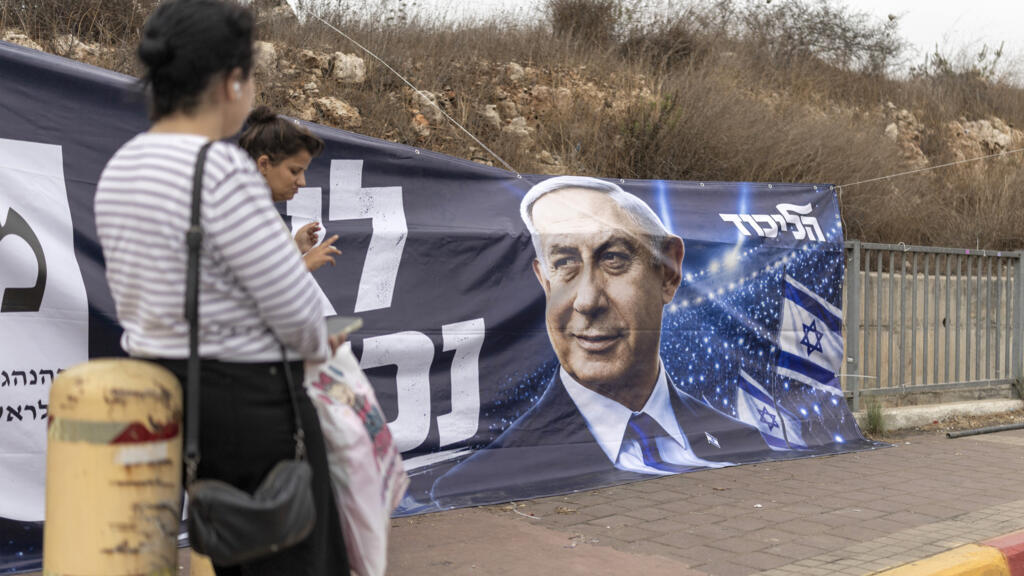
Israelis are voting in a pivotal election that could reshape the country’s political future. Prime Minister Benjamin Netanyahu faces a serious challenge after years of war, rising international criticism and demands for accountability over the Hamas-led attacks of October 7, 2023.
The contest is being fought against a backdrop of deep divisions. Security, the war in Gaza and the country’s political direction have dominated the campaign. The outcome may also determine whether Israel’s right-wing governing bloc retains power.
A Vote Shaped by War
For many voters, the election is about more than choosing a government. The October 7 attacks exposed major security failures and left a lasting mark on Israeli society.
The wars that followed have brought further loss and disruption. Israeli military operations in Gaza and across the region have also intensified international scrutiny of the government.
Netanyahu, 77, has made national security central to his campaign. His relationship with US President Donald Trump has featured prominently, alongside claims that his experience makes him best placed to protect the country.
Yet his record has faced sustained criticism. Opponents have questioned his handling of the October 7 failures and his support for far-right partners in government.
Eisenkot Offers a Challenge
Former military chief Gadi Eisenkot has emerged as Netanyahu’s main centrist challenger. His campaign has drawn support from parties spanning the political centre and parts of the right.
Eisenkot has pledged to establish an independent state commission of inquiry into the security failures surrounding the 2023 attacks. Such an investigation has been resisted by Netanyahu’s government.
But the opposition candidate is not offering a complete break with the government’s security agenda. He has opposed the creation of a Palestinian state and expressed support for Israeli settlements, while promising action against violent settlers.
The contest therefore centres on leadership and accountability as well as the country’s future direction.
Divisions Over Military Service
The role of ultra-Orthodox parties has also become a campaign issue. Netanyahu’s coalition has included religious and far-right factions whose influence has grown in recent years.
Opponents have criticised efforts to preserve exemptions from military service for ultra-Orthodox Jewish students. The dispute has become more pressing as the armed forces face personnel demands after years of conflict.
For critics, the issue raises questions about whether the burden of military service is being shared fairly. For Netanyahu’s allies, religious and political commitments remain central to their position.
Voters Weigh Experience and Change
Some voters continue to support Netanyahu because of his experience and security record. Others want a change in leadership and a clearer account of how the October 7 attacks were allowed to happen.
“I think this is one of the most important election days in the history of the state of Israel,” Jerusalem resident Uriel Brandler, 58, told AFP before voting.
“The country definitely needs a change for the better in every aspect,” he added.
Another voter, 85-year-old retiree Zipporah Bennett, said she supported Netanyahu because of his experience in difficult periods. She also pointed to his relationship with Washington and his willingness to act.
The contrasting views reflect a country divided over how its recent history should shape its next government.
Coalition Talks Could Decide the Outcome
Israel’s proportional electoral system makes a clear victory for one party unlikely. A government must command the support of at least 61 members in the 120-seat Knesset, the country’s parliament.
Neither major political bloc is expected to secure that number on its own. Smaller parties could therefore hold the balance during negotiations.
Arab-led parties, which represent a significant share of Israel’s population, could become important to government formation. However, Netanyahu and Eisenkot have both ruled out formal partnerships with the predominantly Arab lists.
Official results may take several days to emerge. Even after the vote, weeks or months of negotiations could be needed before a new government is formed. If no candidate can assemble a viable coalition, another election may eventually be required.
For Netanyahu, the ballot is a test of whether his security-focused leadership can withstand demands for accountability. For Eisenkot, it is an opportunity to turn public dissatisfaction into parliamentary power.
The final verdict will depend not only on how Israelis vote, but also on which parties can agree to govern together.


