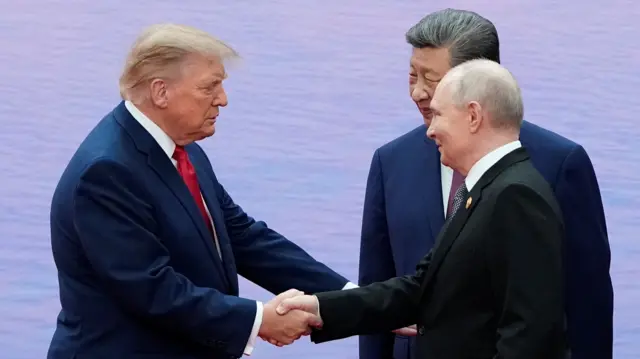
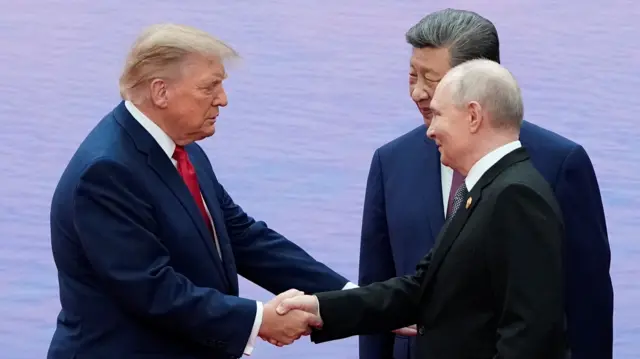
US President Donald Trump, Russian President Vladimir Putin and Chinese President Xi Jinping have shared a rare public encounter in Shenzhen, China, ahead of a historic meeting that could shape relations between the world's three major powers.
The three leaders exchanged greetings on Wednesday, November 18, during the Asia-Pacific Economic Cooperation (APEC) summit. The encounter came a day before their first formal trilateral meeting, scheduled for Thursday.
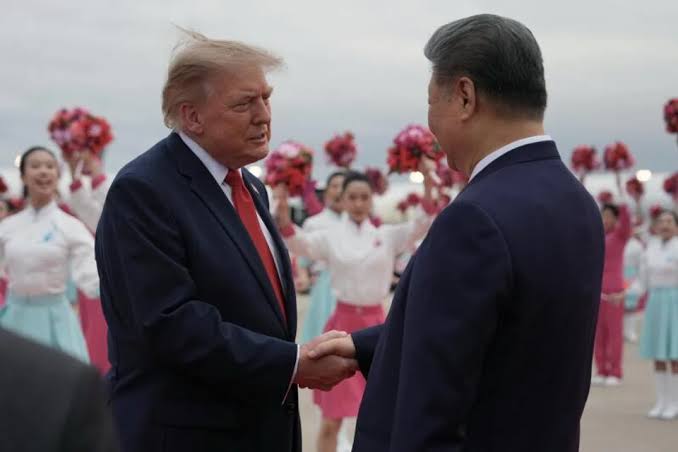
Trump's arrival attracted particular attention after Xi broke with diplomatic convention to personally welcome the American president at Shenzhen Bao'an International Airport.
The Chinese leader greeted Trump at the foot of Air Force One, where the two shook hands before sharing a brief embrace. The reception included a red carpet, military honour guard, marching band and crowds waving Chinese and American flags
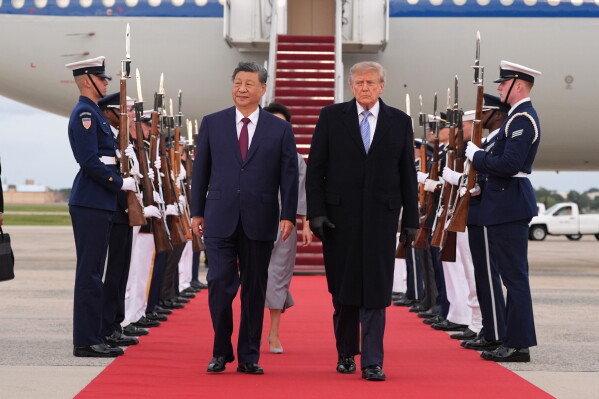
The gesture was widely viewed as a diplomatic show of respect, particularly because it mirrored Trump's decision to personally welcome Xi during the Chinese leader's visit to the United States in September.
According to China's state-run Xinhua news agency, Xi said Beijing wanted to build a constructive and stable relationship with Washington based on mutual respect, fairness and equality.
The elaborate reception set the tone for a series of high-level engagements involving the three leaders.
Trump and Putin share rare handshake
Later on Wednesday, Trump and Putin met in person for the first time in more than a year.
Footage from the APEC gathering showed the American and Russian presidents shaking hands and exchanging pleasantries, with Xi also present before the leaders posed for a group photograph.
Their encounter marks the first time the two leaders have met face-to-face since August 2025, when Putin travelled to Alaska for talks with Trump over Russia's war in Ukraine.
The Alaska meeting failed to produce a breakthrough on the Ukraine conflict, which remains one of the most difficult issues in relations between Washington and Moscow.
The latest encounter has renewed attention on whether Trump and Putin can make progress on the war, although the precise format of any separate discussions between them in China remains unclear.
Historic three-way meeting puts global powers in focus
The main diplomatic event is expected on Thursday, November 19, when Trump, Xi and Putin are due to hold their first formal meeting together.
The gathering is significant because it brings the leaders of the United States, China and Russia into the same negotiating room at a time of heightened international tensions.
The agenda has not been fully disclosed. However, nuclear weapons, the war in Iran, international trade and broader security concerns are expected to feature.
Washington has indicated that Trump wants to discuss reducing nuclear arsenals. The issue has gained urgency following the expiry of the last major nuclear arms control treaty between the United States and Russia in February 2026.
A senior US official has cautioned that the meeting is unlikely to produce an immediate agreement, describing it instead as an opportunity to begin discussions.
The Ukraine war presents another potential source of disagreement.
Trump has indicated that the conflict could come up during his engagements in China, while US officials have previously suggested it would not be a central subject of the trilateral meeting.
Russia, meanwhile, has signalled its interest in discussing the conflict and a possible settlement.
The absence of Ukrainian President Volodymyr Zelensky from the gathering has also raised concerns in Kyiv and among European officials about decisions affecting Ukraine being discussed without its direct participation.
China seeks to strengthen its position
For Xi, the summit offers an opportunity to reinforce China's position as a major diplomatic and economic power.
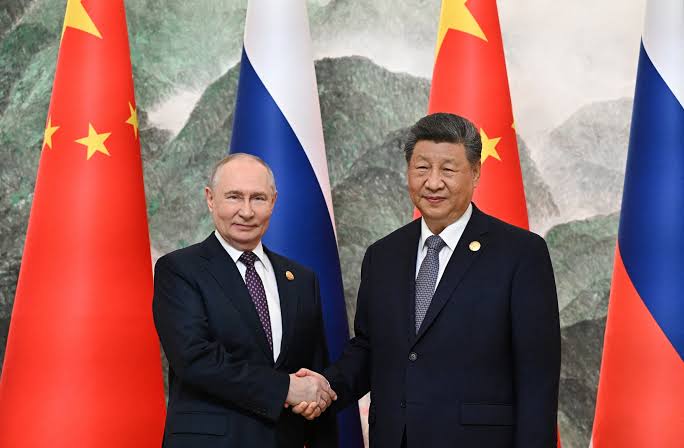
His meeting with Putin earlier on Wednesday highlighted the close relationship between Beijing and Moscow.
The two leaders discussed cooperation and reaffirmed their commitment to strengthening ties. Xi described the relationship between their countries as stable despite international pressure.
At the APEC summit, Xi also defended open trade and criticised protectionism, presenting China as a reliable economic partner.
Putin, for his part, used his remarks to criticise Western sanctions against Russia, arguing that they had failed to stop the country's economic development.
The competing messages underline the wider political and economic tensions surrounding the summit.
Shenzhen, a major technology and manufacturing centre in southern China, provides a fitting setting for discussions involving trade, artificial intelligence and global economic competition.
What is at stake?
The meeting brings together three leaders whose countries hold considerable influence over global security, trade and diplomacy.
For Trump, the discussions offer an opportunity to pursue nuclear arms reductions and address tensions involving Iran and other international challenges.
For Putin, the gathering provides an opportunity to strengthen Russia's diplomatic position and maintain direct engagement with Washington.
Xi, meanwhile, is seeking to reinforce China's influence while managing its complicated relationship with the United States.
Despite the historic nature of the gathering, expectations of an immediate breakthrough remain modest.
The leaders may leave Shenzhen with few concrete agreements. But their decision to meet together sends a significant diplomatic message at a time when international relations remain strained.
Whether the encounter leads to meaningful cooperation or simply provides an opportunity for political positioning will become clearer after Thursday's talks.