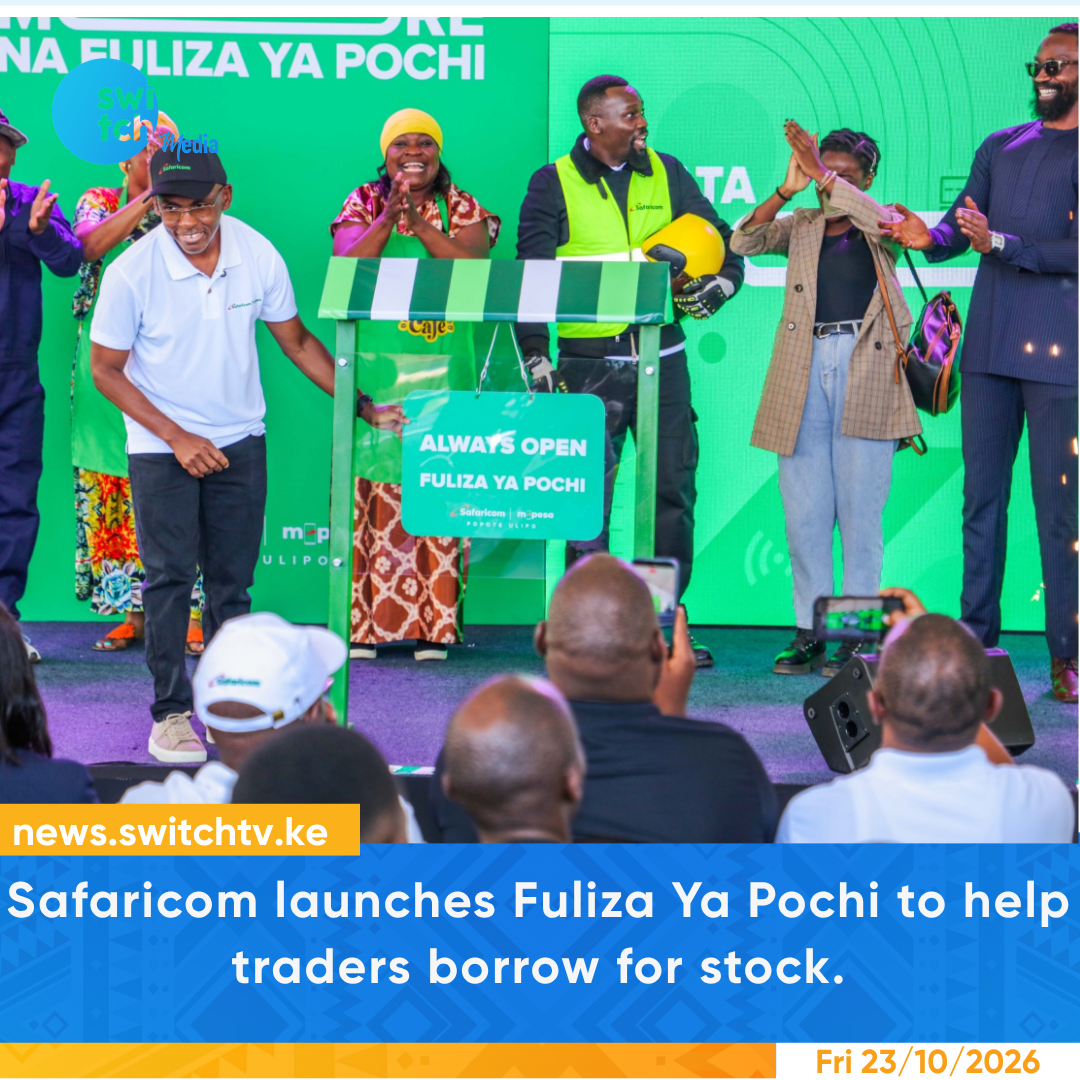
Safaricom has extended its mobile lending services to small businesses, introducing an overdraft facility that allows eligible traders to borrow money when their M-Pesa business wallets run short of cash.
Known as Fuliza Ya Pochi, the service enables merchants to complete transactions, purchase stock, pay suppliers and settle utility bills without waiting for new payments to arrive.
The facility was launched at Makongeni Market in Thika on Thursday, October 22, 2026, targeting small-scale traders who depend on daily sales to finance their operations.
For businesses operating on tight margins, a temporary cash shortage can mean delayed stock purchases or missed sales. Safaricom says the new service is intended to help merchants bridge those gaps and keep their businesses running.
“We are very excited as Safaricom to be launching Fuliza Ya Pochi, which is a credit product for all our Pochi customers,” Safaricom Group Chief Executive Officer Peter Ndegwa said during the launch.
Ndegwa said the company would continue reviewing the service to expand access to credit among merchants using its mobile money platform.
Who Qualifies for Fuliza Ya Pochi?
The service is available to merchants who have actively used Pochi La Biashara for more than six months.
However, having a Pochi account does not automatically guarantee access to an overdraft. Eligibility and the amount a merchant can borrow depend on the business's activity.
According to Ndegwa, Safaricom intends to make credit available to its wider Pochi customer base as it continues reviewing access to the service.
“Fuliza Ya Pochi allows all the 3.3 million customers to be eligible for credit, the same way Fuliza is serving 17 million customers today on the individual side, and we continue to review so that customers who are Pochi users can access credit,” he said.
The six-month usage requirement remains an important condition for traders seeking to access the facility.
How to Access Fuliza Ya Pochi
Eligible merchants can access the service through two channels:
-
My OneApp: Open the Pochi Mini App.
-
USSD: Dial *334# on your mobile phone.
Once approved, merchants receive a credit limit determined by their business activity. The facility allows them to complete qualifying transactions even when their available Pochi wallet balance is insufficient.
Fuliza Ya Pochi uses an automatic repayment system. When a merchant receives subsequent payments into their Pochi La Biashara wallet, outstanding borrowed amounts are deducted from the incoming funds.
This removes the need to initiate a separate repayment transaction. However, it also means that part of a trader's next sales proceeds may go towards clearing the overdraft rather than paying for fresh stock or other expenses.
Merchants will therefore need to account for these deductions when managing their daily cash flow.
Traders Welcome Access to Credit
The launch comes as small businesses continue to rely on mobile money to receive customer payments and manage routine expenses.
Pochi La Biashara allows informal business owners, including shopkeepers and market traders, to receive payments separately from their personal M-Pesa funds. Safaricom says the platform serves more than two million micro-merchants.
Trader Grace Wambui welcomed the new lending facility, saying it would help her replenish stock and maintain her business operations.
“As a businesswoman, I am very happy that Safaricom has introduced Fuliza Ya Pochi because I will now be able to borrow through the service and restock my business. This will help my business continue running smoothly,” Wambui said.
Her comments reflect one of the immediate uses of short-term business credit: financing purchases before revenue from earlier sales has been replenished.
However, access to additional funds does not remove the need for careful financial planning. Automatic deductions can leave merchants with less money available for subsequent purchases, particularly when sales are slow.
How Fuliza Ya Pochi Fits Into Safaricom's Lending Business
The new product expands Safaricom's existing range of digital credit services.
The company introduced its original Fuliza overdraft in 2019, allowing eligible individual M-Pesa customers to complete transactions despite insufficient balances. It later introduced Fuliza ya Biashara for qualifying merchants using Lipa na M-Pesa.
Fuliza Ya Pochi extends overdraft lending to users of Pochi La Biashara, linking access to credit to activity on their business payment wallets.
The move also follows temporary reductions in transaction charges announced for Pochi La Biashara users. Under the reported measures, customer payments of up to KSh200 are free, while charges on payments above KSh200 are reduced by 50 per cent, subject to a maximum fee of KSh50, for three months.
The fee reductions are separate from the overdraft facility and should not be taken to mean that borrowing is free.
What Traders Should Consider Before Borrowing
While Fuliza Ya Pochi provides another option for managing short-term cash shortages, merchants should understand the full cost of borrowing before using it.
Reports published following the launch did not provide a confirmed schedule of interest rates, access fees, daily charges or individual credit limits for the new facility. Traders should check the applicable terms and charges through Safaricom's official channels before accepting or using the overdraft.
They should also consider how automatic deductions will affect their ability to buy replacement stock, pay suppliers and meet other operating costs.
For a trader who needs to restock quickly and expects sufficient sales to cover the borrowing, the service may offer useful flexibility. For a business with persistently weak sales, however, repeated borrowing could make cash-flow management more difficult.
Fuliza Ya Pochi gives eligible merchants another way to bridge the gap between spending and receiving payments. Its practical value will depend not only on access to credit, but also on the cost of borrowing and traders' ability to repay from future sales.