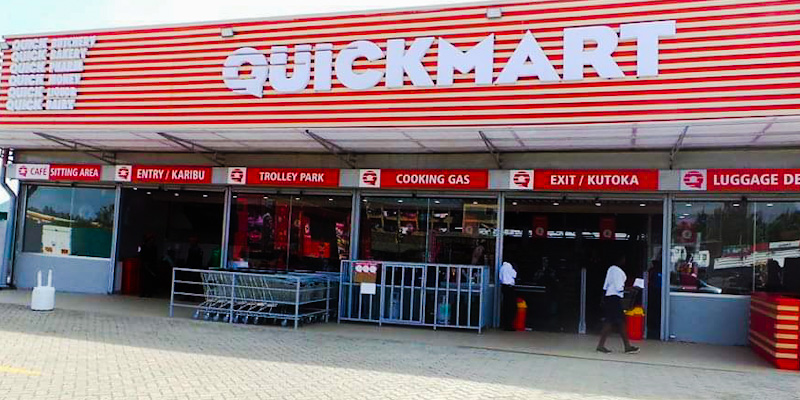
The International Finance Corporation (IFC), the World Bank Group’s private-sector investment arm, is preparing to take a stake in Quickmart as the Kenyan supermarket chain moves towards a stock market listing.
The institution has conditionally committed KSh1.94 billion for a 6.5 per cent stake in the retailer. The investment forms part of Quickmart’s KSh15 billion initial public offering (IPO), which values the business at about KSh30 billion. The commitment remains subject to approval by the IFC’s board.
The proposed investment marks the IFC’s return to Kenya’s supermarket sector. It previously held a minority stake in rival retailer Naivas before exiting in 2022.
But the deal is about more than one international investor. Commitments from four institutional investors now account for a substantial share of Quickmart’s offer, drawing fresh attention to Kenya’s formal retail market.
Four Investors Commit KSh7.12 Billion
The IFC has been joined by three other institutional investors: the UK government-backed MOBILIST programme, RWC Asset Management and US-based 337 Frontier Capital.
Together, their disclosed commitments and applications amount to up to KSh7.12 billion, or about 47.5 per cent of the KSh15 billion offer. The total includes the IFC’s conditional commitment, so the full amount is not yet guaranteed.
The disclosed amounts are:
-
IFC: Up to KSh1.94 billion, subject to board approval.
-
MOBILIST: About KSh1.94 billion.
-
337 Frontier Capital: About KSh1.94 billion.
-
RWC Asset Management: About KSh1.3 billion.
The shares are being offered at KSh7.50 each. The offer covers two billion existing shares, equivalent to half of Quickmart’s issued share capital.
The participation of large investors may help build confidence in the listing. It does not, however, guarantee that Quickmart will perform well after its shares begin trading.
Why the Sale Structure Matters
One detail is particularly important for potential investors: the IPO proceeds will go to existing shareholders, not directly to Quickmart.
The shares are being sold by Sokoni Retail Kenya Limited, the supermarket’s parent company. It is majority-owned by private equity firm Adenia Partners alongside Quickmart’s founding families.
This is an offer for sale rather than a new share issue. The KSh15 billion is therefore intended to provide liquidity to shareholders selling their holdings. It will not automatically provide Quickmart with fresh funds for new shops, stock purchases or debt repayment.
That distinction does not remove the potential benefits of listing. A public listing can widen a company’s ownership, establish a market price for its shares and require more regular financial disclosure.
But future expansion will still depend on Quickmart’s operating cash flow and any other financing it secures.
Quickmart’s Position in the Market
Quickmart has grown into one of Kenya’s largest supermarket chains. It operates 72 stores across 16 counties, following four additional store openings in July and August 2026.
The retailer reported revenue of KSh50.4 billion for the financial year ended in 2025, according to the IPO coverage. Its scale gives investors exposure to Kenya’s formal grocery market, but it also faces the challenges that have troubled the sector for years.
Nakumatt and Tuskys, once prominent supermarket brands, collapsed after prolonged financial difficulties. Uchumi has also struggled to recover from years of problems.
Their experiences underline the pressures facing large retailers: thin profit margins, price-sensitive customers, supplier obligations, debt and the cost of expanding too quickly.
Quickmart will need to manage these risks while competing with Naivas, Carrefour, neighbourhood shops, wholesalers and online retailers.
What the IFC’s Involvement Means
The IFC’s participation is significant because the institution assesses investments before committing funds. Its involvement may encourage other investors to examine the offer more closely.
However, the IFC’s proposed stake would remain a minority holding. It would not make the institution responsible for Quickmart’s day-to-day operations, nor would it guarantee the retailer’s future success.
Quickmart’s public listing will also bring greater scrutiny. Shareholders will be able to assess its reported financial performance and compare results over time.
That transparency could help investors judge whether the business is growing sustainably. It will also make the company’s financial performance more visible to the market.
What Investors Need to Know
The Quickmart IPO opened on October 5, 2026. The offer is scheduled to close at 5pm on Friday, October 30, with allocations expected to be announced on November 6.
The minimum application is 500 shares, costing KSh3,750 at the offer price. Trading on the Nairobi Securities Exchange is scheduled to begin on November 12, subject to the offer conditions.
Investors should read the official information memorandum before applying. The IFC’s participation is not a recommendation to buy the shares, and its commitment should not be treated as a guarantee of returns.
The central question will be how Quickmart performs once it enters the public market. Its size and established presence may offer opportunities, but its long-term prospects will depend on costs, cash flow, supplier relationships and disciplined growth.
The IFC’s proposed investment gives Quickmart a prominent institutional backer. The more important test will come after listing, when the retailer’s results are measured against the expectations built into its valuation.