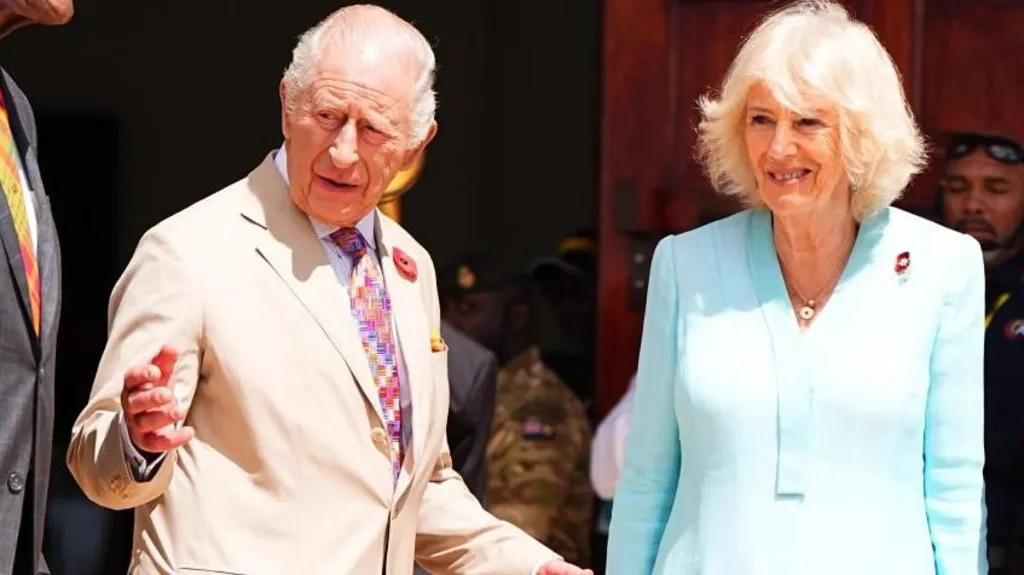
King Charles III is expected to confront Britain's history of slavery when he addresses Commonwealth leaders in Antigua on Tuesday, amid growing calls for the UK to formally apologise for its role in the transatlantic slave trade.
The King's remarks are expected to acknowledge the suffering caused by slavery and its lasting consequences, Buckingham Palace has said, as the debate over Britain's colonial past takes centre stage during his Caribbean tour.
A Palace spokesperson said the monarch would address the issue with "unflinching honesty, sincere sorrow, and respect" for discussions taking place between Commonwealth governments.
The speech comes days after British Prime Minister Andy Burnham signalled a shift in the government's position, saying he was open to considering a formal apology for Britain's involvement in the slave trade.
In an opinion article published in The Guardian on Friday, Burnham described the transatlantic slave trade as a "brutal and barbaric violation" and said Britain needed to confront its history.
He proposed structured discussions with countries affected by slavery, including consideration of calls for an official apology.
However, the Prime Minister ruled out financial reparations, arguing that people living in Britain today should not be held responsible for historical injustices in which they had no personal involvement.
The government has never issued a formal apology for Britain's role in slavery or agreed to compensation payments.
Caribbean leaders renew calls for reparatory justice
Antigua and Barbuda's Prime Minister, Gaston Browne, has welcomed renewed attention to the issue, saying the consequences of slavery remain deeply felt across the Caribbean.
In an address marking the country's independence celebrations, Browne said the painful history of slavery had not disappeared with time.
He called for the pursuit of reparatory justice to be treated with "seriousness, sensitivity and sustained international engagement".
Browne also confirmed that his government was discussing the issue with Britain and other Commonwealth members during the Commonwealth Heads of Government Meeting (CHOGM).
The calls have drawn support from other Caribbean leaders, who argue that the wealth generated through slavery contributed to Britain's development while leaving lasting economic and social inequalities in former colonies.
However, not everyone supports the push for an apology.
Conservative Party leader Kemi Badenoch criticised the renewed debate, describing continued discussions about apologies as a distraction from present-day challenges.
Speaking to the BBC's Sunday with Laura Kuenssberg, she said the Commonwealth should focus on the future rather than remain preoccupied with events that happened centuries ago.
Palace draws a line between the King and government policy
Despite the growing pressure, Buckingham Palace has made clear that the King will not announce a formal apology on behalf of the British government.
The monarch will deliver his address in his capacity as head of the Commonwealth, which brings together 56 member states.
A Palace spokesperson said it would not be appropriate for Charles to comment on specific government policies concerning Britain's position on slavery.
Royal officials also confirmed that the King's speech had not been changed following Burnham's announcement. The Palace had been informed of the Prime Minister's position before it was made public.
The King has already acknowledged the suffering associated with slavery during earlier stops on his Caribbean tour.
In the Bahamas, he spoke about the suffering experienced by enslaved people. In Guyana, he visited a historic site connected to the 1823 Demerara Rebellion, during which British colonial authorities suppressed an uprising by enslaved people.
The visit was intended to deepen his understanding of the history of slavery and resistance in the region.
Commonwealth leaders face difficult discussions
The slavery debate is expected to feature prominently at this year's Commonwealth summit, whose theme is Accelerating Partnerships and Investment for a Prosperous Commonwealth.
The meeting brings together leaders from 56 countries every two years to discuss shared challenges and opportunities.
Speaking during a church service in Antigua, Bishop Ernest Flemming said the organisation's prosperity should benefit all its members.
"True partnership requires mutual respect, it requires listening, it requires fairness," he told the congregation.
The Palace has also emphasised the importance of cooperation between Commonwealth countries, particularly at a time when institutions around the world face growing pressure.
For Charles, Tuesday's address presents a delicate diplomatic moment. He must acknowledge the historical suffering of countries affected by slavery while respecting the constitutional boundaries of his role as monarch.
Whether Burnham's openness to a formal apology will lead to a significant change in Britain's position remains to be seen.