
By Shukri Osman
The 2021 edition of the Social Institutions and Gender Index (SIGI) Regional Report for Africa, which was released in Paris-France reveals that despite legal improvements, deep-rooted social norms continue to expose women and girls to gender-based discrimination.
This report covers 54 African countries and reveals that hidden aspects of gender inequality, such as discriminatory laws, norms, and practices, have a long-term impact on women’s outcomes, as measured by the Africa Gender Index (AGI), in areas like employment, entrepreneurship, health, and political representation.
The COVID-19 pandemic has exacerbated the situation, with preliminary estimates suggesting an increase in all forms of violence against women and girls since the outbreak began.
Nonetheless, the analysis reveals that the region’s campaign for gender equality is making progress.
Women’s political leadership and decision-making participation have expanded, particularly in nations that have implemented specific policies such as quotas. Women’s representation in those countries, for example, is 10% higher than in countries where such policies do not exist.
Many countries adopted legislative amendments addressing gender-based violence and promoting women’s access to property and money between 2014 and 2020.
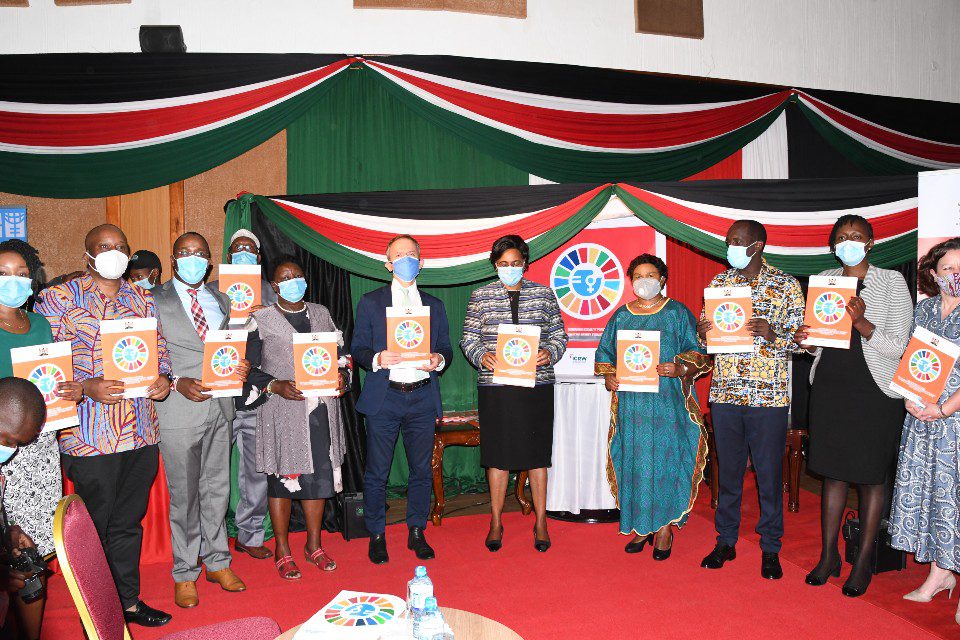
Kenya’s roadmap to end gender-based violence by 2026 was launched by President of Kenya Uhuru Kenyatta. [Image by Brian Kochwa ]
“We strongly believe in gender equality and its potential to contribute to the success of the world’s Agenda 2030 and Africa’s Agenda 2063. But for that, more needs to be done for women and girls in Africa, as they continue to face multiple barriers to their full participation in their societies and economies”, stated Ragnheiður Elín Árnadóttir, OECD Development Centre Director while launching the report today. She added: “It is about justice, but it also makes economic sense”.
The report estimates that discriminatory social institutions cost Africa the equivalent of 7.5% of its gross domestic product (GDP) in 2019.
Despite wide variances throughout the continent, African women face the greatest levels of discrimination in the world on average. Gender-based violence, according to the research, is caused by rigid masculinity standards that reinforce male domination in the private sphere, as well as women’s acceptance of this violence.
Harmful practices like child marriage and female genital mutilation are also tolerated due to discriminatory social norms (FGM). In 2018, for example, 16 per cent of African women aged 15 to 49 thought FGM should continue average.
At home, traditional gender roles continue to dominate: only 25% of women report being the head of their household, compared to 70% of men.
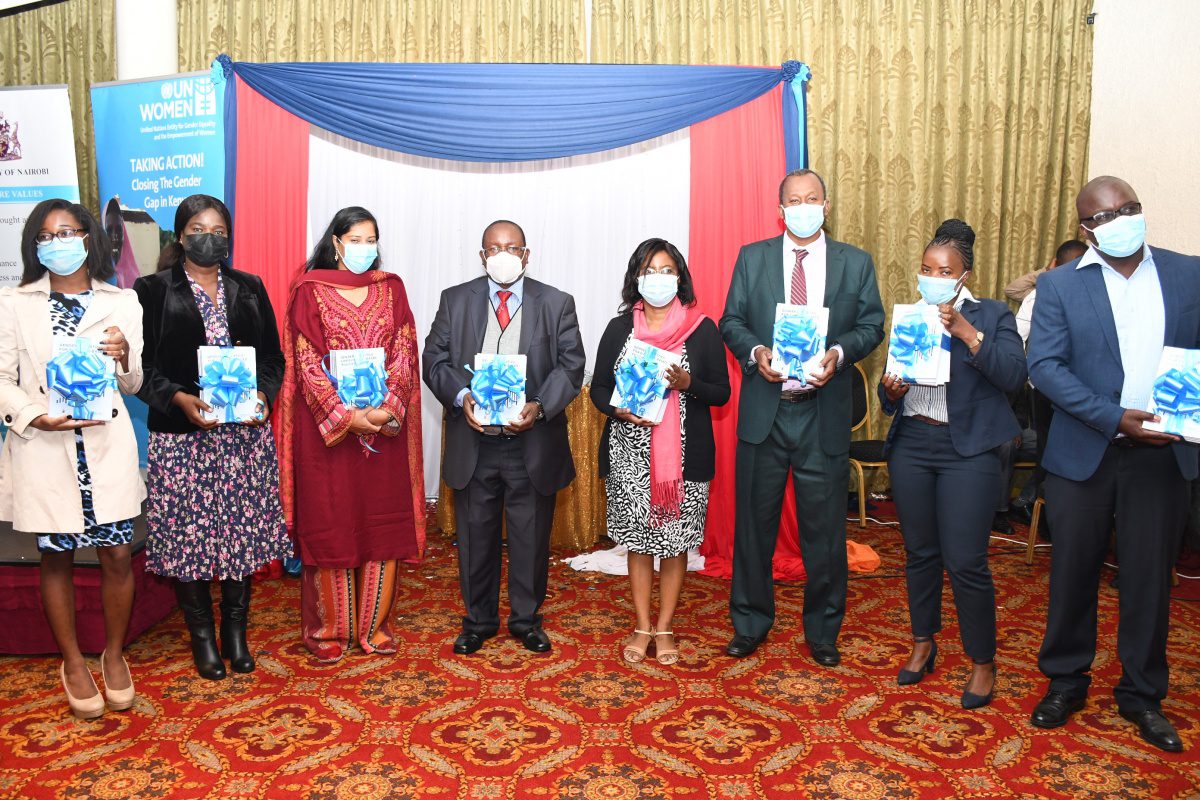
UoN, KNBS, UN Women, State Departmentment of Gender and researchersrepresentatives at the launch of the Gender-data manuscript [Image by UoN Website
These conventions maintain unequal allocations of unpaid care work, which has a negative influence on women’s labour force participation. Women in Africa perform four times as much unpaid domestic and care work as males, which is higher than the global average.
In terms of economic empowerment, traditions and conventions that regard men to be the true owners stifle women’s ownership of land, which accounts for only 12% of agricultural land despite accounting for over half of Africa’s agricultural workers.
Traditional work sectors continue to be dominated by men. In construction, mining, and transportation, for example, men accounted for more than 80% of workers in 2020.
When it comes to women’s political engagement, 28% of the population feels that men make superior leaders and that men should be elected over women.
In addition, ongoing gender-based violence in the political realm discourages women and girls from pursuing leadership positions and speaking out in public.
In light of this, the SIGI 2021 Regional Report for Africa makes specific policy recommendations on physical integrity, economic empowerment, political voice, leadership, and agency for women.
It also offers five suggestions for better integrating gender equality into development strategies:
Update and repeal discriminatory legal provisions, and fill legislative gaps following international and regional conventions.
Gender-responsive budgeting should be integrated across all government ministries and sectors.
Men and boys, as well as influential community leaders, should be included in gender-transformative interventions to promote awareness and support positive behaviour change.
Through successful implementation of UN Security Council Resolution 1325, strengthen peace and security activities with a gender lens.
To uncover gender data gaps and acquire a better understanding of how social norms emerge, invest more in sex-disaggregated and intersectionality data.


