WASHINGTON — For Sean Cairncross, the journey from Republican Party politics to the centre of America's national security establishment was an unusual career transition. A lawyer by training, political strategist by experience and government administrator by profession, he entered one of Washington's most technically demanding offices without the conventional background of a career cybersecurity specialist.
His appointment placed him at the intersection of politics, national security and technology. His departure, announced on 19 November 2026, has brought renewed attention to the qualifications required to protect a country whose economy, government services and military operations increasingly depend on digital networks.
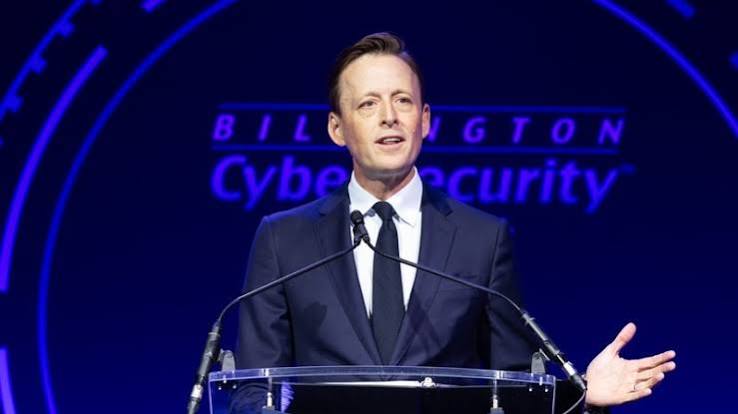
 Sean Cairncross
Cairncross served as the United States National Cyber Director from August 2025 until November 2026, during President Donald Trump's second administration. He was responsible for coordinating cybersecurity policy across federal agencies, advising the President and helping shape the government's approach to emerging technologies, including artificial intelligence.
His exit came as the United States grappled with a series of major technology disruptions affecting banking, air travel, communications and sensitive government systems. While the timing raised questions about the administration's handling of the incidents, officials said the outages were separate events rather than evidence of a coordinated cyberattack.
There are also conflicting accounts of how Cairncross left office. A source close to the White House told Reuters that Trump supported firing him, citing concerns about his cybersecurity credentials. Axios, however, reported that his departure had been amicable and that Cairncross wanted to leave before the next two years of his term. A person close to him disputed the characterisation of the exit as a dismissal.
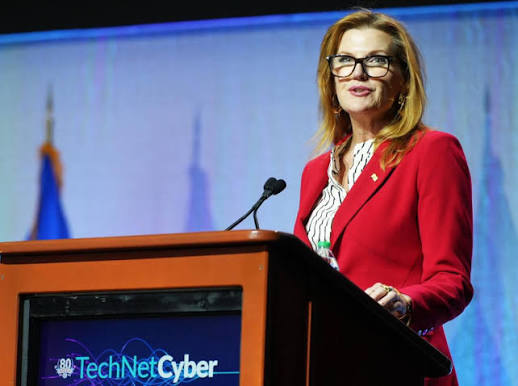
His successor, Kirsten A. Davies, the Pentagon's chief information officer, was designated to take over in an acting capacity.
 Kirsten A. Davies
For Cairncross, the departure marked the end of a short but consequential period in a position that demands both political judgement and an understanding of the vulnerabilities beneath America's digital infrastructure.
From law to Republican politics
Cairncross built his career in the legal and political worlds long before cybersecurity became his principal responsibility.
He holds a Bachelor of Arts degree, earned summa cum laude, from American University, a Master of Philosophy degree from the University of Cambridge and a Juris Doctor from New York University School of Law.
He began his professional career at the Washington law firm Covington & Burling. His early experience in legal practice helped establish a path into the Republican Party's political and institutional networks.
His relationship with the Republican National Committee (RNC) became a defining feature of his career.
He served as chief counsel to the committee before taking on senior responsibilities at the National Republican Senatorial Committee, where he worked as deputy executive director and general counsel between 2009 and 2013.
The positions placed him within the legal and organisational structures responsible for supporting Republican candidates, managing election operations and navigating the rules governing American political campaigns.
He later became a partner at the law firm Holtzman Vogel, where his work remained closely connected to election law and Republican political affairs.
Cairncross returned to the RNC as chief operating officer during the 2016 presidential election cycle. He held a similar operational role during the 2024 election campaign, giving him experience in the organisation of two major presidential contests.
His background was rooted in political strategy, legal compliance and institutional management rather than computer science or technical cyber operations. That distinction would become central to the debate surrounding his appointment.
A place in Trump's first administration
 Sean Cairncross
Cairncross's political career took a significant turn when Trump entered the White House in January 2017.
He joined the administration as a deputy assistant to the President and senior adviser to the White House chief of staff.
The position gave him exposure to the workings of the executive branch and the national security decision-making process. He also represented the White House chief of staff on National Security Council committees, according to accounts of his career.
In January 2018, Trump announced his intention to appoint Cairncross as chief executive of the Millennium Challenge Corporation (MCC), an independent US government agency responsible for supporting economic growth and poverty reduction through development partnerships.
The appointment was confirmed, and Cairncross assumed leadership of the corporation in June 2019.
The MCC works with eligible developing countries to support investments in areas such as transport, energy, education and institutional reform. Its programmes are based on agreements with partner governments and are intended to address barriers to economic growth.
At the time of his appointment, Cairncross described the corporation's mission as an opportunity to combine development objectives with broader American economic and strategic interests.
“I am honoured to join the Millennium Challenge Corporation as CEO and look forward to working with MCC’s talented staff as we pursue the agency’s mission,” he said in a statement issued in June 2019.
His leadership at the MCC gave him experience managing a federal institution with international operations, complex budgets and relationships with governments outside the United States.
It also strengthened his credentials as an administrator capable of working across different parts of government.
However, managing a development agency and directing national cybersecurity policy are distinct responsibilities. The difference would become increasingly apparent when he was nominated for the White House cyber position.
The road to the White House cybersecurity office
When Trump returned to the presidency in January 2025, Cairncross was once again part of the administration's political and institutional network.
In February 2025, Trump nominated him to lead the Office of the National Cyber Director (ONCD), a position created to bring greater coordination to the federal government's cybersecurity strategy.
The nomination was significant because the office sits at the centre of a complicated national security structure. It does not independently run every government cybersecurity operation. Instead, it helps align priorities, budgets and policies across agencies, while working with the private sector and other national security institutions.
The position also carries considerable political responsibility. Cybersecurity decisions can affect military readiness, economic stability, international relations and the protection of personal information belonging to millions of Americans.
Cairncross was not an obvious choice for the role.
His experience included senior government administration, election law and political operations. But he had not built a career in cybersecurity, intelligence technology or computer engineering.
That gap became a major issue during his Senate confirmation process.
The cybersecurity experience question
On 5 June 2025, Cairncross appeared before the Senate Committee on Homeland Security and Governmental Affairs for his confirmation hearing.
Senators questioned whether his professional experience had prepared him to oversee a national cybersecurity strategy at a time when the United States faced threats from criminal hacking groups, hostile governments and increasingly sophisticated digital operations.
Some of the concerns centred on his lack of a conventional technical cybersecurity background.
Cairncross acknowledged that he was not a technical cybersecurity specialist. He argued, however, that the position required more than an understanding of computer systems.
He pointed to his experience managing large organisations, dealing with national security issues and responding to cyber-related incidents affecting institutions under his leadership.
His argument was that the national cyber director needed to bring different agencies together, establish priorities and ensure that the government responded as a coordinated institution.
During the hearing, he outlined an approach built around four broad priorities.
First, he wanted the office to concentrate on protecting critical infrastructure rather than attempting to take responsibility for every cybersecurity issue across government.
Second, he argued that cyber defence should be treated as a national security and operational concern, not simply a technical matter.
Third, he called for a review of federal cybersecurity regulations, saying overlapping compliance requirements could increase costs without necessarily improving security.
Finally, he wanted closer cooperation between the White House, intelligence agencies, the Cybersecurity and Infrastructure Security Agency (CISA), private companies and state authorities.
In his prepared statement, he argued that America's critical infrastructure should remain capable of functioning even during a major national emergency.
He also emphasised the importance of making malicious cyber activity more costly for the individuals and governments responsible.
His position reflected the Trump administration's broader interest in a more assertive approach to national cyber operations.
The hearing did not remove concerns about his technical experience. But it provided a clearer picture of how he intended to approach the job: through coordination, management, policy direction and national security strategy.
On 2 August 2025, the Senate confirmed Cairncross by 59 votes to 35. He became President Trump's principal adviser on national cybersecurity policy and strategy.
What the National Cyber Director actually does
To understand Cairncross's responsibilities, it is important to understand the office he led.
The Office of the National Cyber Director was established through the National Defense Authorization Act for Fiscal Year 2021. It was designed to provide central coordination of cybersecurity policy within the executive branch.
Before its creation, cybersecurity responsibilities were spread across several government departments and agencies.
The Department of Homeland Security, the Department of Defense, the intelligence community and other federal institutions each had their own responsibilities. Although these organisations worked together, the government needed a stronger mechanism for aligning national priorities.
The National Cyber Director was intended to help fill that gap.
The office advises the President, coordinates national cybersecurity policy, engages with Congress and works with private-sector organisations that own or operate much of America's critical infrastructure.
Its influence therefore extends beyond government computer networks.
Banks, telecommunications companies, energy providers, hospitals, technology firms and transport operators all depend on digital systems that can have national security implications when they fail.
Cairncross's challenge was to help bring these interests together without undermining the responsibilities of the agencies already tasked with protecting them.
His approach to artificial intelligence and emerging threats
Artificial intelligence became one of the defining issues of Cairncross's tenure.
AI has opened new possibilities for cybersecurity professionals. It can help identify weaknesses in software, examine suspicious network activity and assist in responding to threats.
But the same technology can also help malicious actors develop convincing phishing campaigns, automate attacks and identify vulnerabilities more quickly.
This has created a difficult policy question for governments: how can they encourage technological innovation while ensuring that new systems do not expose critical infrastructure to greater risks?
Cairncross became involved in the administration's discussions on AI security and the protection of critical infrastructure.
According to reporting by CyberScoop, his office participated in key decisions involving the administration's approach to AI-related security.
Axios also reported that he held discussions with executives from Anthropic during the summer of 2026 as the administration considered questions surrounding advanced AI models and their potential implications for national security.
His role placed him in discussions involving technology companies, government officials and national security policymakers.
The debate was particularly important as increasingly capable AI systems began to raise questions about the speed at which software vulnerabilities could be discovered and exploited.
The challenge was not limited to preventing attacks. It also involved deciding how much information the government should have about powerful AI models before they were made available to the public.
Cairncross's office became part of that wider policy discussion, illustrating how the responsibilities of the National Cyber Director were expanding beyond traditional network security.
A short tenure under growing pressure
 Sean Cairncross
Cairncross's time in office lasted approximately 15 months.
Although his responsibilities were national in scope, the office did not operate in isolation. It depended on cooperation with other departments, private companies and intelligence agencies.
That arrangement presented both an opportunity and a challenge.
The National Cyber Director could help establish national priorities, but the actual protection of government systems and critical infrastructure remained distributed across different institutions.
The administration also faced disagreements over the direction of cybersecurity policy, including the balance between regulation, government oversight and private-sector responsibility.
Questions about the resources available to federal cybersecurity agencies added to the debate.
During his Senate confirmation process, Cairncross had argued that government cybersecurity efforts needed clearer priorities and better coordination. He also called for reducing unnecessary regulatory burdens.
The wider policy challenge was how to achieve those goals without weakening the institutions responsible for protecting the country.
His departure would bring those questions back into focus.
The November outages and his departure
The events leading up to Cairncross's exit unfolded against a troubling series of technology failures across the United States.
In the week preceding 19 November 2026, disruptions affected major digital services, financial institutions, aviation operations and government communications.
The incidents included problems affecting Microsoft services, banking platforms and a classified communications network at the National Security Agency.
One of the most serious disruptions involved a nationwide aviation interruption that affected more than 18,000 flights, according to Reuters.
The incidents raised questions about the resilience of America's digital infrastructure and the government's ability to respond when several essential services experience failures within a short period.
However, the administration pushed back against suggestions that the disruptions represented a coordinated cyberattack.
US intelligence officials said the incidents were separate service interruptions associated with maintenance and technical changes, rather than evidence of a state-sponsored operation.
That distinction matters. A technology outage does not automatically mean that a system has been hacked. Software updates, infrastructure maintenance, configuration errors and other technical problems can also interrupt essential services.
Nevertheless, the incidents created political pressure for the administration to explain what had happened and whether existing safeguards were adequate.
On 19 November, reports emerged that Cairncross was leaving the National Cyber Director's office.
A person close to the White House told Reuters that Trump supported his dismissal, arguing that he lacked the cybersecurity credentials required for the position.
Axios offered a different account, reporting that Cairncross had decided to leave and that the departure was amicable. The report said he did not intend to serve another two years and wanted to give the administration time to secure Senate confirmation for a successor before Democrats took control of the Senate in January 2027.
Cairncross also released a statement reflecting on his time in government.
“It has been the honour of a lifetime to serve President Donald J. Trump,” he said.
He added that he was proud of efforts to strengthen America's cybersecurity, protect critical infrastructure, confront foreign threats and maintain the country's position in advanced technology.
The White House did not immediately provide a detailed public explanation resolving the differing accounts of his departure.
Kirsten Davies takes over
The administration turned to Kirsten A. Davies, the Pentagon's chief information officer, to assume the cybersecurity leadership position in an acting capacity.
Davies brought a different professional background to the office.
Unlike Cairncross, whose career centred on law, political operations and government administration, Davies had extensive experience in corporate and government cybersecurity.
She previously held senior information security positions at organisations including Unilever, Barclays Africa Group, Hewlett Packard Enterprise and Siemens.
Her appointment was welcomed by Secretary of State Marco Rubio, who said he looked forward to working with her to strengthen American cybersecurity.
The transition also placed renewed attention on the qualifications required to lead the country's cybersecurity strategy.
A permanent National Cyber Director will require Senate confirmation. The political composition of the Senate is expected to make that process an important consideration for the administration.
The legacy of a political strategist in a technical office
Cairncross's departure leaves behind a complicated record.
He entered the National Cyber Director's office with considerable experience in government administration, political strategy and national security. His appointment reflected an approach that placed a premium on leadership, institutional coordination and the ability to bring different government agencies together.
He also brought a clear argument to the cybersecurity debate: protecting a country in the digital age requires more than technical expertise. It requires political direction, effective management, cooperation with private industry and a willingness to confront those responsible for malicious cyber activity.
Yet his appointment exposed a persistent question about the leadership of highly specialised government institutions.
Can a capable administrator without a conventional technical background successfully lead an office responsible for coordinating the defence of an increasingly complex digital environment?
Cairncross believed his management and national security experience prepared him for the task. Some senators questioned whether that experience was sufficient. His departure has brought the debate into sharper focus.
Ultimately, his time in office will be judged not only by the policies he helped shape, but also by the effectiveness of the institutions and partnerships he sought to coordinate.
The American cybersecurity challenge will not disappear with his departure. Nor will the questions surrounding artificial intelligence, critical infrastructure, foreign threats and the growing dependence on digital systems.
For Cairncross, the move from Republican political operations to the highest levels of national cyber policy was an unusual chapter in a career built around law, government and public administration.
It ended after 15 months, leaving his successor with the responsibility of protecting a digital landscape that is becoming more important, more interconnected and increasingly difficult to defend.