
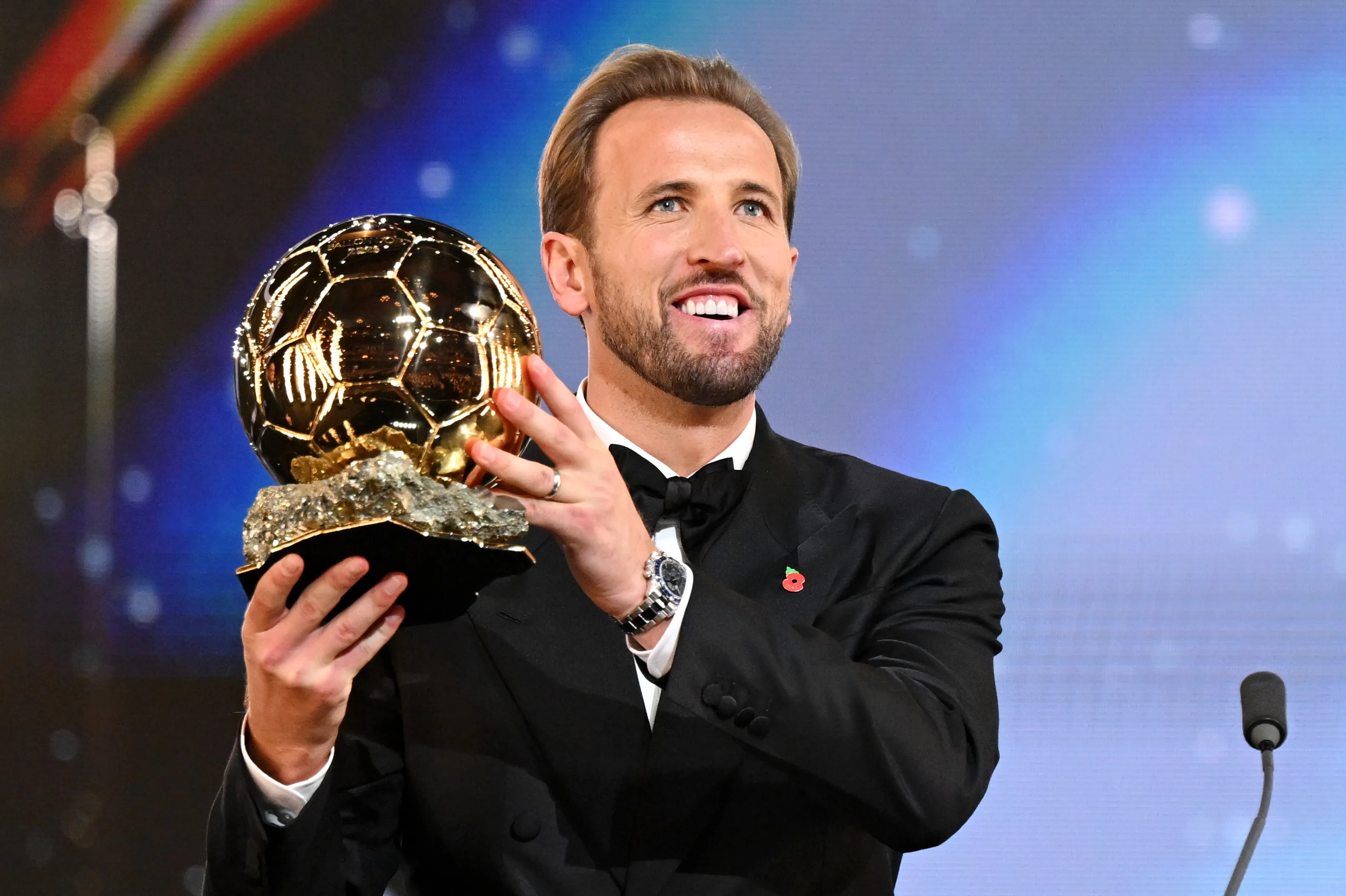
Harry Kane has reached the summit of world football. The England captain won the 2026 men’s Ballon d’Or on Monday night in London. He beat Kylian Mbappé and Lamine Yamal to claim the sport’s most coveted individual prize.
The victory ended a 25-year wait for an English winner. Michael Owen was the last Englishman to lift the award, in 2001. For Kane, the honour capped a remarkable season with Bayern Munich and England.
A Season of Goals and Trophies
Kane, 33, scored 73 goals in 65 appearances for club and country during the 2025–26 campaign. His goals helped Bayern secure domestic silverware. He also scored six times as England finished third at the World Cup.
The striker thanked his Bayern team-mates after receiving the award. He credited their support and the competition within the squad for helping him reach new heights.
“Without you guys and the rest of the team it wouldn't be possible,” Kane said. He praised the players who pushed him throughout the season.
His success follows years of near misses. Kane lost the 2019 Champions League final with Tottenham. He also suffered defeat in two European Championship finals with England.
His move to Bayern in 2023 was a major turning point. Some viewed the transfer as a risk. Kane said it gave him the chance to improve alongside new team-mates and coaches.
Putellas Returns to the Top
Spain’s Alexia Putellas won the women’s Ballon d’Or for a third time. She had previously claimed the award in 2021 and 2022.
Her latest triumph followed a strong season with Barcelona. She helped the club win the Women’s Champions League before joining London City Lionesses in July 2026.
Putellas returned to the top after an anterior cruciate ligament injury disrupted her progress four years ago. Her recovery has been marked by renewed success at club and international level.
She succeeds Spain team-mate Aitana Bonmatí, who had won the award for three consecutive years. Bonmatí missed much of last season after suffering a broken leg.
Putellas has spoken about valuing every moment since her injury. Her third award marks another milestone in an already distinguished career.
Yamal Wins Again, but Misses the Main Prize
Lamine Yamal left London with another major honour. The Barcelona winger won the men’s Young Talent award for the third consecutive year.
The 19-year-old had also been among the leading contenders for the main prize. But he finished third behind Kane and Mbappé.
Mbappé took second place after another prolific season with Real Madrid and France. His two goals also helped Real Madrid beat Barcelona 2–1 in Sunday’s El Clásico.
Yamal arrived at the ceremony in a black suit decorated with a pink flower. His appearance drew attention, but the evening’s main award went to Kane.
Spain and Barcelona Collect More Awards
Spain coach Luis de la Fuente was named men’s Coach of the Year. He was recognised after guiding Spain to World Cup success.
“I’m really privileged to work with a team of such high quality on a professional and human level,” he said.
Barcelona coach Pere Romeu won the women’s coaching award. Spain’s Unai Simón and Barcelona’s Cata Coll were named the best men’s and women’s goalkeepers.
Barcelona also won the women’s Club of the Year award. Paris Saint-Germain claimed the men’s honour, despite missing out on the main individual prizes.
Yamal’s fellow Barcelona player Vicky López won the women’s Young Talent award. Mexico forward Charlyn Corral was named women’s Striker of the Year, while Kane also received the men’s striker prize.
Bukayo Saka Honoured for Humanitarian Work
Arsenal and England winger Bukayo Saka received the Sócrates Award. The honour recognises humanitarian work and social initiatives.
The award added an off-field highlight to a night dominated by individual and team achievements. It recognised Saka’s contribution beyond football.
London Hosts a Historic Ceremony
The ceremony was held at the London Palladium. It was the first time the Ballon d’Or had been presented in England.
The event also marked the award’s 70th anniversary. The first winner, English forward Stanley Matthews, received the inaugural prize in 1956.
The evening began nearly an hour late after traffic disrupted arrivals. Yet the delay did little to overshadow the night’s defining moment.
Kane’s victory was a personal breakthrough and a landmark for English football. Putellas, meanwhile, reaffirmed her place among the women’s game’s leading figures. Both left London with the sport’s most celebrated individual honours.


