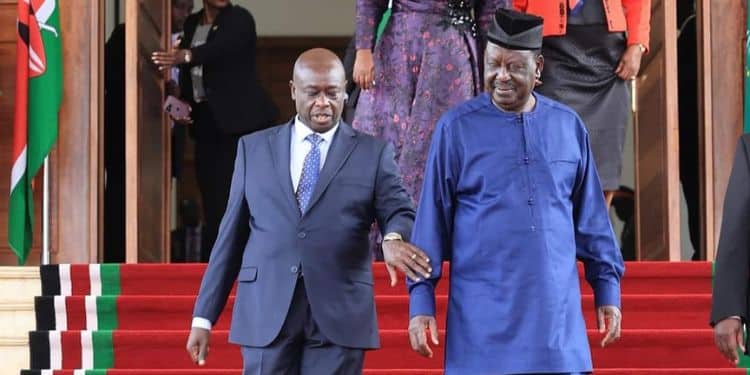
Former Deputy President Rigathi Gachagua has accused unnamed Orange Democratic Movement (ODM) leaders of weakening the political legacy of Raila Odinga, a year after the former Prime Minister’s death.
The Democracy for the Citizens Party (DCP) leader said the party built by Raila over decades had lost much of its former strength. He blamed unnamed politicians for what he described as a betrayal of the late opposition leader’s ideals.
His remarks came as Raila’s life and political career were being commemorated on the first anniversary of his death on October 15, 2026.
Gachagua Questions ODM’s Direction
In a statement marking the anniversary, Gachagua expressed disappointment at what he saw as ODM’s decline. The party, he said, had been one of Raila’s most important political achievements.
“It is a pity, just one year after his death, that his greatest legacy, the ODM party, is now a pale shadow of its former self,” he said.
No specific leaders were named in the statement. Nor was detailed evidence provided to support the allegation that individuals within the party had deliberately weakened it.
The remarks add to the political debate over ODM’s direction following the death of its long-time leader.
Criticism of Posthumous Tributes
Gachagua also questioned the sincerity of politicians who have recently praised Raila. Some, he said, had previously used insulting language against the former Prime Minister.
He cited descriptions such as “mchawi” (witch), “mganga” (traditional healer) and “mtu ya kung’oa reli” (the man who uprooted railway lines).
The DCP leader argued that respect should be shown while political figures are still alive. Praise offered only after their deaths, he suggested, could be insincere.
“I am a firm believer in giving a man his flowers when he is alive and hearing,” he said.
Gachagua did not identify the politicians he was criticising. The individuals concerned were also not given an opportunity to respond in the statement.
Raila’s Political Lessons
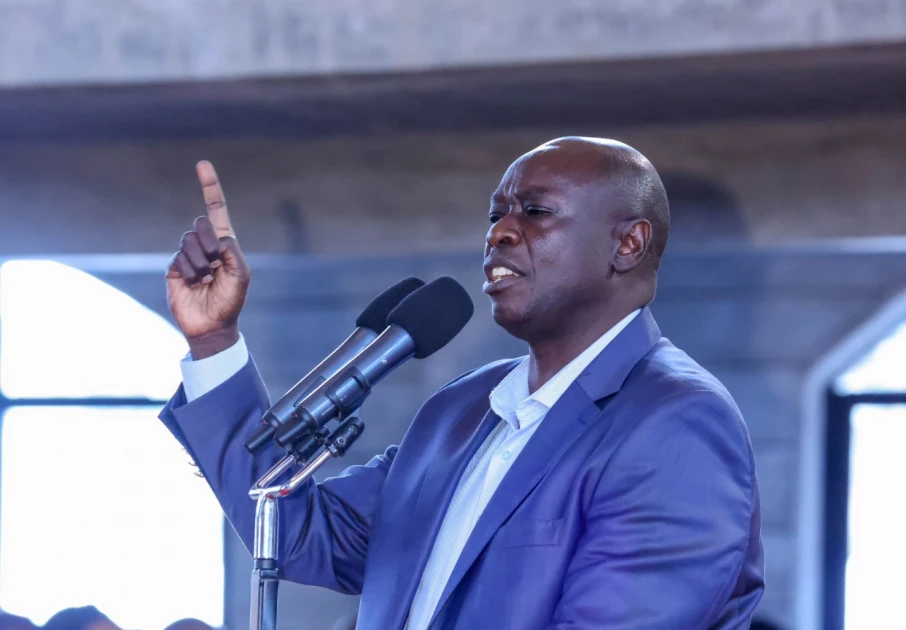
Despite his criticism, Gachagua praised Raila’s ability to build a strong political movement. He also commended his role in encouraging voters to elect capable legislators.
Those lessons, he said, were being applied as he sought to expand DCP’s influence across the country.
“I am doing my very best in following his footsteps in building DCP into a formidable political movement that will be at the centre of every political conversation in Kenya for many years to come,” he said.
Gachagua also urged his party’s members and Kenyans to elect leaders who could represent their constituents effectively.
His remarks placed the emphasis on party organisation and the quality of elected representatives, areas he believes are central to building a lasting political movement.
Why Gachagua Missed the Memorial
Gachagua’s statement also explained why he was absent from the first-anniversary commemoration. He said an invitation had been received from Raila’s widow, Ida Odinga.
However, attendance was ruled out by a previously scheduled programme in the United States, he said.
The anniversary was an occasion to remember Raila’s decades-long political career and his place in Kenya’s public life. His influence extended across opposition politics, constitutional reform and successive efforts to reshape the country’s political landscape.
Gachagua’s statement offered praise for that legacy while questioning whether the party associated with it was being preserved.
His allegations against unnamed ODM leaders remained unsubstantiated in the statement. No specific individuals were identified, leaving the accusations open to further scrutiny.
The central question raised by his remarks was whether ODM could maintain the political influence built under Raila’s leadership while navigating a new chapter without him.