As Kenya marks Mashujaa Day on 20 October, the country celebrates the men and women who shaped its history. But beyond the familiar names, monuments and national ceremonies lies another generation of heroes: ordinary Kenyans whose sacrifices keep communities alive, protect the vulnerable and quietly transform lives.


NAIROBI, Kenya, 19 October 2026 — Every year on 20 October, Kenya pauses to honour its heroes. National flags are raised, military parades are held, patriotic songs fill stadiums and leaders deliver speeches celebrating the sacrifices that shaped the nation.
For many Kenyans, the word Shujaa immediately evokes familiar historical figures: Jomo Kenyatta, Dedan Kimathi, Mekatilili wa Menza, Field Marshal Muthoni Kirima and other personalities associated with the struggle against colonial rule.
Their contributions form an essential part of Kenya's national story.
But more than six decades after independence, an increasingly important question deserves attention: Who qualifies as a hero in modern Kenya?
Is it the politician who commands a national following? The athlete who raises Kenya's flag on the international stage? The celebrity with millions of followers?
Or could it be the nurse working through the night in an understaffed hospital, the parent who sacrifices everything to educate a child, or the volunteer who enters floodwaters to rescue a complete stranger?
Perhaps Kenya is not experiencing a shortage of heroes. Perhaps the country has become so accustomed to extraordinary acts by ordinary people that it no longer recognises them as heroic.
From Kenyatta Day to Mashujaa Day: How Kenya redefined heroism
The history of Mashujaa Day is closely connected to Kenya's struggle for independence and its changing understanding of national identity.
Before 2010, 20 October was commemorated as Kenyatta Day, rooted in the events of 1952 when British colonial authorities arrested Jomo Kenyatta and other nationalist leaders during the Emergency.
Kenyatta, together with Achieng' Oneko, Bildad Kaggia, Fred Kubai, Kung'u Karumba and Paul Ngei, became collectively known as the Kapenguria Six.
Their detention became a defining episode in the independence struggle, although Kenya's liberation was the product of a much wider movement involving armed resistance, political organisation, labour activism, women's contributions and community mobilisation.
The promulgation of the 2010 Constitution marked an important shift.
Kenyatta Day was renamed Mashujaa Day, broadening the commemoration beyond a single historical figure to recognise Kenyans who contributed to freedom, justice and national development.
Article 9 of the Constitution formally establishes Mashujaa Day as a national day observed on 20 October.
The Kenya Heroes Act, 2014, subsequently provided a legal framework for identifying, selecting and honouring national heroes.
Under this framework, heroism is not confined to political leadership or military sacrifice. It extends to contributions in areas including human rights, peacebuilding, environmental conservation, research, sports, philanthropy, culture, entrepreneurship and national cohesion.
This expanded definition raises a compelling question: If heroism is measured by service, sacrifice and positive social impact, how many deserving Kenyans remain invisible?
The volunteers who run towards danger
When disaster strikes, most people's instinct is to move towards safety.
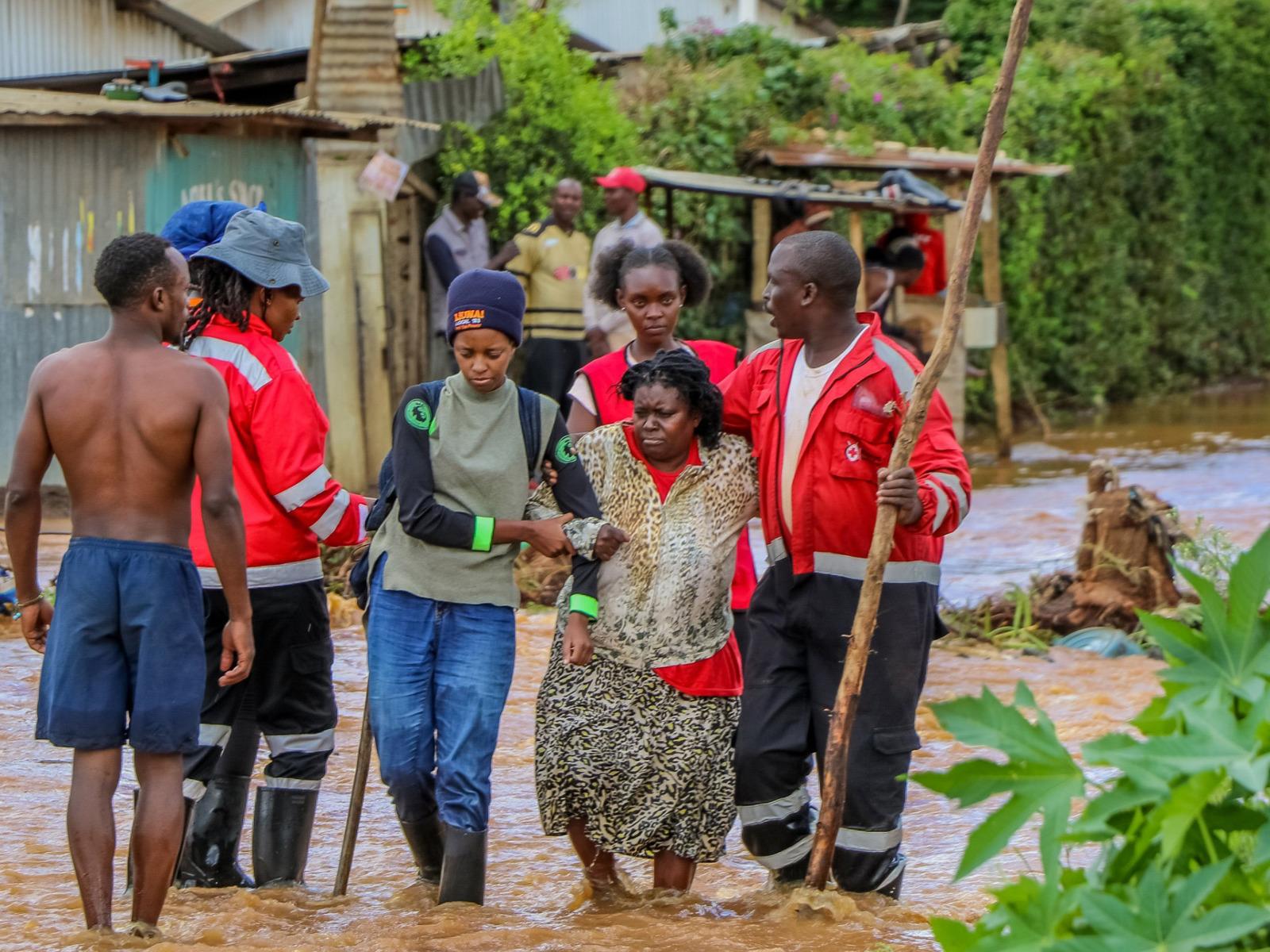
Yet across Kenya, thousands of humanitarian volunteers make the opposite decision.
They enter flood-affected communities, search for missing people, distribute emergency supplies, provide first aid and help families cope with tragedy.
Among the most visible are Kenya Red Cross volunteers, whose work spans disaster response, disease outbreaks, displacement, community health and emergency preparedness.
During the devastating floods of 2024, Kenya Red Cross teams participated in search-and-rescue operations, emergency shelter support and the distribution of essential supplies to affected households.
The organisation's 2024 annual report recorded a volunteer network of 243,654 people and reported that its disaster-response interventions reached more than six million people.
Its 2025 annual report documented further growth, with more than 326,000 volunteers mobilised and over 7.6 million people reached through humanitarian and development programmes.
Behind these figures are people who may never become household names.
Consider what volunteering during an emergency can demand: leaving home at short notice, working in difficult conditions, witnessing suffering and responding to urgent needs while managing personal and family responsibilities.
Some volunteers support grieving families. Others help reunite separated relatives, assist displaced households or educate communities about disease prevention.
Their work is not without institutional support or training, but much of it happens away from television cameras.
The question is not whether every volunteer should automatically be declared a national hero. It is whether Kenya adequately recognises the exceptional contributions of those whose service goes far beyond ordinary expectations.
A compelling Mashujaa Day tribute would follow one such volunteer beyond the emergency scene, exploring their family life, motivations, sacrifices and the people whose lives they have touched.
The healthcare workers whose courage rarely makes headlines
In a country where public healthcare facilities frequently face pressure from high patient numbers and resource constraints, healthcare workers remain central to the survival and wellbeing of millions.
Doctors, nurses, clinical officers, laboratory specialists, ambulance crews, community health promoters and other frontline personnel perform work that can carry significant physical and emotional demands.
During infectious disease outbreaks, some face occupational exposure risks. In emergency departments, others must make urgent decisions involving severely injured or critically ill patients.
But heroism in healthcare is not limited to dramatic lifesaving interventions.
Sometimes it is the nurse who patiently explains a difficult diagnosis to a frightened family.
Sometimes it is the community health promoter who identifies a warning sign during a household visit and helps someone seek timely treatment.
Sometimes it is a laboratory professional whose careful work contributes to detecting an outbreak before it spreads further.
Such contributions are often understood simply as professional responsibilities.
That distinction matters. Healthcare workers deserve fair compensation, safe working conditions and functioning health systems, not merely public praise for enduring hardship.
Recognising their service should never become an excuse for normalising inadequate staffing, unsafe workplaces or poor remuneration.
A meaningful national celebration would honour their contribution while examining the conditions under which they serve.
Parents and guardians: The heroes within our homes
Ask Kenyans to name a national hero, and many will recall a historical or political figure.
Ask them who has made the greatest difference in their personal lives, and the answers may be very different.
For some, the answer will be a mother who raised children alone.
For others, a father who worked several jobs, a grandmother who took responsibility for orphaned grandchildren, or an older sibling who postponed personal ambitions to support younger family members.
These are stories of sacrifice rarely recorded in official histories.
A market trader who spends years paying school fees may never receive a medal.
A guardian caring for a child with a disability may never feature in a national address.
Yet their decisions can change the course of entire families.
This form of heroism challenges the assumption that extraordinary contributions must occur on a national stage.
It also raises a deeper question about recognition.
If the purpose of honouring heroes is to acknowledge those whose actions improve the lives of others, why should the scale of public visibility matter more than the depth of personal impact?
The answer may lie in distinguishing between national honours and personal heroes. Not every devoted parent meets the legal threshold for national recognition, but their contribution can still deserve profound respect.
The teachers shaping futures without recognition
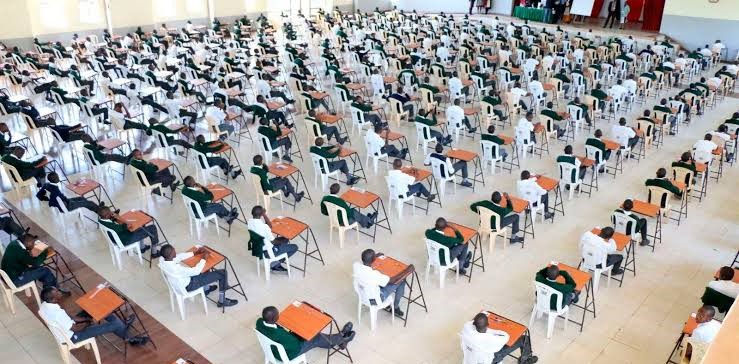
In some parts of Kenya, teachers work in schools facing shortages of learning materials, infrastructure and specialist support.
Their responsibilities can extend beyond classroom instruction to mentorship, counselling and helping children navigate difficult personal circumstances.
A teacher who identifies a struggling learner, intervenes early and helps that child remain in school may alter the trajectory of an entire life.
The results of that intervention may not become apparent for years.
The student might later become a doctor, engineer, journalist, entrepreneur or community leader.
Public attention often focuses on the eventual achievement rather than the teacher who helped make it possible.
The most compelling teacher-hero stories are not necessarily about examination results or national rankings.
They are about persistence, inclusion and opportunity: educators who support learners with disabilities, encourage girls to remain in school, help children recover from disrupted learning or create opportunities where resources are limited.
Such stories offer a different measure of national progress.
Instead of asking only how many students passed an examination, they ask how many young lives were given a meaningful chance.
The community health promoters protecting families before illness strikes
One of Kenya's less visible groups of public health workers operates far from major hospitals.
Community health promoters visit households, provide basic health education, support disease prevention, identify health risks and connect residents with health facilities.
In March 2025, the Ministry of Health reported that 107,831 community health promoters had been deployed nationwide as part of efforts to strengthen preventive healthcare.
Their work illustrates a different kind of heroism.
A successful intervention may mean that a child receives timely medical attention, a pregnant woman is referred for appropriate care, or a family learns how to reduce the risk of infection.
The outcome is often something that never happens: a preventable illness, a delayed diagnosis or an avoidable medical emergency.
That makes preventive work difficult to celebrate. There may be no dramatic rescue footage, no cheering crowd and no moment that attracts national attention.
Yet preventing a tragedy can be just as consequential as responding to one.
Environmental defenders: Protecting a future they may never see


Kenya's environmental challenges have created another category of everyday heroes.
Community conservationists, forest restoration volunteers, wildlife rangers and local environmental advocates contribute to protecting ecosystems on which livelihoods depend.
Some work to restore degraded landscapes. Others protect water catchments, support mangrove restoration, conserve indigenous trees or help communities manage natural resources.
Environmental heroism can involve years of work without immediate results.
A tree planted today may take decades to mature. A restored ecosystem may benefit people who were not yet born when the restoration began.
These contributions also demonstrate why national heroism should not be measured solely through dramatic individual actions.
Sustained collective effort can be equally transformative.
The quiet courage of people who defend others
Some acts of heroism begin with a simple decision: refusing to look away.
A neighbour intervenes when a child is being abused. A community organiser helps families affected by violence. A journalist investigates wrongdoing despite pressure. A lawyer offers assistance to someone unable to afford representation.
Human rights defenders, whistleblowers, community mediators and ordinary citizens who challenge injustice can face considerable personal and professional risks.
Their work is sometimes controversial because defending rights may require questioning powerful institutions or prevailing social attitudes.
Yet Kenya's constitutional framework recognises human dignity, equality, justice, integrity and accountability as national values.
It is possible to respect differing political opinions while recognising that peaceful advocacy, lawful accountability and the protection of vulnerable people are legitimate forms of public service.
These contributions remind the country that courage is not always physical.
Sometimes courage is the willingness to speak when silence would be easier.
The heroes keeping communities functioning
There are also people whose contributions are so familiar that society barely notices them.
The sanitation worker who helps maintain public hygiene. The firefighter responding to a dangerous blaze. The water technician restoring an essential supply. The local organiser mobilising food for struggling families. The caregiver providing daily support to someone who cannot live independently.
These roles are not automatically heroic simply because they are difficult or essential.
But exceptional acts of compassion, perseverance, public service and sacrifice can emerge from any profession or community.
Kenya's understanding of heroism becomes richer when it looks beyond job titles and asks what individuals have actually done for others.
A person's influence should not have to be measured in social media followers, wealth or political power.
Have modern Kenyans lost their heroes, or changed how they recognise them?
The question of whether Kenya has fewer heroes today is difficult to answer scientifically.
There is no established national measure showing that acts of courage, selflessness or service have declined over successive generations.
What has undoubtedly changed is the environment in which public figures become visible.
Social media platforms allow celebrities, entertainers, politicians, entrepreneurs and online personalities to command enormous attention.
Popularity can develop rapidly, sometimes independently of a person's contribution to society.
But visibility and heroism are different concepts.
A person may be widely admired for entertainment, achievement or influence without necessarily demonstrating exceptional public service.
Conversely, someone may make an extraordinary contribution to a community while remaining almost entirely unknown outside it.
This distinction should not become an argument against celebrating artists, athletes or digital creators. Many make meaningful contributions through their work, philanthropy, innovation and advocacy.
Rather, it raises questions about the standards society uses to recognise exemplary conduct.
Does Kenya celebrate the people who attract the most attention, or those whose actions produce the greatest positive impact?
And when a person becomes famous, does society sometimes overlook the less visible people who helped make their achievements possible?
Kenya already has a system for recognising unsung heroes
The challenge of recognising modern heroes is not entirely new.
Kenya's National Heroes Council is mandated to identify, select and facilitate recognition of individuals who meet the criteria established under the Kenya Heroes Act.
Members of the public, organisations and institutions can nominate individuals for consideration.
The nomination process involves assessment against statutory criteria, public scrutiny of proposed names and recommendations for formal recognition.
In June 2026, the Council invited nominations for this year's Mashujaa Day honours, with a submission deadline of 1 July.
The exercise covered 14 areas of contribution and required evidence of qualities including selflessness, courage, perseverance, commitment and innovation.
The Council's website currently indicates that the 2026 nomination period has closed.
The existence of this framework is important because it means the country does not need to invent an entirely new definition of heroism.
The greater challenge is ensuring that deserving individuals, particularly those in remote or marginalised communities, are identified and given a fair opportunity for recognition.
Mashujaa Day 2026: A moment to reconsider national recognition
This year's national Mashujaa Day celebrations are scheduled for Tuesday, 20 October, at Kipchoge Keino Stadium in Eldoret.
The event is being jointly hosted by Uasin Gishu, Nandi and Elgeyo-Marakwet counties, an arrangement intended to broaden participation in the national celebrations.
The government has also organised activities showcasing development programmes and national achievements.
But beyond the ceremonies and official speeches, Mashujaa Day presents an opportunity for a different national conversation.
Who are the people making communities safer, healthier, more inclusive and more resilient?
Which sacrifices go unnoticed because they happen in private homes, remote villages, hospital wards or disaster-affected settlements?
And what would meaningful recognition look like beyond a certificate, a medal or a single day of public appreciation?
For some heroes, recognition may mean documenting their stories for future generations.
For others, it could mean access to better equipment, safer working conditions, institutional support or assistance for their families.
Celebration is important. So is ensuring that those who serve others are not abandoned when they themselves need help.
The next generation of Kenyan heroes may already be among us
Kenya's independence heroes confronted the injustices of colonial rule and helped shape the country's political future.
Today's challenges are different, but they continue to demand courage, integrity, innovation and sacrifice.
The struggle against preventable disease, the effects of climate change, poverty, inequality, violence and barriers to education requires contributions from people across society.
Some will lead nationally recognised initiatives. Others will make their greatest contribution in a single classroom, village, neighbourhood or family.
Their names may never appear in history textbooks.
But the impact of their actions can endure across generations.
As Kenya celebrates Mashujaa Day, perhaps the most meaningful tribute is not simply to remember the heroes of the past, but to recognise those making a difference today.
The mother who refuses to give up on her children's education. The volunteer who helps rescue strangers. The teacher who keeps a struggling student in school. The healthcare worker who identifies an illness before it becomes fatal. The community leader who brings neighbours together during a crisis.
Their stories may be less familiar than those of national leaders, but they are part of the country's continuing history.
Kenya may not be running out of heroes. It may simply need to look beyond the spotlight to find them.
And this Mashujaa Day, the most important question may not be who deserves another monument, but whose extraordinary contribution has gone unnoticed for far too long.