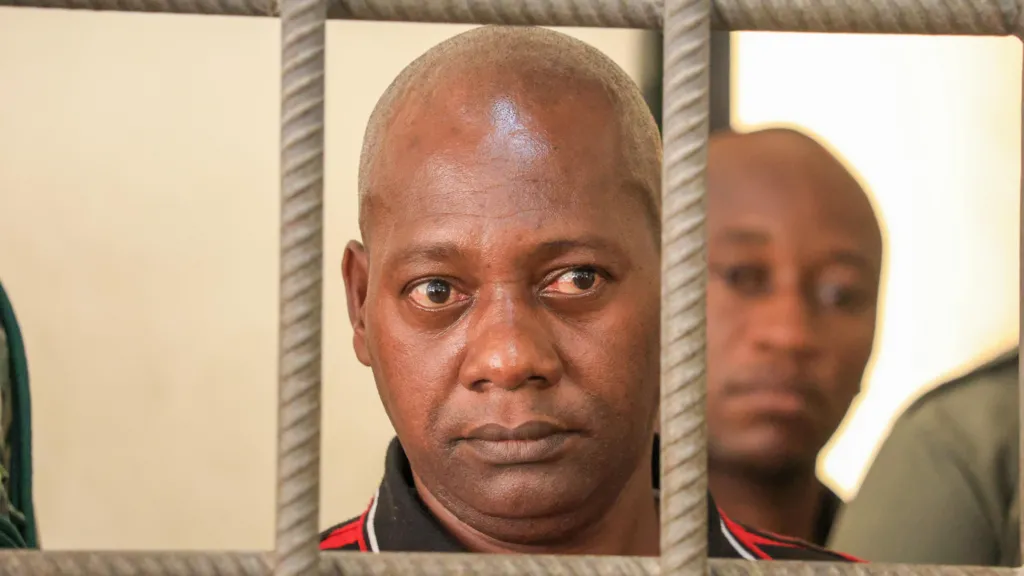
A Kenyan court is set to deliver a landmark judgment in the murder trial of Paul Nthenge Mackenzie, the controversial preacher accused of playing a central role in the deaths of 191 children linked to his religious movement in Shakahola Forest.
The case, being heard at the High Court in Mombasa, centres on allegations that Mackenzie and his co-accused promoted extreme fasting among followers who believed it would lead them to meet Jesus. The charges relate to alleged offences committed between January 2021 and September 2023.
The deaths came to light in April 2023, when authorities began uncovering mass graves in Shakahola Forest, in Kilifi County. More than 429 bodies have since been recovered from the area, exposing the scale of a tragedy that devastated families and raised serious questions about the oversight of religious groups in Kenya.
191 Murder Counts
Mackenzie and his co-accused face 191 counts of murder involving 11 identified children and 180 whose identities have not been established. Prosecutors have relied on testimony from survivors, relatives of victims, investigators and experts, alongside post-mortem reports and other evidence.
In April 2026, the court ruled that the prosecution had presented sufficient evidence to require the accused to answer the charges. The decision allowed the trial to proceed to the defence stage; it was not a finding of guilt.
The accused have denied the murder charges, maintaining that followers were not forced to fast or die. The court must determine individual criminal responsibility based on the evidence presented.
Families Left With Painful Questions
Behind the case are families still struggling to come to terms with the loss of children and relatives. Some remains recovered from the forest have been difficult to identify, leaving loved ones without the certainty of knowing whether their missing family members were among the dead.
Survivors have described a community shaped by Mackenzie's teachings, which reportedly discouraged formal education and modern medicine. Some followers believed prayer and faith alone could protect them, even when illness and starvation took a heavy toll.
Peter Shukrani, a survivor who grew up attending Mackenzie's church, told the BBC that his mother discarded medicine he needed because she believed God would heal him. He said he might have died had he not been rescued from the forest.
Yet Shukrani has continued to defend the preacher, saying followers made their own decisions about fasting. His account illustrates the complicated loyalties that have persisted among some members of the movement, even after the deaths.
Other families have expressed anger and demanded accountability. Stephen Mwiti, who told the BBC that he lost all six of his children in Shakahola, said he recovered only the remains of one son.
A Wider Legal Reckoning
The murder case is part of a broader series of proceedings involving Mackenzie and allegations linked to his religious activities. The discoveries in Shakahola have prompted national debate over religious freedom, child protection and the responsibility of authorities to intervene when religious teachings put lives at risk.
Mackenzie established Good News International Ministries in 2003 and attracted followers through church services and televised sermons. Prosecutors allege that his teachings helped create the conditions behind the deaths. The defence maintains that the accused did not force people to die.
The judgment is expected to mark a major moment in one of Kenya's most disturbing criminal cases. For the families who lost children, however, the court's decision will not erase the suffering left behind by the Shakahola tragedy.