
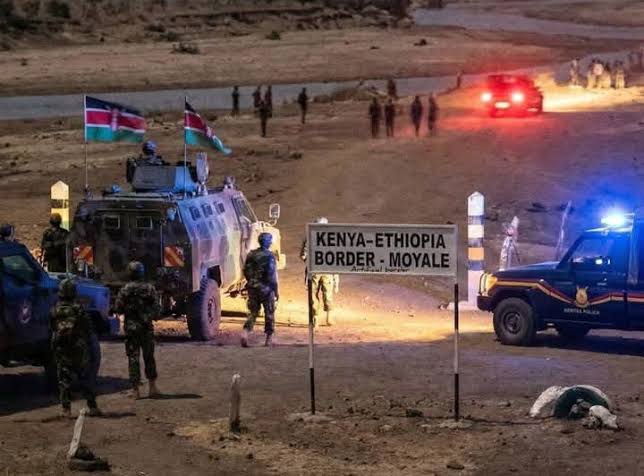
Hundreds of Ethiopians, mostly women, children and young people, have fled into Kenya through the Moyale border as escalating tensions in Ethiopia trigger gunfire and raise fears of further violence.
The arrivals began on Wednesday night, with families crossing into Moyale, Marsabit County, through several entry points. Kenyan authorities said the exact number of people who had entered the country was still unknown.
The Kenya Red Cross Society (KRCS) has launched an emergency humanitarian response to assist the displaced families, many of whom arrived carrying few belongings and facing an urgent need for food, shelter, clean drinking water and healthcare.
Police said the arrivals were fleeing tensions involving Ethiopia’s Oromia and Somali regions, particularly disputes involving the Garre community.
The situation on the Ethiopian side remained volatile on Thursday, with gunshots reportedly heard from around 5.50am. Kenyan security agencies were notified as authorities moved to monitor the situation and prevent the unrest from spreading across the border.
Those entering Kenya reportedly used several crossing points, including Sessi, Kore, Biashara, Foundation and Miti. Additional security officers were deployed to help manage the influx and maintain order.
Despite the developments across the border, the Kenyan side of Moyale remained peaceful, regional police commander Stephen Chebet said.
“There are teams on the ground to help in many ways including offering humanitarian attention,” he said.
The Moyale sub-county security team and the Moyale Cross-Border Peace Committee were also activated to ease tensions among communities living along the border and support efforts to maintain stability.
No deaths had been reported in connection with the developments at the time of the initial reports.
Red Cross mobilises emergency assistance
The Kenya Red Cross has begun establishing temporary shelters and distributing essential supplies in collaboration with the Marsabit County Government, national authorities and humanitarian partners.
The assistance includes tents, blankets, sleeping mats, jerrycans and kitchen sets to help families meet their immediate needs.
The agency is also distributing Super Cereal, a fortified food product intended to support the nutritional needs of young children, pregnant women and breastfeeding mothers. First aid services are being provided to people requiring immediate medical attention.
The initial response is expected to reach 1,000 households as humanitarian teams work to establish how many people have crossed the border and what assistance they need most.
A rapid needs assessment is under way, with preliminary findings pointing to shortages of food, safe drinking water, sanitation facilities, primary healthcare and protection services.
Women, children, older people and people with disabilities have been identified as particularly vulnerable groups requiring additional support.
Beyond providing basic supplies, the Red Cross is helping families reconnect with relatives who may have become separated during their flight from the reported violence.
“Our priority is to make sure every family arriving in Moyale is safe, sheltered and treated with dignity. Our volunteers and staff are on the ground and will continue to respond as needs evolve,” said KRCS secretary general Dr Ahmed Idris.
The society said it would provide assistance based on humanitarian need, regardless of the backgrounds of those affected. It also pledged to continue coordinating with government agencies and humanitarian partners as the situation develops.
Authorities monitor border security
The influx has placed renewed attention on the security and humanitarian challenges facing communities along the Kenya-Ethiopia border.
Authorities are monitoring movements across the border while local security teams and peace committees work to prevent tensions from affecting communities on the Kenyan side.
For the families arriving in Moyale, however, immediate survival remains the priority. Many need somewhere safe to sleep, reliable access to food and clean water, and medical support while they await further developments.
The full scale of the displacement remains unclear, and humanitarian teams are continuing their assessment to determine whether additional assistance will be required as the situation across the border unfolds.


