
By Kwabe Victor
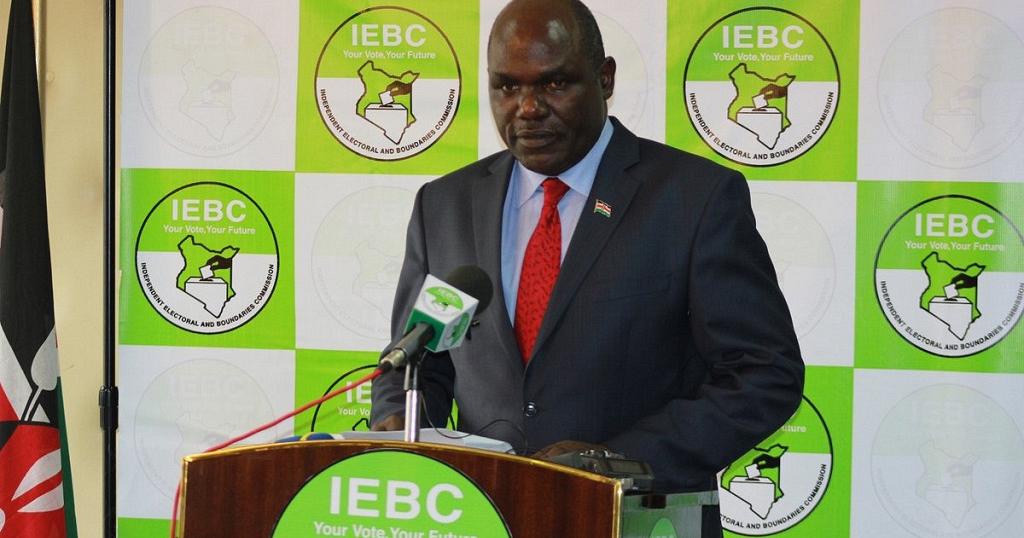
Civil societies of Kenya have moved to state their minimal conviction in the Independent Electoral and Boundaries Commission in matters on the effective conduction of this coming August polls.
The 9 civil societies have reached out to IEBC’s Chairman Wafula Chebukati in a letter signed by Kenya Human Rights Commission Executive Director, Davis Malombe, dated 2 June, citing areas that could allegedly compromise the agency’s obligation to offer credible polls.
In the letter, the organizations allege massive “Inefficiencies, negligence and outright corruption” in IEBC’s procurement and other electoral management operations, which highlight the credibility of the voters’ register and security of IEBC’s electronic systems among other issues.
The organizations include Information, Angaza Movement, Africa Centre for Open Governance (Africog), Muslim Human Rights (Muhuri), International Commission of Jurists Kenya (ICJ-Kenya), Inuka Kenya, Midrift Network, Haki Yetu, and Crawn Trust.
This comes after Deputy President William Ruto had earlier accused the IEBC of failing to account for up to a million registered voters in his stronghold having been struck out.
Chebukati in the defence had cited that no such breach would have happened unless it was an internal or external breach of the electronic voters’ register.
Later last week the Chairman of IEBC stated that investigations had been launched into the matter and perpetrators are to be brought to book.
The memo issued by Marjan asking the electoral staff to reverse the transfers not accompanied by statutory forms reveals the potentiality of their having been a breach either internally or externally.
The civil society organizations have cited improper coordination within the independent organ mandated with offering credible election and integrity among other issues.
Referring to this factor as one that has drained the faith citizens have in electoral processes.
Allegations against the IEBC
About an audit report by KPMG Firm that exposed the vulnerability of the IEBC’s electronic system.
The letter stated, “The KPMG 2017 audit report raised concerns about unauthorized entry and capacity to change, delete, amend or add changes to records, without any trace whatsoever. Your recent public comments about the transfer of voters in the register without authority are alarming as this is one of the issues flagged in 2017 and reflects a failure to address past problems.”
A need for the IEBC to take a stand in the ongoing integrity issues leaders are engaged in.
The civil societies are now urging the institution to put its constitutional powers in effect and coordinate meaningful actions towards enforcing Chapter Six and other legal as well as constitutional provisions.
A deadline for IEBC testing of its electoral technology is scheduled for the 9th of this month, a deadline the chairman said they would attain as an institution.
Now the civil societies are questioning effectivity this time round reminding the institution of previous failures, “We remind you that in the test runs in 2013 and 2017 the technology did not pass the usability test as it collapsed across the country.
The KIEMS kits did not capture and record all voters’ data and a number did not have power back up,” the letter addresses.
Reference to these failures is dire since it’s one of the causes for the nullification of the presidential election in 2017, as the court noted results transmitted from areas not within the gazette polling stations.