
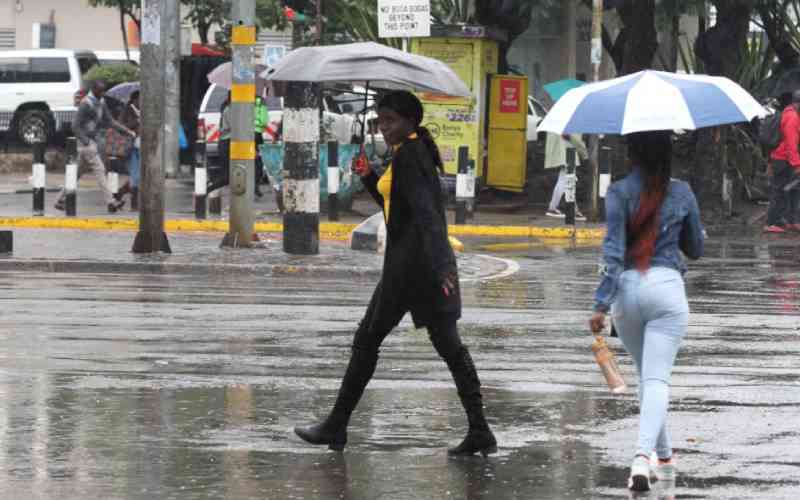
The Kenya Meteorological Department has warned of possible flash floods in parts of the country as rainfall is expected across 46 counties over the next seven days, including Nairobi, where some areas may receive showers.
The warning comes as Kenya enters the October-to-December short-rains season, with meteorologists forecasting above-average rainfall across much of the country. While the rains could provide relief to farmers and improve water supplies, heavy downpours in some areas may also pose risks to residents, motorists and communities living near rivers.
In its seven-day forecast covering October 22 to 29, 2026, the department said rainfall was expected in parts of several counties, although the amount and distribution would vary from place to place.
Parts of Mandera, Wajir, Lamu, Kilifi, Mombasa and Kwale were singled out as areas that could experience isolated storms capable of triggering flash floods.
The department cautioned that the forecast did not mean every area within the listed counties would receive rain. Some locations could experience heavy showers while others remain dry.
Six Counties Face Flash Flood Risk
The Meteorological Department identified parts of Mandera, Wajir, Lamu, Kilifi, Mombasa and Kwale as areas where isolated storms could lead to flash floods.
Such flooding can develop quickly after intense rainfall, particularly in low-lying areas, near rivers and in places with poor drainage. Roads can become impassable, while rising water levels may threaten homes and livelihoods.
Residents in areas prone to flooding have been urged to remain vigilant throughout the forecast period. Those living near rivers and other waterways should pay attention to changing water levels and avoid crossing flooded sections.
Motorists and pedestrians have also been advised not to attempt to cross flooded roads, bridges or rivers. Even when the water appears shallow, moving water can make crossings dangerous.
The department's warning highlights the importance of taking precautions before heavy rainfall begins, particularly in communities where flooding has previously disrupted transport and daily activities.
Residents Urged to Take Precautions During Heavy Rain
The department issued several safety recommendations for people in areas likely to experience heavy rainfall and thunderstorms.
Residents have been advised against sheltering under trees or standing near isolated tall structures during thunderstorms because of the danger of lightning strikes.
Motorists should reduce their speed, maintain a safe distance from vehicles ahead and use headlights when rain reduces visibility. Drivers have also been urged to avoid flooded roads rather than risk driving through water of uncertain depth.
People living on or below steep slopes and unstable hillsides should watch for possible signs of landslides. These include cracks appearing in the ground, leaning trees, unusual ground movement and sudden changes in water flow.
The department encouraged residents to monitor local weather updates because rainfall conditions may differ significantly between neighbouring areas.
The precautions are particularly important where intense rainfall can overwhelm drainage systems or cause water to rise rapidly. Residents should follow official advisories and move away from areas threatened by flooding when necessary.
Short Rains Bring Hope for Farmers Amid El Niño Concerns
The forecast comes at a critical time for farmers preparing for the short-rains season, which supports crop production, pasture growth and water supplies, particularly in arid and semi-arid areas.
The Meteorological Department encouraged farmers in areas receiving rainfall to take advantage of improved soil moisture. However, the uneven distribution of rain means that planting decisions may need to reflect local conditions rather than the national forecast alone.
The wider outlook has also drawn attention to the possibility of an unusually strong El Niño event.
The World Meteorological Organization has warned that the current event could reach exceptional strength, with tropical Pacific sea-surface temperatures projected to rise substantially above average between November 2026 and January 2027.
WMO Secretary-General Celeste Saulo said the projected intensity was beyond the range of monitoring charts used over the previous four decades. She also stressed that early action could help limit the effects of extreme weather.
El Niño can disrupt normal rainfall and temperature patterns around the world. Its effects vary by region, with some areas experiencing heavier rainfall and flooding while others face drought.
For Kenya, the prospect of improved rainfall offers potential benefits for agriculture and water security. But the possibility of localised flooding means that residents and authorities must prepare for both the opportunities and the risks.
As the short-rains season progresses, residents have been urged to follow official forecasts, exercise caution during storms and avoid crossing flooded roads or waterways.