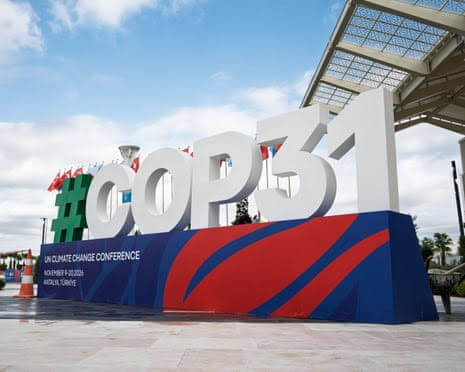
The world’s climate ambitions are facing another major test as nearly 200 countries gather in Antalya, Turkey, for the 31st United Nations Climate Change Conference (COP31), with mounting pressure to turn years of promises into meaningful action.
The two-week summit, which opened today, Monday, November 9, comes at a time when extreme weather events are intensifying, global temperatures continue to rise and disagreements over climate financing threaten international cooperation.
More than 100,000 participants are expected at the Antalya Expo Centre, including government representatives, climate scientists, environmental campaigners and civil society organisations. The conference runs until November 20.
At the centre of the discussions is a difficult question: How can countries accelerate the transition from fossil fuels to cleaner energy while ensuring that developing nations have the resources to cope with the effects of climate change?
For many poorer countries, particularly those in Africa, the issue goes beyond reducing emissions. It is also about securing funding to protect communities, strengthen infrastructure, improve food security and recover from increasingly destructive weather events.
A climate emergency meeting a divided world
COP31 comes after another year marked by severe climate-related disasters.
Europe has experienced intense heatwaves, wildfires have affected parts of Indonesia, while devastating floods in Nepal have highlighted the vulnerability of communities exposed to extreme weather.
Scientists are also warning about the possibility of another exceptionally strong El Niño later in the year, which could intensify heat and disrupt weather patterns in several parts of the world.
The United Nations has warned that the world remains off track to meet the Paris Agreement's most ambitious temperature goal of limiting global warming to 1.5 degrees Celsius above pre-industrial levels.
The consequences are particularly serious for countries with limited resources to prepare for climate shocks.
Climate campaigners are calling on governments to accelerate the shift away from fossil fuels and expand renewable energy investment.
Rachel Cleetus, climate programme director at the Union of Concerned Scientists, said global leaders needed to commit to a faster transition towards renewable energy, particularly as energy affordability becomes an increasingly pressing concern.
Turkey and Australia take on unusual leadership roles
This year's conference has an unusual leadership arrangement.
Turkey is hosting and presiding over COP31, while Australia is leading the negotiations under an agreement reached after the two countries disputed the hosting arrangements.
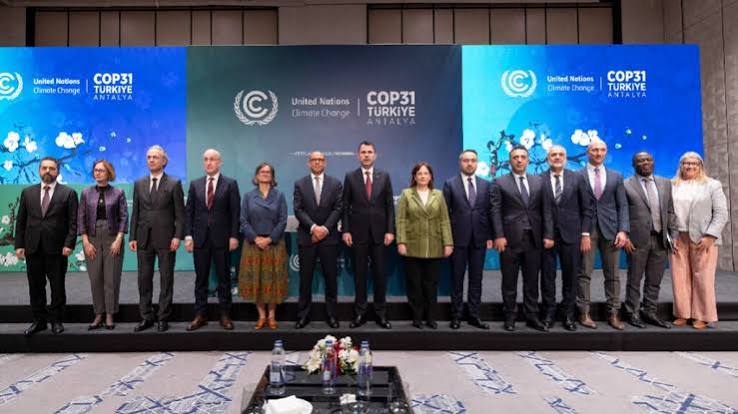
Turkey's environment minister, Murat Kurum, is serving as COP31 President, while Australia's Climate Change and Energy Minister, Chris Bowen, is leading the negotiations.
The two countries have presented the summit as an opportunity to move beyond political declarations and focus on implementing existing climate commitments.
Turkey is also promoting an action agenda covering issues such as clean energy, waste management, food security and the use of technology in addressing environmental challenges.
One of its central proposals is to increase electricity's share of global energy demand from about 20 per cent to 35 per cent by 2035.
However, the proposal could generate debate over what qualifies as clean electrification and whether the expansion of electricity should be accompanied by a clear reduction in fossil fuel dependence.
The European Union has advocated for clean electrification, reflecting wider disagreements over the future role of coal, oil and gas.
At COP28 in Dubai in 2023, countries agreed to transition away from fossil fuels. However, disagreements over implementation have continued at subsequent climate negotiations.
The COP30 conference in Brazil ended without an explicit reference to fossil fuels in its final agreement, after resistance from oil-producing countries. Brazil subsequently advanced a voluntary roadmap on the transition away from fossil fuels.
Climate finance emerges as a major battleground
For developing countries, the availability of climate finance remains one of the most important issues at COP31.
African nations and other climate-vulnerable countries are seeking greater financial support from wealthier economies to help them adapt to rising temperatures, floods, droughts and other climate-related threats.
The funding is needed for practical interventions, including flood protection infrastructure, drought-resistant agriculture, early warning systems and resilient public services.
Developing countries are also pressing for discussions on increasing adaptation finance, arguing that communities already experiencing the effects of climate change cannot afford to wait for future commitments.
However, expectations of fresh financial pledges remain uncertain. A senior European Union official has cautioned against anticipating additional funding commitments.
The disagreement reflects a longstanding divide in climate negotiations over how responsibility for financing climate action should be shared, particularly given the historical contribution of industrialised countries to global emissions.
United States absence adds to diplomatic uncertainty
The negotiations are also taking place against a complicated geopolitical backdrop.
The United States is once again missing from the official climate diplomacy process following President Donald Trump's decision to withdraw the country from the Paris Agreement.
A US congressional delegation is nevertheless expected to attend the Antalya meeting, although its participation does not amount to official representation by the federal administration.
Meanwhile, conflicts involving Iran and Russia's war in Ukraine have added to international tensions and concerns about energy security.
Despite the difficult political and financial environment, some negotiators have expressed optimism about the atmosphere surrounding the conference.
Azerbaijan's chief negotiator, Yalchin Rafiyev, told AFP that the mood was positive, but stressed the need to translate that goodwill into concrete results.
As negotiations continue over the next two weeks, the pressure will be on governments to demonstrate that international climate cooperation can deliver more than ambitious speeches.
For millions of people living in climate-vulnerable communities, the outcome will be measured not only in agreements signed in Antalya, but also in the resources, protection and practical action that reach them.