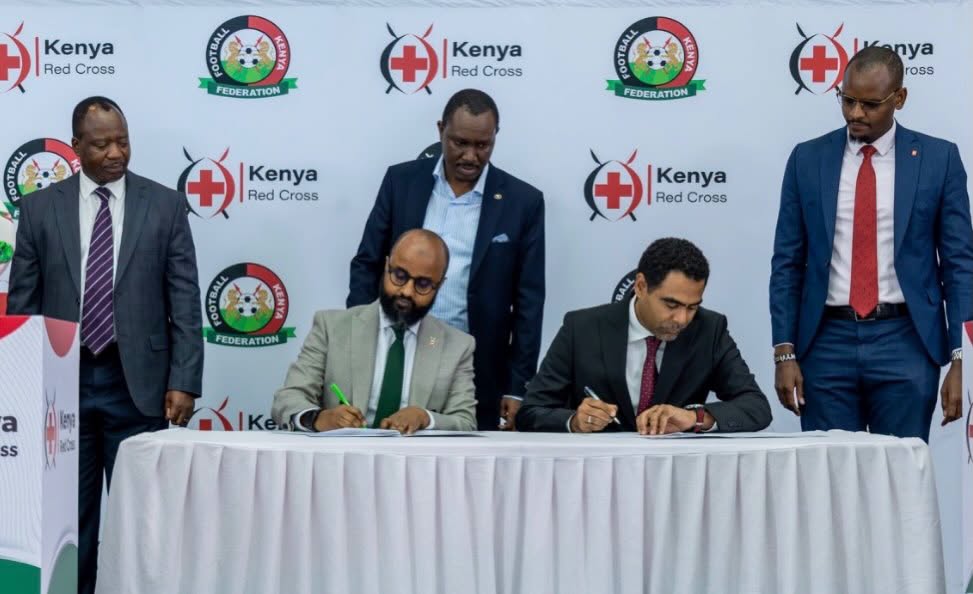
Football Kenya Federation (FKF) and the Kenya Red Cross Society have signed a partnership worth approximately KSh54 million aimed at improving medical support and emergency response across Kenyan football.
The agreement, announced in Nairobi on Tuesday, November 24, 2026, will see the two institutions work together to strengthen player welfare, improve medical preparedness and make football matches safer for players, officials and supporters.
The partnership will cover four major competitions: the SportPesa League, FKF Women's Premier League, National Super League and Women's National Super League.
It will also extend medical assistance to international matches hosted in Kenya.
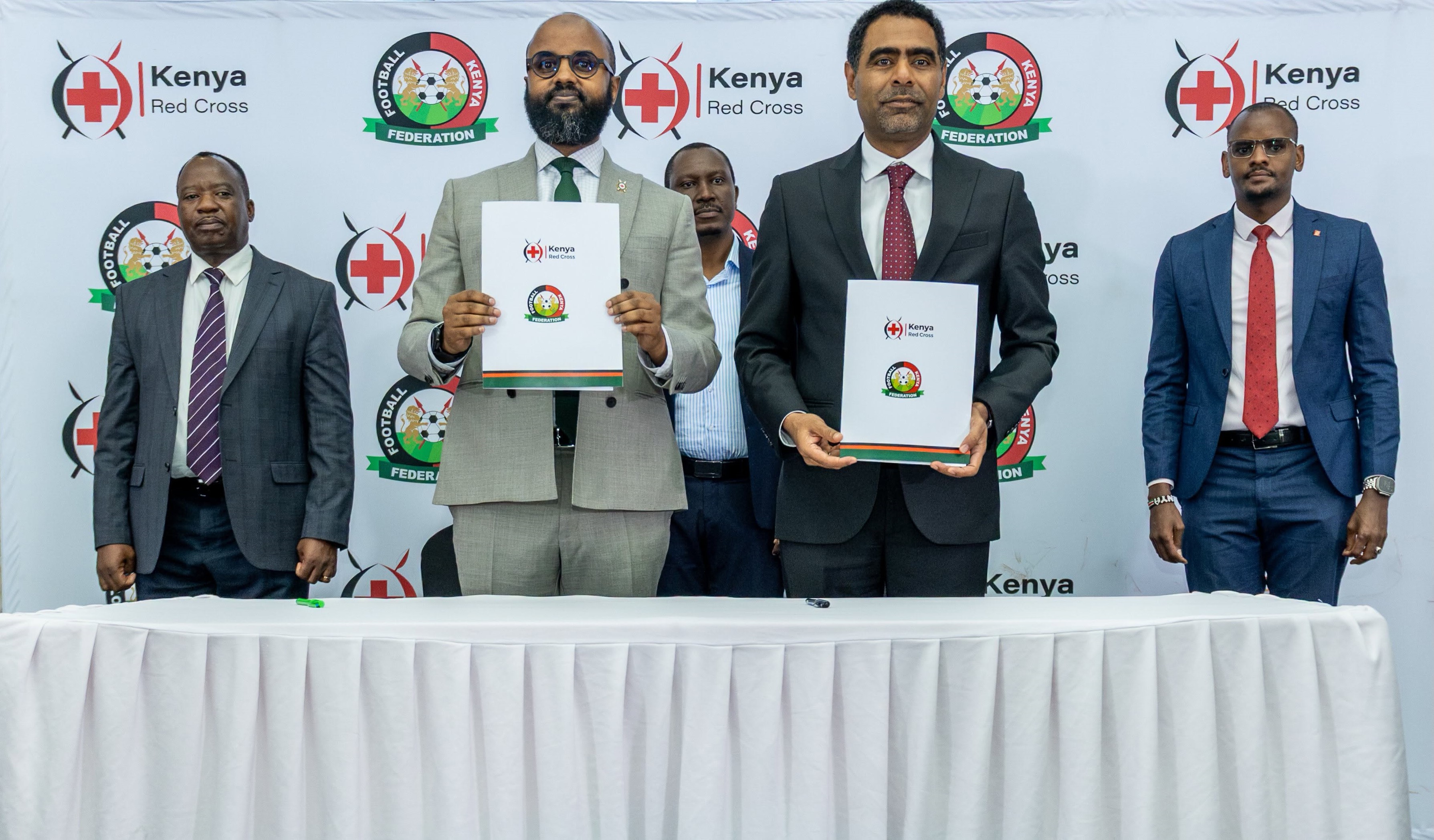
FKF President Hussein Mohammed and Kenya Red Cross representatives during the partnership announcement.
What the KSh54 Million Partnership Will Cover
Under the agreement, Kenya Red Cross will provide ambulance services during the covered competitions and international matches.
The partnership will also introduce first aid services for Division One matches, alongside medical training for club teams.
Other areas of cooperation include the provision of trauma bags and stretchers to improve the ability of football teams to respond to emergencies.
The measures are intended to ensure that players and other participants can access medical assistance when injuries or other emergencies occur during matches.
FKF President Hussein Mohammed said the agreement reflects the federation's commitment to placing people's safety at the centre of football development.
"Football is about more than what happens on the pitch. It is also about the people, their safety and the communities we serve. This partnership is a practical demonstration of our commitment to putting people first," Mohammed said.
Red Cross Explains Its Role in Football Safety
The agreement builds on an existing relationship between the two organisations.
Kenya Red Cross has previously supported the FKF Women's Premier League and provided medical response services during the African Nations Championship (CHAN) and other international matches hosted in Kenya.
The expanded partnership will extend those services to more competitions and strengthen emergency preparedness across different levels of the game.
Kenya Red Cross Secretary General Dr Ahmed Idris said emergencies could occur whenever large numbers of players, supporters and families gather for football events.
"Football brings Kenyans together, and wherever thousands of fans, players and families gather, emergencies can happen. This partnership makes sure that when they do, help is already there," Idris said.
He added that the organisation would provide E-Plus ambulance services, first aid teams at matches and medical training for club teams.
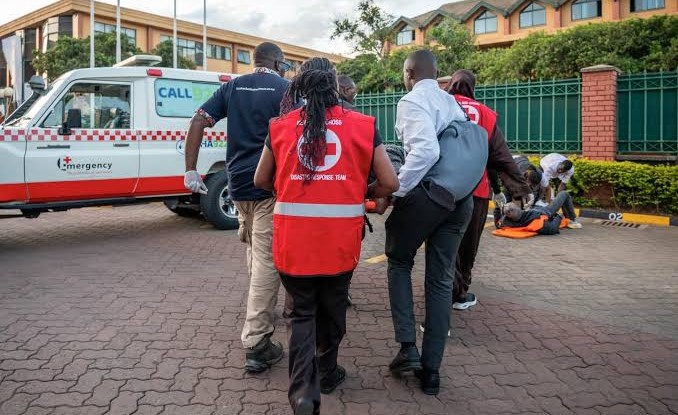
Kenya Red Cross ambulance and first aid personnel providing emergency medical support at a sporting event.
Partnership to Support Grassroots Football and Young Players
Beyond emergency medical services, the agreement will also focus on youth development and grassroots football.
Dr Idris said the two institutions would pursue youth-led programmes aimed at strengthening the capacity of grassroots teams.
The partnership will also support the FIFA Arena programme, which seeks to provide young people with safe spaces to play, learn and develop.
He said the collaboration would bring together football development and community resilience.
"Football builds teams, and the Red Cross builds resilience. Side by side, we can build safer, stronger communities," he said.
FKF President Mohammed also stressed the importance of strengthening structures that support football at every level, rather than concentrating only on elite competitions.
How Clubs and Players Stand to Benefit
Football clubs are expected to be among the biggest beneficiaries of the agreement.
Currently, clubs may have to organise and pay for their own ambulance and medical services during competitions.
Under the new arrangement, structured medical and ambulance support will be provided across the covered competitions, reducing the financial and logistical pressure on participating teams.
This could allow clubs to direct more resources towards other operational needs while ensuring players receive appropriate medical attention during matches.
Both institutions say the success of the partnership will be assessed through the consistency and quality of medical services delivered at match venues.
The impact will also be measured by how effectively the programme serves players, clubs, match officials and supporters.
For Kenyan football, the KSh54 million agreement represents an expanded effort to make medical preparedness part of the game's wider development, from grassroots competitions to the country's top leagues.