Nearly a decade after Yahya Jammeh left power, Gambians are preparing to elect a president who must answer a difficult question: what has changed, and what remains unfinished?
For many voters, the debate is no longer simply about political leadership. It is about finding work, keeping businesses open, affording basic necessities and securing justice for those who suffered under the former regime.
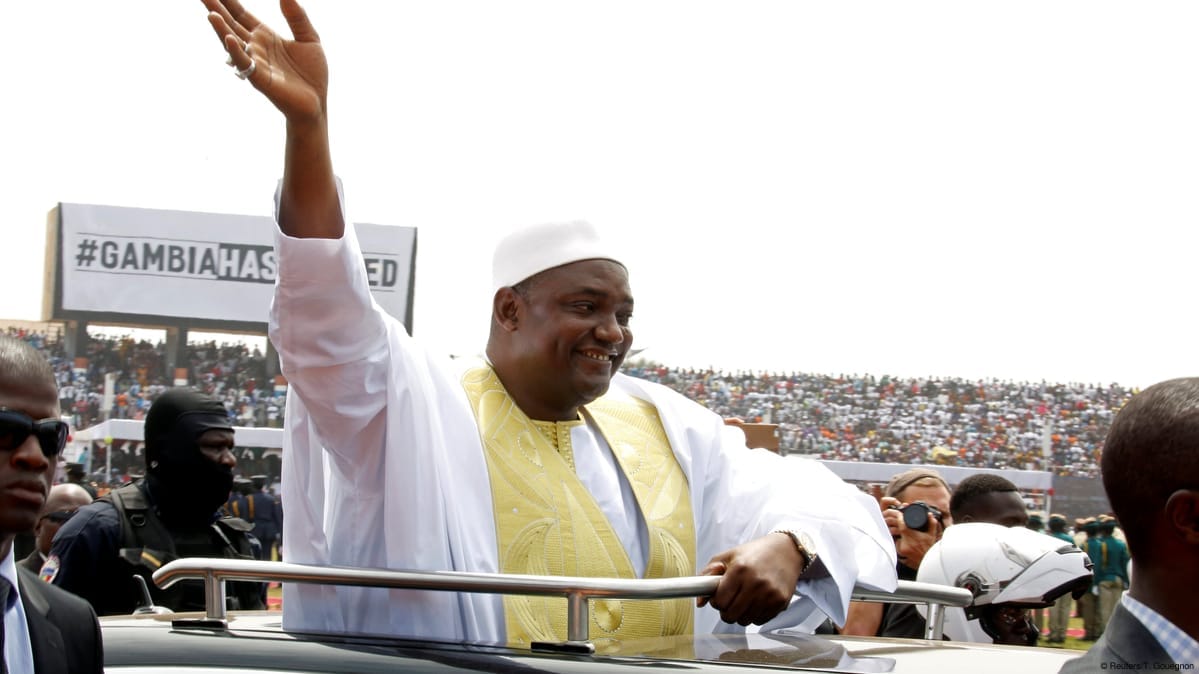
President Adama Barrow is seeking another term in office, but dissatisfaction over the pace of economic improvement and democratic reforms is shaping the campaign.
The Independent Electoral Commission (IEC) has scheduled the presidential election for December 5, 2026. Its official electoral calendar confirms that the vote is still ahead. Eight candidates had been processed to contest the election as of November 19, following the withdrawal of one previously approved candidate.
For voters such as Sosseh Jagne, the outcome will have consequences far beyond the State House.
Electricity cuts threaten small businesses
Jagne established Ya Anna's Catering in 2020 before expanding the business into a restaurant in early 2025.
But unreliable electricity has made running the business increasingly difficult. Frequent outages have disrupted food preparation, refrigeration and customer service.
Between August and October, she said, some power cuts lasted 19 hours or longer.
She estimates that spoiled food cost her more than 40,000 Gambian dalasis, equivalent to about $532. She has also stopped selling homemade iced juices because she cannot guarantee that they will remain properly chilled.
"Electricity is not a luxury; it is a necessity for people's everyday lives and, especially, for businesses that depend on it to operate," she told Al Jazeera.
Her experience illustrates how unreliable public services can undermine small businesses and household incomes.
For entrepreneurs already operating under financial pressure, prolonged power cuts mean lost stock, fewer customers and reduced earnings.
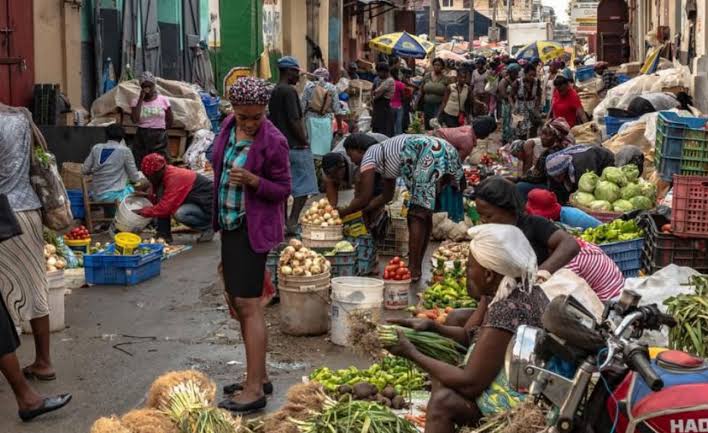
Small businesses in The Gambia are struggling with unreliable electricity and rising operating costs.
Young people struggle to find work
For many young Gambians, employment is among the most pressing concerns ahead of the election.
The 2025 Gambia Labour Force Survey puts overall unemployment at 8.3 per cent, up from 7.6 per cent in 2022–23.
Among people aged 15 to 35, the rate stands at 11.5 per cent. More concerning, 41.3 per cent of young people in that age group were neither employed nor attending school or receiving training.
For 26-year-old Maram Mendy, a University of The Gambia graduate, the search for employment has become exhausting.
Her parents made sacrifices to finance her education. Yet, despite graduating, she has struggled to secure a job.
"I'm now fed up with looking for a job," she told Al Jazeera.
She said many employers demand previous work experience, leaving graduates caught in a difficult cycle: they need a job to gain experience but cannot get a job without it.
The frustration has also pushed some young people to consider leaving the country.
Buba Sanneh, 28, has been unemployed since graduating in 2023. He told Al Jazeera that he had considered travelling to Europe through irregular migration, commonly known as the backway.
For Hakeem Touray, the consequences of that journey are painfully personal.
His elder brother, Bob, died in 2021 while attempting to cross the Mediterranean Sea. He was 27.
The loss has left his family confronting the human cost of limited opportunities at home.
Figures cited by United Nations Special Rapporteur Morris Tidball-Binz following his October 2026 visit to The Gambia point to the scale of the problem. Independent sources reported that 1,603 Gambians died while attempting irregular migration in 2024 and another 893 in 2025, most of them at sea.
The International Organization for Migration separately recorded at least 408 Gambians missing along migration routes since 2014.
For families affected, the figures represent more than migration statistics. They represent lives lost and relatives who may never return.
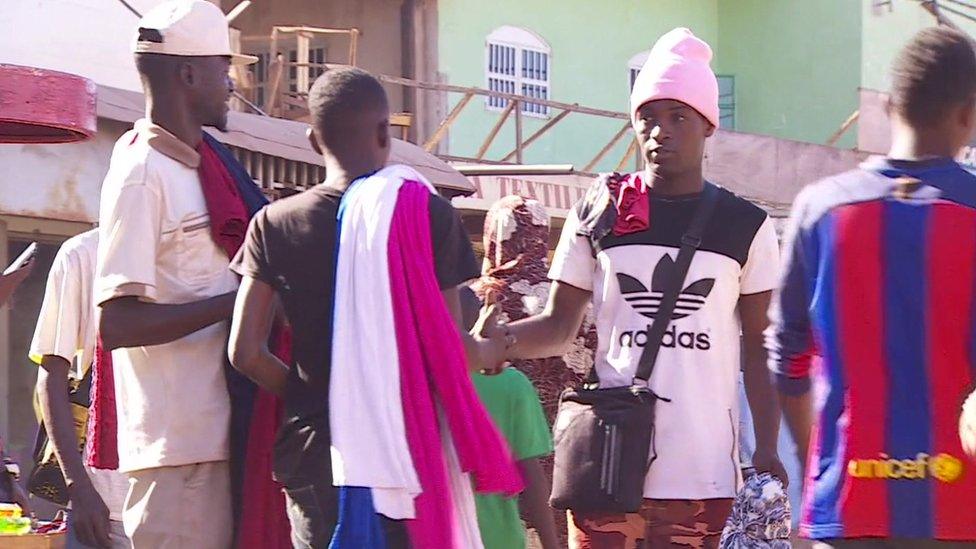 Youth unemployment and limited opportunities remain central concerns for Gambian voters.
Rising living costs deepen economic pressure
The employment crisis is unfolding alongside widespread poverty and the rising cost of everyday necessities.
Figures from the Gambia Bureau of Statistics show that 53.4 per cent of the population, approximately 1.1 million people, lived below the national poverty line in 2020.
The burden was particularly severe in rural communities, where poverty stood at about 76 per cent, compared with 34 per cent in urban areas.
At Bakoteh Market, vegetable seller Fatoumatta Jawara, 38, said supporting her family has become increasingly difficult. She wants the next administration to make affordable healthcare a priority.
"Survival is becoming harder with each passing day. We need a president who will improve our lives for the better," she told Al Jazeera.
Nearby, 22-year-old Isatou Ceesay, a mother of two, expressed frustration with politicians who campaign on promises but fail to maintain contact with voters once elections are over.
"All they do is promise, and after the election you don't hear from them again. We are tired of their endless promises," she said.
Security is also a concern, particularly in communities close to Senegal's Casamance region. Instability in the neighbouring area has raised questions about the safety of border communities and livelihoods dependent on cross-border movement.
For many households, the priorities are immediate: affordable food, accessible healthcare, reliable electricity and opportunities to earn a living.
Victims of Jammeh's regime still waiting for justice
Beyond economic concerns, the election is also testing the country's commitment to addressing abuses committed during Jammeh's 22-year rule.
His departure in 2017 raised expectations that victims would finally receive justice and adequate compensation.
But nearly a decade later, many families say progress has been painfully slow.
Sainabou Camara Lowe was 17 when security forces violently suppressed student demonstrations in April 2000, killing more than a dozen students.
She survived but sustained a spinal injury that required two operations.
Now 43 and widowed, she is raising five children while living with limited mobility. Although she received about 900,000 dalasis, approximately $11,970, through the reparations process, she said the payment had not resolved her family's difficulties.
"We are forgotten as victims and continue to wallow in pain and poverty," she told Al Jazeera.
Kebba Jome, national coordinator of the Gambia Centre for Victims of Human Rights Violations, said fewer than 25 per cent of the 263 recommendations made by the Truth, Reconciliation and Reparations Commission had been fully implemented.
He said a special tribunal expected to begin hearings early next year would be an important step towards prosecuting alleged crimes committed under Jammeh.
Jome argued that the next president would have a responsibility to ensure the accountability process moves forward.
For Muhammed and Fatoumatta Sandeng, the children of opposition activist Ebrima Solo Sandeng, justice remains a central demand.
Their father died in state custody in April 2016 after being tortured, according to findings by the Truth, Reconciliation and Reparations Commission.
They want the incoming administration to implement the commission's recommendations and ensure those responsible for abuses face justice.
"Victims have been waiting, victims are dying," Fatoumatta said. "Justice is long overdue."
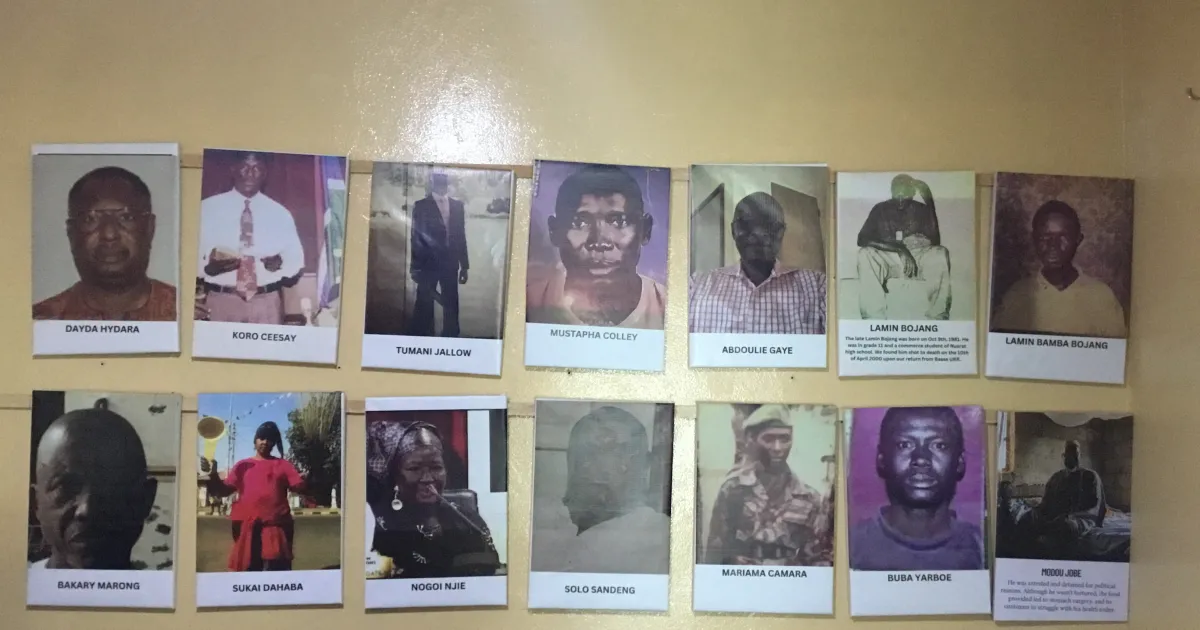 Families affected by abuses under Yahya Jammeh continue to demand accountability and reparations.
Barrow and Darboe offer competing political promises
The election comes as The Gambia continues to grapple with unfinished constitutional and institutional reforms.
One of the major promises made after Jammeh's departure was the replacement of the 1997 Constitution.
A proposed constitution completed in 2020 included a two-term presidential limit and other institutional changes. However, it failed to secure the two-thirds majority required in the National Assembly in September that year.
Disagreement over whether Barrow's first term should count towards the proposed presidential limit was among the issues surrounding the draft.
Barrow blamed opposition resistance for its failure and has said he would revisit constitutional reform if re-elected.
His main challenger, Ousainou Darboe, leader of the United Democratic Party (UDP), has promised to reintroduce the 2020 draft within his first 100 days in office.
Darboe's party manifesto also commits him to serving one five-year term.
The proposals include reforms to public institutions and the security sector, reducing the budget of the Office of the President, addressing public debt and improving access to healthcare, education, electricity and water.
Other candidates include former Kanifing Municipality mayor Talib Ahmed Bensouda and independent candidate Almameh Gibba, who has said he would facilitate Jammeh's return if elected.
Former Vice President Isatou Touray is also seeking to make history as the country's first woman president. Campaigning under the symbol of a broom, she has promised constitutional reform and improvements in living conditions.
The IEC's November 19 update confirmed eight candidates remained in contention after Ansu Sanneh of the National Builders Party withdrew.
Political scientist Essa Njie said the outcome would depend on several factors, including economic conditions, candidates' personalities and party loyalty.
He noted that although unemployment, living costs and corruption were major campaign issues, some voters would also make decisions along ethnic, religious and political lines.
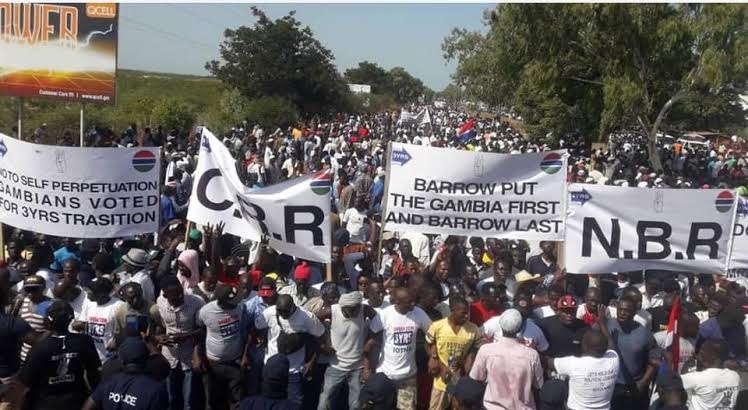 Adama Barrow and Ousainou Darboe are among the leading political figures competing for the presidency.
Can the next president deliver?
For many Gambians, the December 5 election is about whether another five years will bring improvements they can actually feel.
Jagne wants dependable electricity to keep her restaurant running. Mendy wants an opportunity to use her education. Sanneh wants a future that does not require risking his life to reach Europe.
Market traders want to feed their families and afford healthcare. Victims of past abuses want compensation, accountability and recognition.
The next administration will inherit an economy under pressure, unfinished democratic reforms and demands for justice that have persisted since the end of Jammeh's rule.
The election will therefore test more than the popularity of individual candidates. It will test whether the country's democratic transition can deliver meaningful improvements in people's lives.
For Hakeem Touray, whose brother died attempting to reach Europe, the issue is particularly painful.
"Our young people are not necessarily running away from The Gambia; many are running away from hopelessness," he told Al Jazeera.
That sentiment captures the challenge facing whoever wins the presidency: restoring hope in a country where many people are still waiting for the promises of change to become reality.