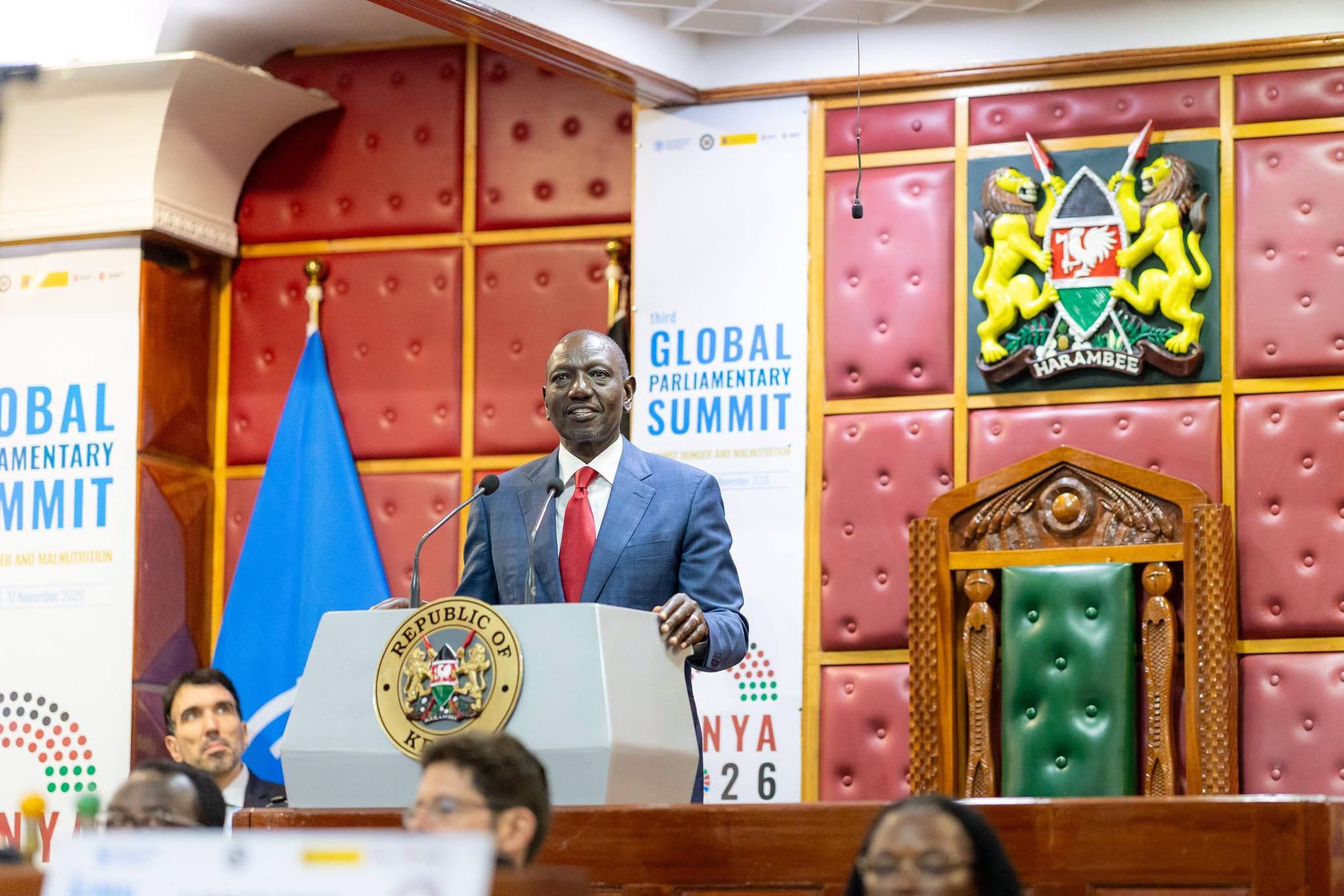
President William Ruto has officially opened the Third Global Parliamentary Summit Against Hunger and Malnutrition in Nairobi, bringing together legislators and international stakeholders to confront one of the world's most persistent challenges: access to adequate and nutritious food.
The two-day summit, taking place on November 16–17 at Parliament Buildings, has drawn more than 250 delegates representing over 100 national legislatures, making Kenya the first African country to host the international gathering.
The meeting provides a platform for parliamentarians to examine how laws, government budgets and parliamentary oversight can help address hunger, malnutrition and growing pressure on food systems.
Jointly organised by the Parliament of Kenya, the Food and Agriculture Organization of the United Nations (FAO) and the Spanish Agency for International Development Cooperation (AECID), the summit builds on previous editions held in Spain in 2018 and Chile in 2023.
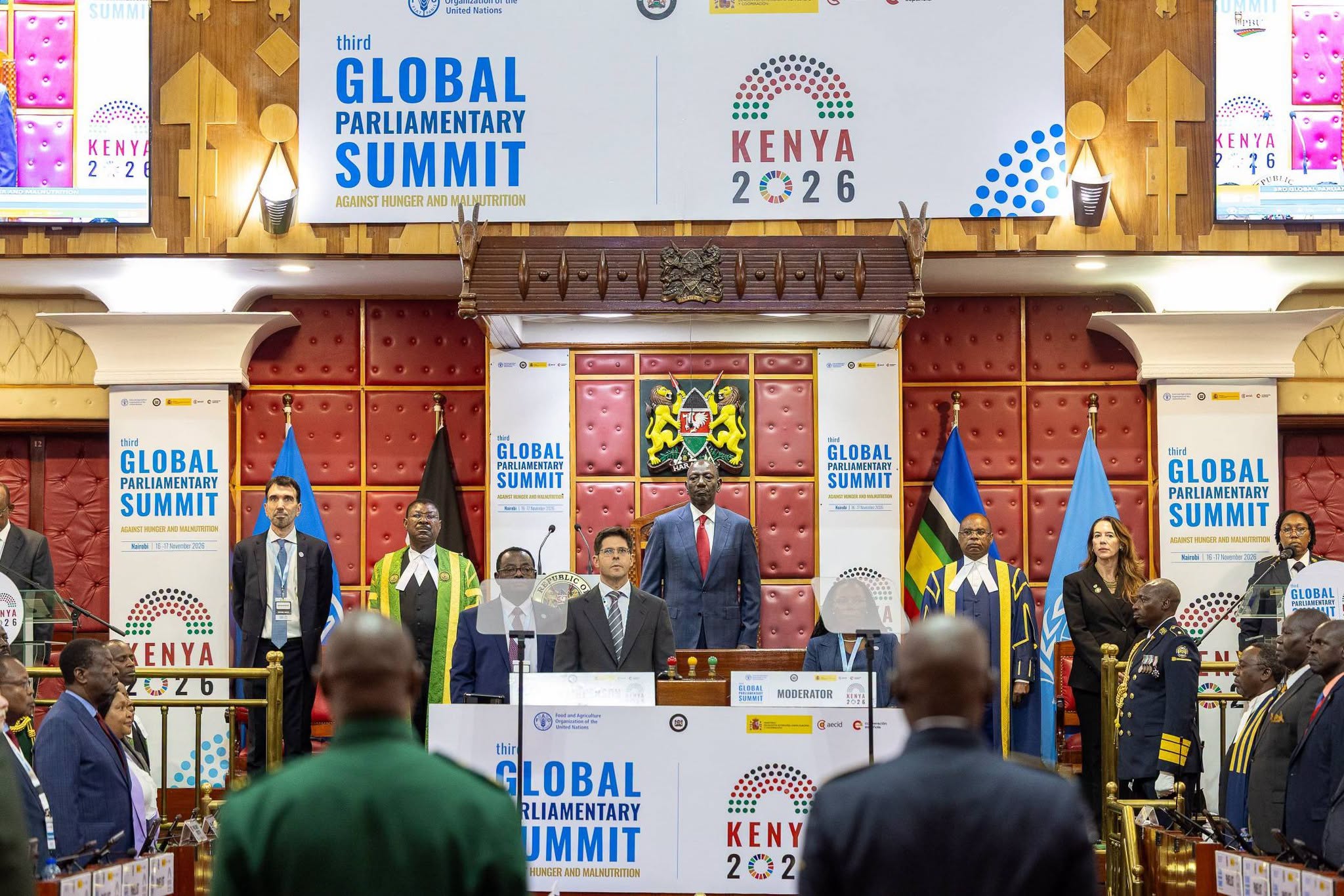
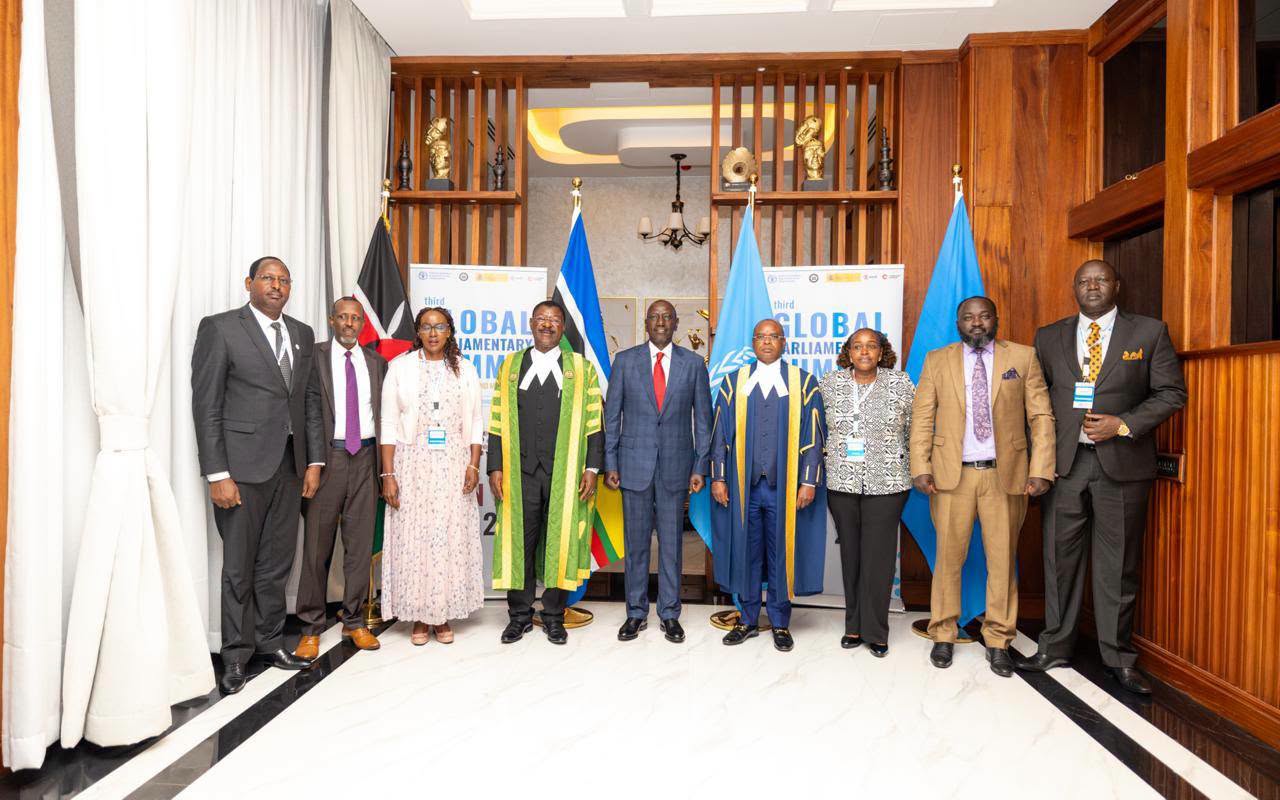 President William Ruto and other leaders during the official opening of the Third Global Parliamentary Summit Against Hunger and Malnutrition in Nairobi.
Kenya's food security challenge
The summit comes at a difficult moment for Kenya, where millions of people in arid and semi-arid areas continue to face food shortages linked to unreliable rainfall, drought and other climate-related shocks.
A September 2026 assessment by the Integrated Food Security Phase Classification (IPC) estimated that approximately 2.7 million people in Kenya's arid and semi-arid lands were experiencing crisis-level or worse food insecurity between July and October 2026.
Of these, about 348,000 people were classified in the Emergency category, reflecting the severity of the situation in affected communities.
The nutrition outlook is also concerning. IPC estimates indicate that more than 883,300 children aged between six and 59 months, alongside 117,000 pregnant and breastfeeding women, will require treatment for acute malnutrition between April 2026 and March 2027.
These figures underline the need for sustained investment in food production, nutrition services and support for communities whose livelihoods depend on climate-sensitive agriculture.
Parliamentarians urged to turn commitments into action
Discussions at the summit are centred on three broad priorities: advancing the right to food through inclusive development, improving access to affordable and nutritious diets, and building resilient and sustainable agricultural systems.
Beyond political declarations, the meeting is expected to examine how national legislatures can translate international commitments into practical action through legislation, budget allocations and stronger oversight of government programmes.
The previous summit, held in Chile in 2023, produced the Global Parliamentary Pact Against Hunger and Malnutrition, which called for stronger legislative action to address food insecurity and advance the right to adequate food.
The Nairobi meeting builds on those commitments, with renewed attention on the effects of climate change, economic pressures and disruptions to agricultural production.
For African countries, the discussions offer an opportunity to push for greater investment in climate-resilient agriculture, support for smallholder farmers, improved nutrition programmes and stronger food systems.
The road ahead
Kenya's hosting of the summit places the country at the centre of an international conversation about how governments can tackle hunger and malnutrition.
But the real measure of its success will extend beyond the two-day meeting.
For millions of households facing rising food insecurity, the priority remains practical solutions that make food more available, affordable and nutritious.
As parliamentarians deliberate in Nairobi, the challenge is to ensure that the commitments made translate into meaningful improvements in the lives of vulnerable communities.