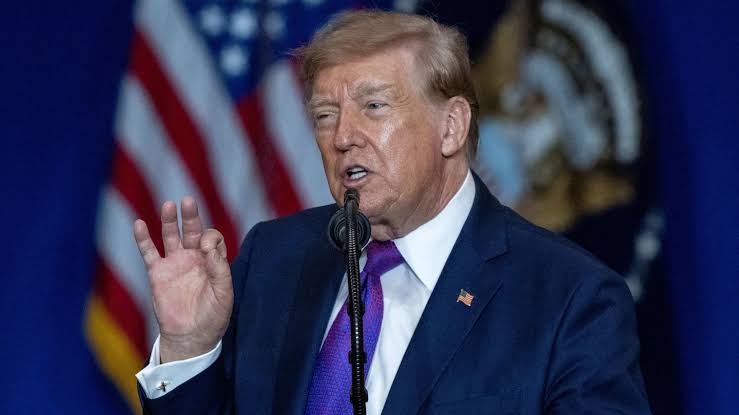
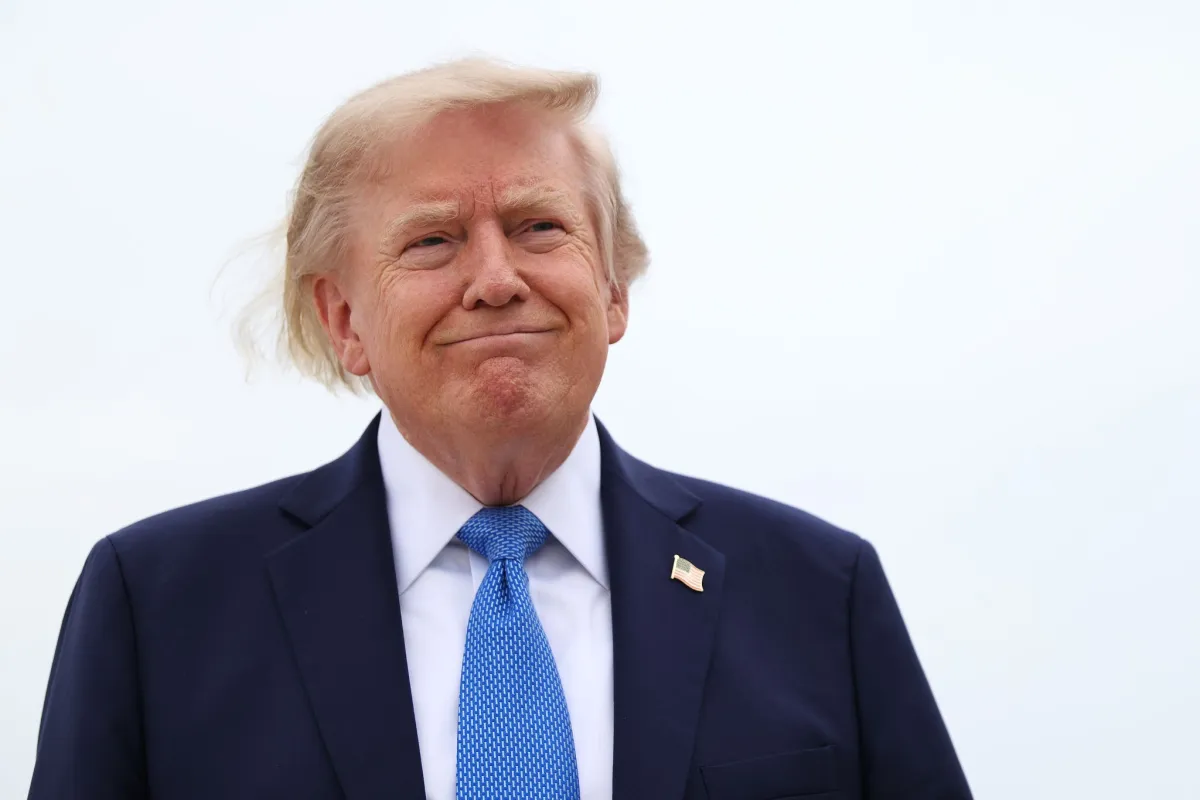
Trump says he plans to meet Abdul El-Sayed, the incoming Michigan senator, to discuss a proposal to extend government-funded health insurance to every American.
The unexpected development follows El-Sayed’s unusual offer to rename the proposed programme “TrumpCare” if the president helps make universal healthcare a reality.
During a 45-minute interview with the New York Post on Tuesday, November 24, Trump praised the Democrat’s approach.
“He’s a smart guy,” Trump said.
“He did a good job. He actually did a very good job.”
Trump added that he expected to meet El-Sayed, suggesting that the two sides could find common ground.
“Maybe there’s some place in the middle that we could go,” he said, without giving a date for the meeting.
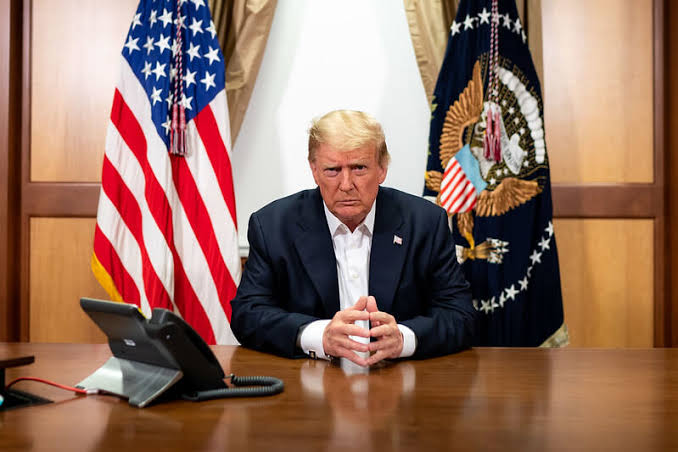
A photo of US President Donald Trump at the White House.
The comments mark a striking change in tone after weeks of political hostility.
During the campaign, Trump questioned El-Sayed’s loyalty to the United States and attempted to link him to the Muslim Brotherhood. El-Sayed denied any association with the organisation, and no evidence was presented to support the allegation.
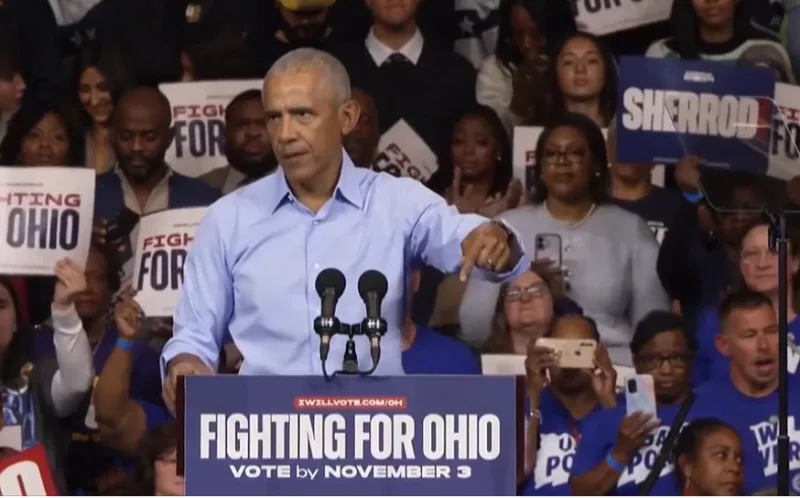
At an October 25 rally in Port Huron, Michigan, Trump described him as a member of the group. Democrats condemned the remarks as an attack on his Muslim faith and Egyptian heritage.
El-Sayed, a physician and former head of Detroit’s Health Department, repeatedly challenged the president's attacks.
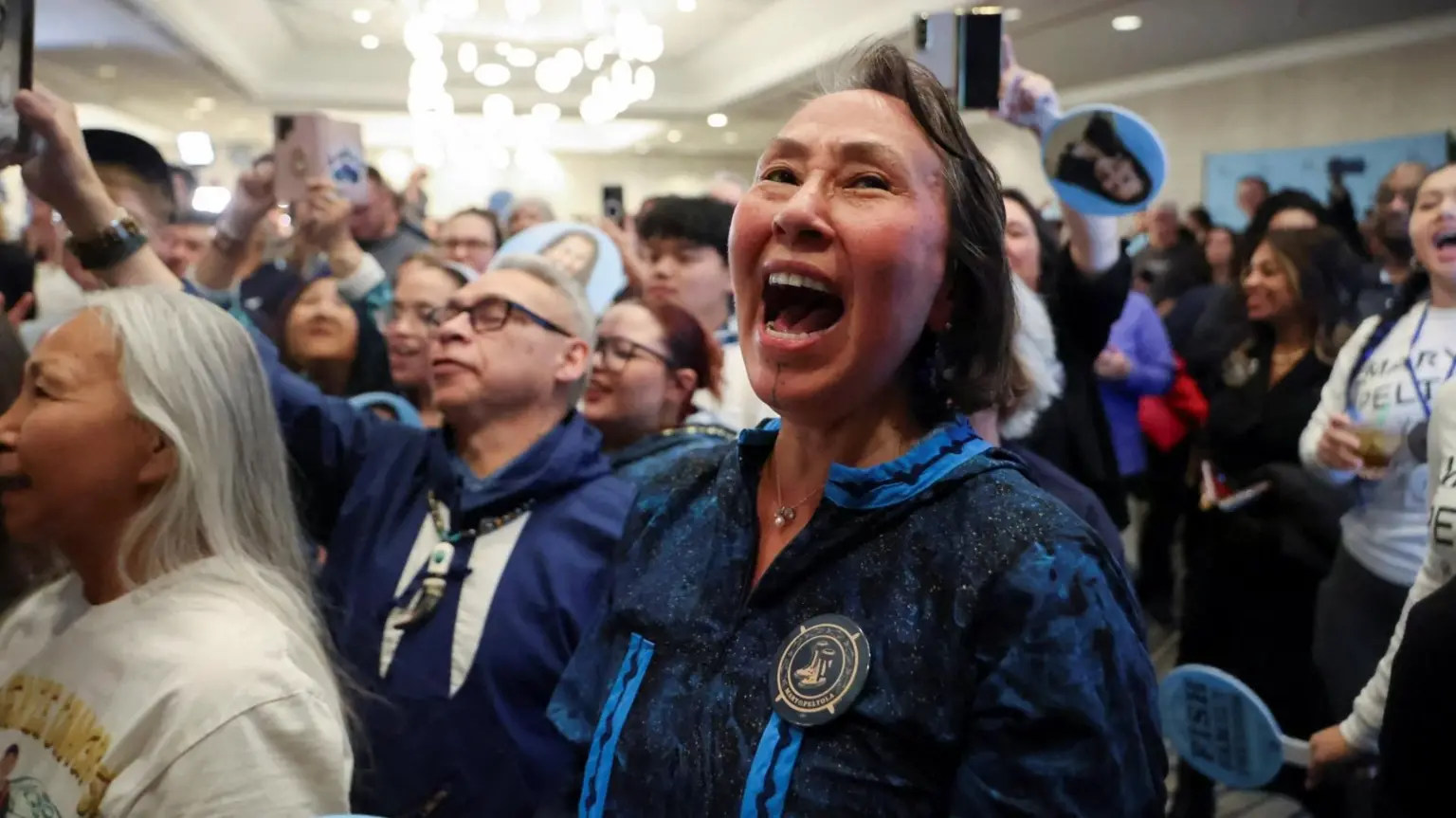
He eventually defeated Republican Mike Rogers in the November 3 midterm elections, becoming the first Muslim elected to the US Senate
How El-Sayed Came Up With TrumpCare
El-Sayed's proposal is built around a simple political calculation: Trump may be more willing to support a policy if he can claim ownership of it.
On November 6, during an interview with Zeteo editor Mehdi Hasan, the senator-elect suggested that he would accept renaming Medicare for All after the president.
"If he wants to pass Trumpcare for all, I'm OK with it. He seems to like to put his name on things," El-Sayed said.
Six days later, he shared a mock-up of a gold-coloured insurance card bearing Trump's signature on X.
"Donald, this is on the table," he wrote, urging the president to guarantee healthcare for every American, from birth to old age.
He continued the campaign in a November 17 video, directly addressing Trump as "habibi", an Arabic term of affection.
"Trumpcare for all. It's really popular. People really want healthcare," he said.
The White House initially rejected the idea. Spokesperson Allison Schuster dismissed it as "Medicare for none", describing it as a government takeover of healthcare.
But Trump's response changed after he reshared El-Sayed's proposal on Truth Social on November 22. Vice-President JD Vance's office subsequently contacted the Democrat's team about arranging a meeting, according to NBC News.
El-Sayed has maintained that the name matters less than the policy itself.
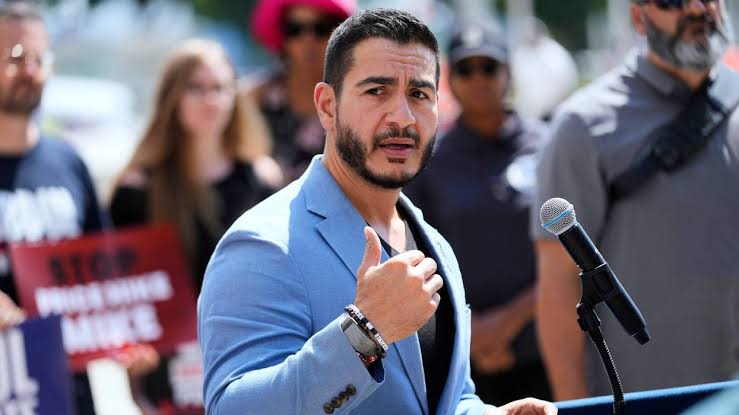
What Would Medicare for All Change?
At the centre of the proposal is a plan to make government-backed health insurance available to every American, rather than limiting access largely to specific groups.
Under the current system, many Americans receive health insurance through their employers. Others purchase private policies or qualify for government programmes such as Medicare and Medicaid.
Medicare mainly covers people aged 65 and older, as well as some younger people with disabilities. Medicaid provides coverage for eligible people with low incomes.
The Affordable Care Act, commonly known as Obamacare, expanded access to private insurance through government-regulated marketplaces and financial assistance.
However, millions of Americans remain uninsured.
A US Census Bureau report published in September 2026 found that 26.7 million people, representing 7.9 per cent of the population, had no health insurance throughout 2025.
 A doctor consulting a patient at a US hospital.
El-Sayed wants a single public insurance programme covering medical appointments, prescription medicines and emergency treatment.
The proposed system would also allow patients to visit participating healthcare providers without facing additional out-of-network charges.
Importantly, insurance would no longer depend on whether someone has a job or changes their family circumstances.
In testimony to the Senate in 2022, El-Sayed argued that changes such as turning 26, losing employment, getting married or getting divorced should not result in someone losing health insurance.
The proposal resembles the Medicare for All legislation championed by Senator Bernie Sanders, which seeks to replace most private health insurance with a public system.
Why the Proposal Is Gaining Attention
The healthcare debate comes as Americans continue to grapple with the cost of medical treatment.
According to the US Centers for Medicare and Medicaid Services, national healthcare spending reached $5.3 trillion in 2024, equivalent to $15,474 per person.
Healthcare accounted for 18 per cent of the country's gross domestic product.
A September 2026 survey by KFF, a non-partisan health policy research organisation, found that 66 per cent of American adults supported Medicare for All. This was the highest level of support recorded by the organisation since it began tracking the issue in 2016.
However, support was sharply divided along political lines. While 84 per cent of Democrats and 72 per cent of independents supported the proposal, 66 per cent of Republicans opposed it.
KFF also found that support could change when respondents were presented with concerns about higher taxes, longer waiting times and the future of existing Medicare coverage.

These figures help explain why healthcare has become an important political issue for both parties.
For El-Sayed, the challenge is turning public support into legislation. For Trump, the opportunity could be to associate his name with a policy that has attracted growing public attention.
Why Trump and Democrats Need Each Other
The proposed meeting also comes against the backdrop of a major shift in Washington following the November midterm elections.
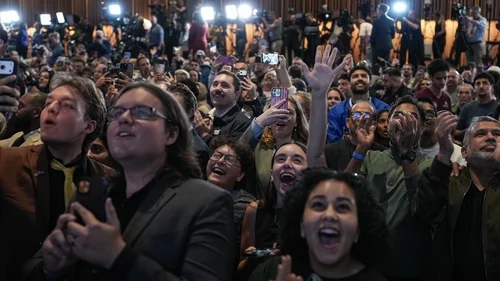
Democrats won control of both chambers of Congress, leaving Republicans preparing to move into the minority when the new Congress begins in January.
Although Democrats will have greater control over the legislative agenda, passing a bill will not automatically guarantee its implementation.
Trump retains the presidential veto. Overriding that veto would require a two-thirds majority in both the House of Representatives and the Senate.
Democrats do not have enough seats to achieve that threshold on their own.
Trump has already warned that he intends to block legislation he considers unacceptable, saying he would become "Mr Veto" if Democrats took control of Congress.
El-Sayed's approach is therefore an attempt to secure presidential support before the proposal reaches that stage.
The strategy could also offer Trump an opportunity to present himself as willing to work across party lines after the Republican election defeat
Will Trump Actually Support the Plan?
Despite Trump's positive remarks, there are reasons to be cautious about the prospect of an agreement.
Ian Lesser, a senior fellow at the Policy Center for the New South, told Al Jazeera that he did not expect the discussions to produce the single-payer healthcare system El-Sayed supports.
He suggested, however, that the two politicians could develop a surprisingly cordial relationship.
Scott Lucas, a professor of international politics at University College Dublin's Clinton Institute, also questioned whether Trump's interest would translate into meaningful policy changes.
Lucas suggested that the president could be attracted to the political benefits of a high-profile meeting, particularly after the election defeat.
He also pointed to the complexity of replacing the existing American healthcare system.
Trump's previous comments offer another reason for caution. He has repeatedly criticised Medicare for All, including describing it as "Medicare for none" in 2018.
As recently as August, he said the proposal would not work.
The question, therefore, is whether his latest comments represent a genuine change in position or simply an interest in the political opportunity presented by El-Sayed.
A Political Gamble With Potential Rewards
The proposed meeting could benefit both politicians, even if they fail to agree on a national healthcare programme.
For El-Sayed, securing a meeting with a president who previously portrayed him as an extremist would be a significant political moment.
It would also give him an opportunity to keep healthcare reform at the centre of the national conversation.
For Trump, attaching his name to a popular healthcare proposal could offer a domestic political achievement at a time when his party is recovering from a difficult midterm election.
But the real test will be what happens after the cameras leave the room.
A meeting, positive remarks and a new name for an existing policy will not resolve the difficult questions surrounding funding, taxation, private insurance and the future of existing healthcare programmes.
For now, El-Sayed has made his offer. Trump has expressed interest.
Whether the two can turn an unexpected political partnership into a healthcare agreement remains uncertain.