
Nairobi Senator Edwin Sifuna is making a different pitch to Kenyans as he prepares for the 2027 General Election: supporters should not expect free campaign merchandise, refreshments or other handouts. Instead, he wants them to help finance the political movement they are backing.
The message is becoming central to the Linda Mwananchi Movement's campaign strategy, which is increasingly relying on individual contributions, voluntary support and fundraising among Kenyans living abroad.
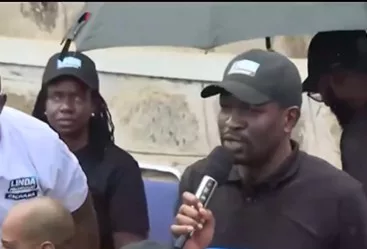
Sifuna made the remarks during an interview with OneMic Show in Beltsville, Maryland, in the United States, where he challenged supporters to take greater responsibility for sustaining the movement.
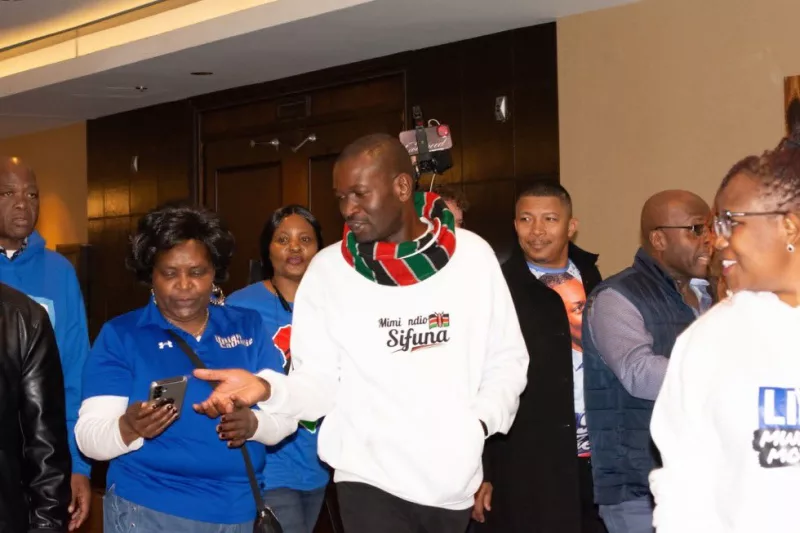
He said Linda Mwananchi had never printed its own campaign T-shirts, explaining that even the branded shirt he was wearing had been given to him by supporters.
“The Linda Mwananchi party has never printed T-shirts. Even the one I am wearing now, I was given,” he said.
He recalled receiving his first Sisi ni Sifuna T-shirt from supporters Abbie Zuena and Gen Z Baddie.
The senator also told supporters not to expect free drinking water at rallies, asking them to bring their own supplies and help cater for the movement's activities.
The approach marks a departure from the familiar campaign culture in which politicians distribute T-shirts, food, drinks and other incentives to attract supporters.
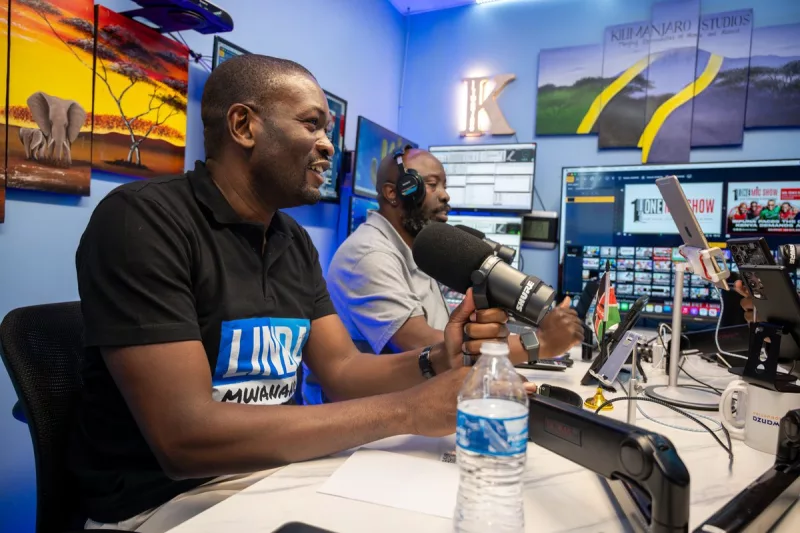
Edwin Sifuna speaks during an interview with OneMic Show in Beltsville, Maryland, in USA.
Sh100 million diaspora fundraising target
Beyond the appeal for supporters to finance their own mobilisation, Sifuna's political project is also seeking financial backing from Kenyans living abroad.
During a meeting in New Jersey on November 21, businessman George Njue, a Kenyan from Embu who lives in North Carolina, pledged to mobilise up to Sh100 million from the diaspora community.
Njue called on Kenyans in the United States to organise themselves and establish a formal mechanism through which they could channel their contributions to the movement.
He said the diaspora had the financial capacity to support Sifuna's presidential ambitions.
The proposed fundraising effort, however, comes with expectations beyond political support.
Njue indicated that Kenyans contributing towards the movement would also be interested in economic opportunities should Sifuna eventually become president.
He specifically mentioned potential partnerships with a future administration through public-private partnerships, including projects involving dams, energy and irrigation.
The Sh100 million remains a fundraising target, not a confirmed amount already collected.
What Sifuna says the money will pay for
In a separate engagement with Kenyans in Maryland, Sifuna offered a clearer explanation of the financial demands facing the movement.
According to the senator, the money being sought would largely cover campaign logistics, including travel across the country's 47 counties, vehicle fuel and basic expenses for people attending political meetings.
He argued that the movement did not need to pay people to attend its rallies, saying its supporters were already willing to participate voluntarily.
“We understand who our supporters are. We have a very impatient support base that will want to see immediate change the moment we leave that stadium after being sworn in,” he said during a separate interview reported by The Star on November 25.
Sifuna also warned against making promises that could not be fulfilled, saying supporters would expect visible results soon after a new administration took office.
His remarks suggest that he wants to build a campaign around financial contributions and political commitment rather than spending heavily on attracting crowds.
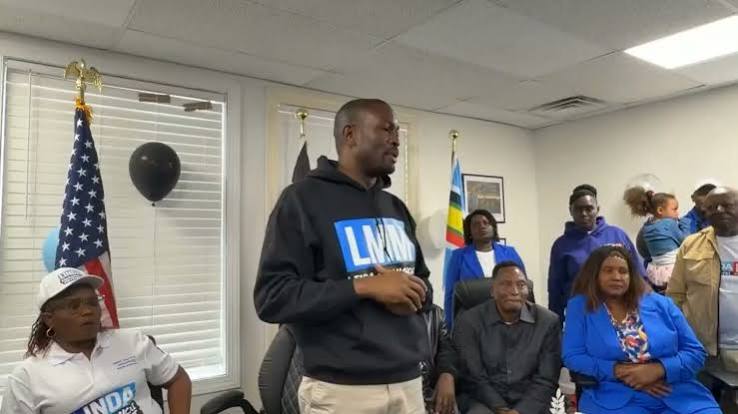 Sifuna speaks to Kenyans living in the United States during his campaign mobilisation tour.
The financial demands of a presidential campaign
The fundraising push comes against the backdrop of the enormous costs associated with mounting a nationwide presidential campaign.
The Independent Electoral and Boundaries Commission has set a spending ceiling of Sh6.1 billion for presidential campaigns in the 2027 General Election, according to the Daily Nation.
The publication also reported that political strategists who have participated in previous elections believe serious presidential contenders could spend considerably more.
For a movement seeking to establish a presence across all 47 counties, the challenge extends beyond organising rallies.
It must also build local structures, recruit supporters, coordinate campaign teams and prepare for election-day operations.
Sifuna's movement has already outlined plans to establish offices across the country.
In October, the senator said Linda Mwananchi had representatives in 38 counties, with the intention of expanding its grassroots presence nationwide.
The movement has identified constitutionalism, government accountability and grassroots mobilisation as key parts of its political agenda.

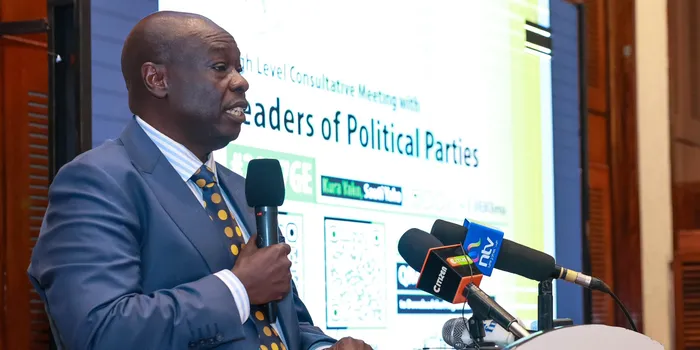
Edwin Sifuna with opposition leaders during the launch of Linda Mwananchi's political structures in Nairobi.
Questions over accountability of public contributions
The increasing reliance on individual contributions has also brought attention to how the money is collected, managed and spent.
In September, a petitioner, Alan Masakhalia, approached the court seeking orders compelling Sifuna and Linda Mwananchi to provide a detailed account of contributions received through the movement's fundraising channels.
According to court documents cited by People Daily, Masakhalia, who said he had contributed Sh55, wanted the movement to disclose the amounts collected and how the money had been spent.
He also sought supporting financial records, including receipts, invoices and payment documentation.
The petition cited approximately Sh519,144 raised by 9,419 contributors on the first day of fundraising. It further indicated that contributions had reached approximately Sh2.21 million within 36 hours.
These figures were presented in the petition and should not be confused with independently audited accounts of the movement's finances.
The case highlights the importance of financial transparency as political movements increasingly turn to ordinary citizens to finance their activities.
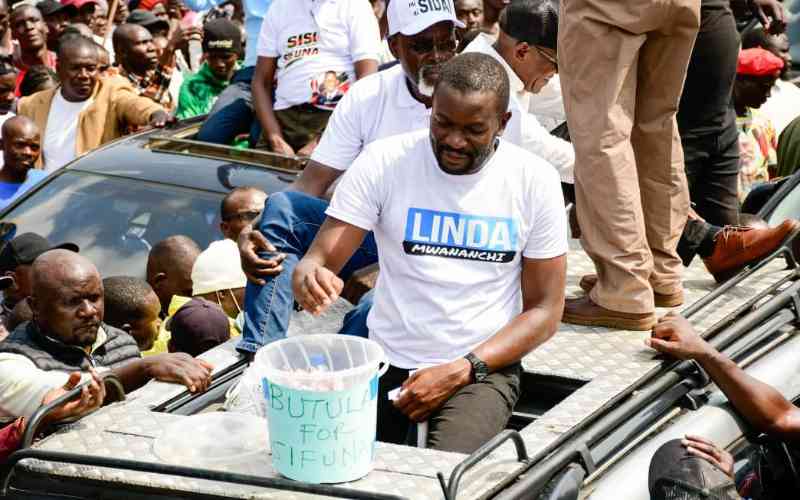 Supporters make financial contributions during a Linda Mwananchi mobilisation rally.
Sifuna takes the campaign beyond Kenya
The senator's fundraising efforts are part of a wider 17-day tour of the United States, which began on November 20 and is scheduled to end on December 7.
According to documents filed with the United States Department of Justice under the Foreign Agents Registration Act, Kenyan lobbyist Gilbert Shanga was involved in coordinating Sifuna's engagements and promoting fundraising activities among Kenyans living in North America.
The Daily Nation reported that the filings listed political engagements and fundraising from Kenyans in the United States among the purposes of the visit.
The delegation includes Vihiga Senator Godfrey Osotsi, Kisii Senator Richard Onyonka, Kabuchai MP Majimbo Kalasinga and former Meru Governor Kawira Mwangaza, among other political figures.
The tour provides an opportunity for the movement to reach Kenyans abroad while building support for Sifuna's anticipated presidential bid.
However, the bigger test will be whether the financial support, grassroots enthusiasm and organisational structures can be sustained as the country moves closer to the 2027 elections.
Sifuna is asking supporters to put their money, time and resources behind the political project, even if that means arriving at rallies with their own T-shirts and drinking water.